Drumcree: Secretary of state Sir Chris Bryant bans contentious parade
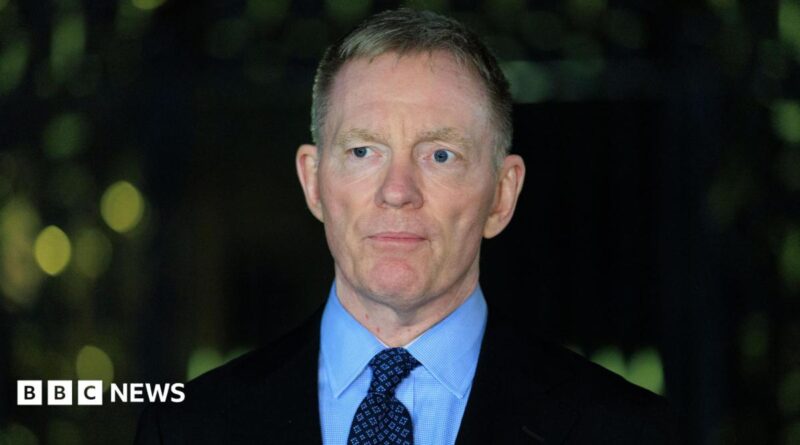
Northern Ireland Secretary Sir Chris Bryant has banned the contentious Orange Order parade at Drumcree.
The dispute led to a stand-off between Orangemen and nationalist residents of the Garvaghy Road in Portadown lasting almost two weeks.
Sir Chris said the PSNI chief constable advised him “it would not be possible to enable the procession to happen without a major intervention which would carry an unacceptable risk of serious injury, disorder and a wider contagion effect across Northern Ireland”.
His decision has been welcomed by Sinn Féin and the SDLP, but the DUP leader said he now needs to “explain what his government intends to do to restore confidence in the rule of law”.
The stalemate has reopened what was once the most bitter parading dispute in Northern Ireland, with stand-offs in the mid-to-late 1990s accompanied by riots, roadblocks and killings.
The Portadown District Lodge has submitted a notification to complete the full march for the past 28 years, with exceptions such as during the Covid pandemic – but every year has been denied permission by the Parades Commission.
For decades, the situation at Drumcree has settled into a relatively minor stand-off that no longer made headlines, however that changed when the Parades Commission ruled that the march, on Sunday 27 September, could go ahead with restrictions in place.
That parade did not happen and, after a series of talks between residents and Orangemen, the secretary of state has banned the procession.
Under legislation, a secretary of state can overturn a Parades Commission determination, especially following input from the police.
Sir Chris had been coming under increasing pressure from Sinn Féin and the SDLP to stop the parade.
Chief Constable Jon Boutcher had asked the secretary of state to review the Parades Commission determination allowing the parade.
On Friday night, Sir Chris said: “The Parades Commission have advised me that while ultimately a matter for the courts to determine, the commission is of the view that, in light of this current assessment by the chief constable, the original determination does not now have enduring legal effect.
“Consequently, and in the interests of wider public interest and safety, I’ve come to the conclusion that the circumstances under which that decision was made have now changed considerably.
“As a result, the procession cannot go ahead as it was determined.”
Boutcher said his “current assessment was that all available, lawful and proportionate options to facilitate completion of the procession had been exhausted”.
“Any remaining options would have required a substantial public order intervention.
“Further to this, such an operation would in my view have had not only catastrophic long-term consequences for trust and confidence in policing, but for the Northern Ireland Executive and the peace process.”
In a statement, the Parades Commission said it “recognises the importance of resolving the issues arising from this dispute and hopes that a way forward can be found through constructive engagement between those concerned”.