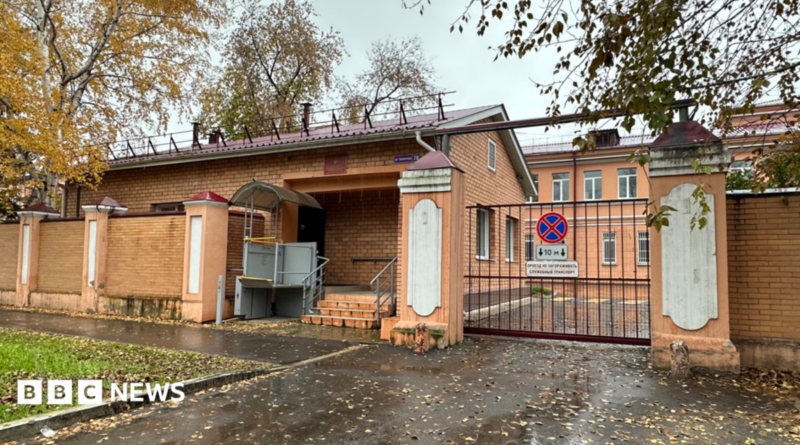
Trump to speak to Putin about plague lab death in Russia
Reports first emerged on Friday of almost 200 people being placed under observation in Siberia’s Irkutsk region following the death.
The lab worker, named in Russian media as Darya Shipilova, had reportedly fallen ill a couple of days earlier.
Unconfirmed reports suggested that she had become ill after breaking a test tube containing the pathogen at the Anti-Plague Institute of Siberia and the Far East where she worked – or following a field trip to a region where plague occurs naturally among wild rodents.
As the US and the WHO sought more information, the country’s health watchdog, Rospotrebnadzor, issued a statement saying “there are no epidemic risks for the population of Irkutsk and the Irkutsk region”.
It said more than 90% of the people who had been in contact with the victim had “completed medical observation” and “no health disorders associated with infectious pathology were detected”.
In the immediate wake of the laboratory worker’s death, Rospotrebnadzor had issued a statement saying the woman had died of “pneumonia of an undetermined etiology” and that testing found “no microorganisms related to her professional activities”.
However, after this announcement, a pro-government federal news outlet deleted five posts mentioning a possible plague case, and authorities in the town of Baikalsk deleted a message advising against travel to Shelekhov because of a possible plague infection.
Ongoing speculation into the lab worker’s death has sparked a back and forth between Russia and the US, with questions about a possible spread outside of Russia.
US Secretary of State Marco Rubio said the US had “measures” available to help Russia if the situation turned out to be more serious than claimed.
According to the WHO, pneumonic plague has a very short incubation period – sometimes just 24 hours – and can be fatal, if not diagnosed and treated early.
People can be infected through:
Symptoms include shortness of breath and coughing, often with blood-tainted phlegm.
The bacterium that causes the plague, Yersinia pestis, found among rodents such as marmots in the area.
It killed up to half the population of Europe in the 14th Century when it was known as the Black Death.
It was in response to an outbreak in the 1920s that the Anti-Plague Institute of Siberia and the Far East, was founded just over 100 years ago.