US military: Stealth bombers, fighters, and 'special capabilities' used in first 24 hours of Iran mission
The US has been battling Iran for more than 24 hours, and the scale of what the American military brought into the fight is now coming into focus.
After a slow but steady drip of details, we now have a clearer, more comprehensive picture of the kind of US combat platforms involved and the targets struck on the opening day of combat, executed alongside the Israeli military.
US Central Command said forces involved in Operation Epic Fury struck over 1,000 Iranian targets with destroyer-launched Tomahawksstealth B-2 Spirit bombers armed with 2,000-pound bombs, and US-made drones modeled after Iranian Shahedsamong other assets and munitions. It called the drones “American-made retribution” as the US struck Iran with a weapon Tehran designed.
Here’s the breakdown from US Central Command, which oversees US operations in the Middle East, on what went into the fight. It’s extensive, though some things are left off, covered by a note that says the operation also includes “special capabilities we can’t list.”
A graphic breaking down the weapons used in Operation Epic Fury from US Central Command US Central Command
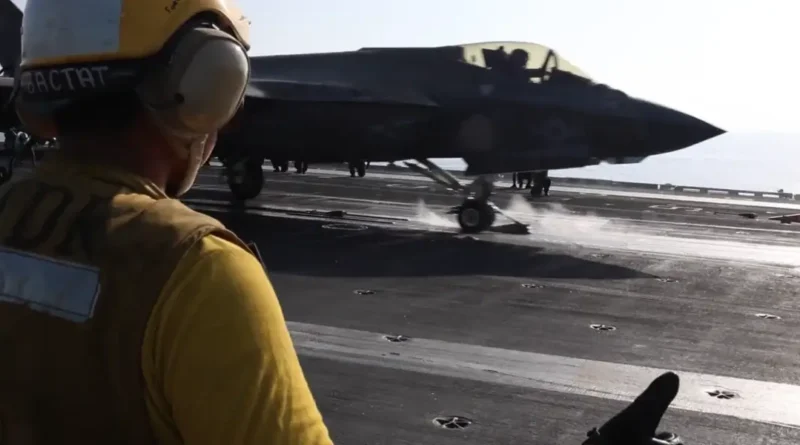
Beyond the B-2 bombers, the list of aircraft includes fifth-generation fighters like the F-35 Lightning II Joint Strike Fighter and F-22 Raptor, as well as a mix of attack aircraft and fourth-gen fighters.
There are also electronic attack planes, airborne early warning and control aircraft, surveillance platforms, and logistics aircraft, such as airlift and refueling planes, listed. The Airborne early warning aircraft can detect and track targets that can be passed off in real-time to fighter jetss like the F-22 and F/A-18.
Drones include the MQ-9 Reaper, a combat and reconnaissance system, and the new Low-Cost Unmanned Combat Attack System, or LUCASdrones. The former is intended to return home, while the latter is purposefully expendable.
Suppression operations aimed at breaking down Iranian defenses set the conditions for air superiority and permitted damaging strikes across Iranian territory. There have been no credible reports of aircraft losses.
Other assets involved include High Mobility Artillery Rocket Systems, or HIMARS, weapons that can fire both guided rockets and missiles. They gained notoriety for their combat effectiveness in Ukraine. In addition to destroyers, American aircraft carriers are in the area, launching fighter aircraft like the F/A-18 Super Hornet and F-35C, the carrier-based variant of the stealth fighter.
While much of the weaponry on the list is offensive or intended to support offensive operations, some assets are strictly defensive. These include Patriot surface-to-air missile systems and Terminal High Altitude Area Defense, or THAAD, batteries. These have been used in air defense battles as Iran launched its missiles.
Prior to the beginning of “major combat operations” against Iran, which President Donald Trump announced early Saturday morning in a video message, the US spent weeks building up its military presence not seen in the area in decades.
The impact of operations, in which the US has suffered some personnel losseshas been felt across Iran. The US has hit command and control centers, operational centers of Iran’s Islamic Revolutionary Guard Corps, missile sites, navy warshipsand critical communication sites.
The Israeli military, as part of Operation Roaring Lionhas also struck hundreds of targets across the country, which has seen much of its military and political leadership killed.