Trump’s Venezuela strategy has failed in Iran
Unlock the White House Watch newsletter for free
Your guide to what Trump’s second term means for Washington, business and the world
The official name for the US military campaign in Iran is Operation Epic Fury. The unofficial name should have been “Desperately Seeking Delcy”.
Donald Trump’s decision to go to war in Iran was powerfully influenced by his military success in Venezuela in early January. A US president who came to office promising to end wars was clearly intoxicated by what he called a “stunning, effective and powerful display” of military might. He was also openly delighted by the prospect of gaining access to Venezuela’s oil.
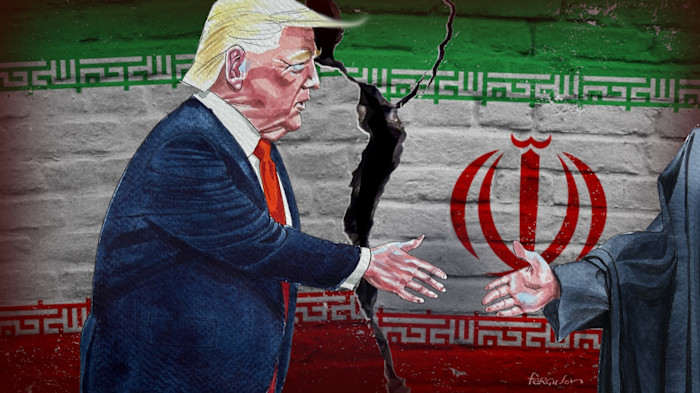
Just a few weeks later the US, acting in concert with Israel, moved to overthrow the government of Iran. Trump saw the role that he had played in picking a new leader for Venezuela as a model for Iran. He told Axios: “I have to be involved in the appointment, like with Delcy [Rodríguez] in Venezuela.”
That hope has been dashed, at least for now, by the announcement that the new supreme leader of Iran will be Mojtaba Khamenei, the son of the former leader, Ali Khamenei — who was assassinated in the opening act of the war.
The Israelis are likely to seek to kill the younger Khamenei. But, even if they succeed, it is already clear that the future leadership of Iran is unlikely to be determined by Trump.
The US had clearly been in contact with Rodríguez before launching the Venezuela operation and seizing President Nicolás Maduro. Since Rodríguez was already serving as the vice-president of Venezuela, installing her as the country’s new leader was relatively straightforward. But Washington had no ready-made successor in place in Iran to take over from the elder Khamenei; the White House has so far shown scant enthusiasm for the leadership aspirations of Reza Pahlavi, the exiled son of the former shah. In tragicomic mode, Trump has revealed that: “Most of the people we had in mind are dead.”
It is certainly possible that, somewhere near the top of the Iranian system, there is a pragmatist who would be willing to take on the Rodríguez role — in return for peace and a personal pay-off. But there is no clear path for such a person to displace Iran’s new supreme leader and then to hold on to power.
The failure to install a US-friendly leader makes it impossible to follow the Venezuelan playbook in Iran. That strategy has been called “regime alteration rather than regime change” by Jeremy Shapiro of the European Council on Foreign Relations.
A regime alteration policy is focused on installing a leader who will do America’s bidding. But that is where the intervention stops. There is no real effort to change the underlying political system.
That strategy pays little heed to the aspirations of pro-democracy forces in Iran and Venezuela. But it has obvious attractions from Trump’s point of view. Regime alteration promises the US an immediate geopolitical and business pay-off, while saving America from getting involved in the messy and often futile business of nation-building.
The regime alteration strategy has, so far, worked well for Trump in Venezuela. That country has gone, almost literally overnight, from being a close collaborator of Russia, China and Iran to becoming a client state of the US. Doug Burgum, the US interior secretary, has just visited Venezuela with a bevy of American business leaders, aiming to strike deals on energy and critical minerals. He was cordially received by Rodríguez — while her former boss, Maduro, languishes in jail in America.
But US military intervention in Iran has already departed drastically from the Venezuelan model. The capture of Maduro was all over within hours. The attack on Iran has been going on for more than a week — with Trump talking of a campaign of four to five weeks and contemplating the deployment of ground forces.
Unlike Venezuela, the war with Iran also quickly went regional — with more than a dozen countries either hit with missiles or targeted by them in the first week of the conflict. Trump wanted to bring the situation swiftly under control by finding a “great and acceptable” leader for Iran. But those hopes have now been dashed.
The economic consequences of the Iran war have also been immediate and dramatic — with the global oil price soaring following the effective closure of the Strait of Hormuz. A prolonged rise in gas prices and a slump in the markets would steadily increase the domestic political pressure on the White House. With the midterm elections looming — and Trump’s Maga coalition under strain — the president might not tolerate an Iran-induced economic downturn for very long.
If Trump is faced with a choice between escalating further or seeking a quick exit, his temperament and political interests point to an effort to cut his losses. That might be easier for this president than all of his more conventional predecessors. Trump has an almost unique capacity for claiming victory, even when he has clearly lost. (Think of the 2020 presidential election.)
But simply declaring victory in Iran and walking away may not be straightforward. There are around 40,000 American troops in the region, as well as military bases, economic assets and vulnerable allies. Trump was able to start this war at a time of his own choosing. He may not be able to end it on the same terms. Operation Epic Fury risks turning into an epic failure.
Join Gideon Rachman and colleagues on Wednesday 11 March 1300 UK/GMT for an FT subscriber webinar on War in the Middle East: what’s the end game? Register now and send us your questions.