Trump’s Iran playbook was written in the 1980s
Unlock the White House Watch newsletter for free
Your guide to what Trump’s second term means for Washington, business and the world
An ultimatum to the Ayatollah: comply within days or face consequences. A threat to seize Iran’s most important oil facilities. A readiness to retaliate massively. And, running through it all, a conviction that one decisive blow would force Tehran to yield.
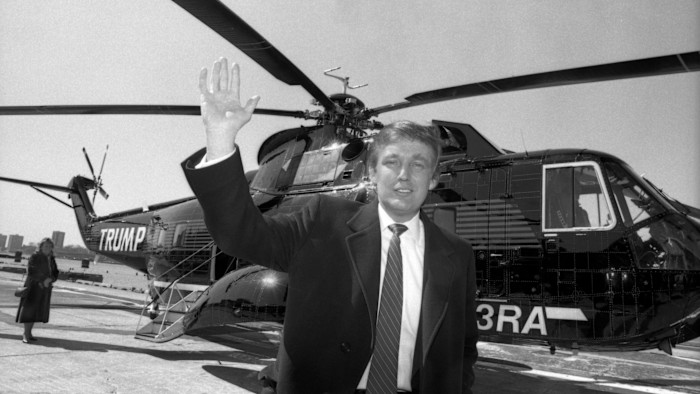
These might sound like the operating assumptions of Donald Trump’s 2026 war on Iran. But they aren’t the US president’s most recent Truth Social posts. They come from the late 1980s and Trump’s first shortlived flirtation with a White House campaign.
It would be a stretch to call this a war foretold. But the Trump playbook on Iran has long been in plain sight.
He sketched out the first outlines in 1987, spending $94,801 to place a full-page ad in three US newspapers. The world was “laughing” at America’s leaders over the Gulf crisis triggered by the Iran-Iraq war, Trump declared.
As the US escorted tankers through the Strait of Hormuz, he said Washington was trying to “protect ships we don’t own, carrying oil we don’t need, destined for allies who won’t help”.
It is a line that his tirades echo today. But back then, as he tested the waters for a possible presidential run, Trump had concluded the problem was a lack of “backbone”.
Appearing a few weeks later at a New Hampshire rotary club event in 1987, Trump sneered at how the Iranian navy — “little runabouts with machine guns” — had held America to ransom. “Why couldn’t we go in there and take some of their oilfields near the coast?” he asked.
The then 41-year-old businessman put it even more starkly in a 1988 interview with the Guardian: “One bullet shot at one of our men or ships, and I’d do a number on Kharg Island. I’d go in and take it.”
Just as today, Trump saw the island that is Iran’s main oil export facility as a point of leverage. Seizing it would stop the regime making the US look “like a bunch of fools”.
His presidential campaign hopes soon fizzled — at least for the 1988 election. But Trump kept riffing off the same core argument: that if American power was being exploited, it should either be priced properly or used more decisively.
In a speech on the “world according to Trump”, delivered to a conference of not-for-profit organisations in 1989, he even included a line that would make Saddam Hussein blush.
Iraq, Trump reportedly said, was the only country that had shown how to negotiate with Iran (seeming to forget the Iraqis invaded and fought a bloody eight-year stalemate that only ended in a UN-brokered ceasefire).
“What is the purpose of military strength if you don’t use it occasionally to set things straight?” Trump reportedly asked. “We ought to tell Iran, ‘Folks, you have one week to give us back all our hostages or all bets are off’.”
Four decades on, the power of the stark military ultimatum still seems to captivate Trump. The main difference this weekend is that the US president gave Tehran 48 hours to open the Strait of Hormuzrather than a week to give America what it wanted.
Trump’s instinct, then as now, is to distil a situation into a small number of negotiating moves — an incident, a deadline, a response — and assume the party willing to use the most power will prevail.
As the world’s military superpower, the US is always expected to be decisive, at least to Trump. The question, as it is so often when the US goes to war in the Middle East, is what happens if it is not.
What will Trump do if he is unable to dictate the outcome of this war, or contain the dire blow to the global economy, or single-handedly decide the fate of Iran, a nation of 90mn people?
Here the second big leitmotif of Trump’s 1980s campaign — blaming allies for freeriding on US power — may return with a vengeance. As the risks in the Gulf have risen, so too has the pressure on partners to contribute more, both materially and politically.
Trump pointedly promised on Friday to remember how Nato’s “cowards” responded when asked to help in the Strait of Hormuz. Some US allies should not be surprised if, in this case, the president is true to his word.
Just as Trump’s musings from the 1980s are a guide to his mindset for the Iran war today, they might also point to who the US president will want to foot the bill for this conflict.
To Trump, this may not just be a battle of wills between Washington and Tehran, but part of a broader effort to reset the terms on which American power is used and who benefits from it. The target of Trump’s next ultimatum might not be some far-off autocrat, but the leaders of Europe and America’s other allies around the world.