Traders placed $580mn in oil bets ahead of Donald Trump’s social media post on Iran talks
Unlock the White House Watch newsletter for free
Your guide to what Trump’s second term means for Washington, business and the world
Traders made bets worth half a billion dollars in the oil market about 15 minutes before Donald Trump’s post touting “productive” talks with Iran sent the price of crude tumbling and ignited volatility in other assets.
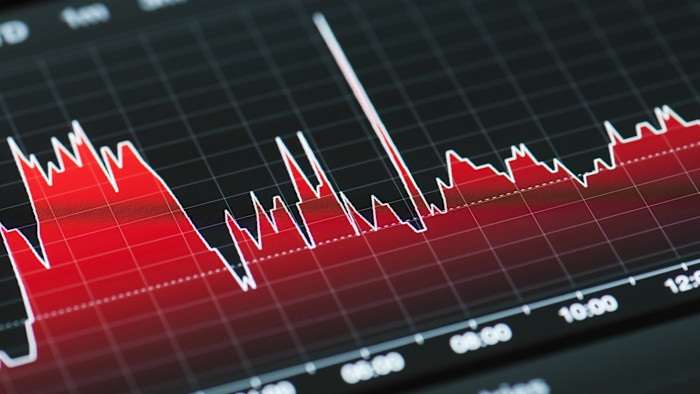
Roughly 6,200 Brent and West Texas Intermediate futures contracts changed hands between 6.49am and 6.50am New York time on Monday, just a quarter of an hour ahead of the US president’s post on Truth Social that there had in recent days been “productive conversations” with Tehran to end the war in Iran. The notional value of those trades was $580mn, according to FT calculations based on Bloomberg data.
Trading volumes for Brent and WTI leapt at the same time, 27 seconds before 6.50am. Futures tracking the S&P 500 share index jumped in price moments after the oil trade, with volumes also rising significantly during that timeframe.
It was not known whether one entity or several entities were behind Monday’s trades.
Trump’s announcement at 7.04am triggered a sharp sell-off across global energy markets and jumps in S&P 500 stock index futures and European equities as investors dialled back bets of a prolonged conflict.
The well-timed trades echoed the flurry of large highly profitable bets made on prediction market Polymarket on the timing of the US’s attacks in recent months on Iran and Venezuela.
“It’s hard to prove causality . . . but you have to wonder who would have been relatively aggressive at selling futures at that point, 15 minutes before Trump’s post,” said a market strategist at a US broker, referring to Monday’s trades.
White House spokesperson Kush Desai said: “The only focus of President Trump and Trump administration officials is doing what’s best for the American people.”
He added: “The White House does not tolerate any administration official illegally profiteering off of insider knowledge, and any implication that officials are engaged in such activity without evidence is baseless and irresponsible reporting.”
Several hedge funds noted that this was one of a number of examples in recent months of large trades being made ahead of official US government announcements.
One trader at a major hedge fund said energy consultants had recently noticed several large block trades that they found to be unusually timed. Another portfolio manager said a series of large and well-timed trades had created a “level of frustration” among investors.
“My gut from watching markets for the last 25 years is this is really abnormal,” he added. “It’s Monday morning, there’s no important data today, there aren’t any Fed speakers you’d want to front run. It’s an unusually large trade for a day with no event risk . . . Somebody just got a lot richer.”
In a post on X later on Monday, the Speaker of Iran’s parliament, Mohammad-Bagher Ghalibaf, denied that any negotiations between Washington and Tehran had taken place, triggering a pullback for global stocks and fresh buying across energy markets.
He added: “Fake news is used to manipulate the financial and oil markets and escape the quagmire in which the US and Israel are trapped.”
One commodities trader said the sales of oil futures were not huge when measured against volumes in a market that even before the war was highly active but that they had spotted a sharp move in TTF, the European gas benchmark, at roughly the same time.
Tim Skirrow, head of derivatives at the consultancy Energy Aspects, said: “That is a larger than usual volume [in Brent and WTI] than I would expect at that time of day, but in the same breath it’s not excessively large. I find it a bit hard to join the dots here.”
He added that the Brent futures and options markets had seen “significant inflows” from funds over recent weeks. “Given the price reaction, it seems that nearly everyone was long. This is almost a necessary precursor for such a violent move.”
Data visualisation by Ray Douglas. Additional reporting by Alex Rogers in Washington