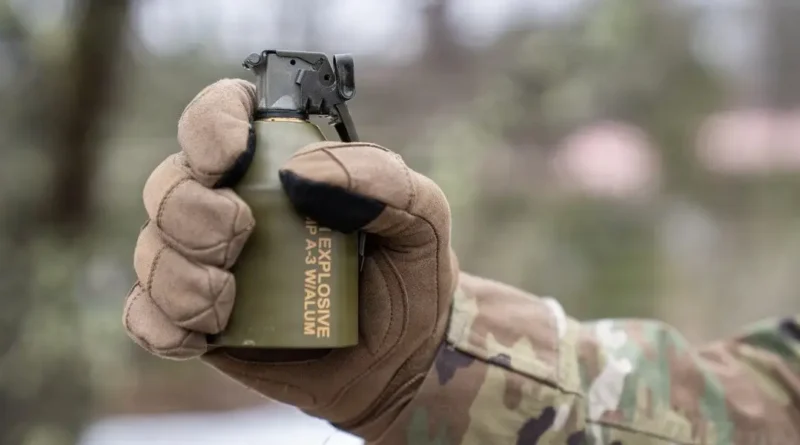
The Army is getting a new lethal hand grenade for the first time in decades
For the first time in nearly six decades, the US Army is getting a new lethal hand grenade.
The Army cleared the new M111 Offensive Hand Grenade for full production this week. The new blast overpressure grenade is replacing the now-obsolete MK3A2 grenades, which were first adopted by the military in 1968, around the same time as the M67 fragmentation grenade.
The Capabilities Program Executive Ammunition and Energetics, together with US Army Combat Capabilities Development Command Armaments Center at Picatinny Arsenal, developed the new hand grenade, the first for the Army since Vietnam.
The M111 is made of plastic that is consumed during detonation. The older MK3A2 blast/concussion grenades, on the other hand, were made from asbestos, a carcinogenic substance that forced the service to put restrictions on the use of these grenades. The old M67 grenades are still in use.
The value of having a blast overpressure grenade is that it decreases the risk of unintentional fratricide, the accidental killing of one’s own troops at war, during close-quarters combat, but the limitations on the use of the MK3A2 meant soldiers only had the fragmentation M67 available to them in combat.
The M67 grenade propels metal fragments outward in all directions when it explodes. In tight indoor spaces like rooms or hallways, those fragments can bounce off walls or be blocked by furniture, reducing effectiveness and potentially hurting friendly troops.
The M111 grenade, similar to the MK3A2, works differently, instead producing a powerful blast and pressure wave less likely to be stopped by walls or obstacles, making it more effective inside buildings and other confined spaces.
“One of the key lessons learned from the door-to-door urban fighting in Iraq was the M67 grenade wasn’t always the right tool for the job. The risk of fratricide on the other side of the wall was too high,” said Col. Vince Morris, the Army project manager for close combat systems, in a service press statement.
Using blast overpressure instead, “can clear a room of enemy combatants quickly leaving nowhere to hide while ensuring the safety of friendly forces,” he said.
Soldiers can still use the M67 fragmentation hand grenade in open terrain, the statement said, but should rely on the newer version for “enclosed and restricted terrain.”
Blast overpressure weapons can be harmful for troops using them, and the US military has been grappling with the effects of these systems. Service members, as a result of their continuous work with artillery, breaching charges, and other heavy weaponry, have suffered traumatic brain injuries, which can come with debilitating effects.
The Army, along with other services, has sought to mitigate these risks.