Shah's son confident Iran rulers to fall as Trump holds off
The son of Iran’s late shah said Friday he was confident that mass protests would topple the Islamic republic and urged international action, as President Donald Trump holds off on intervening in the unrest.
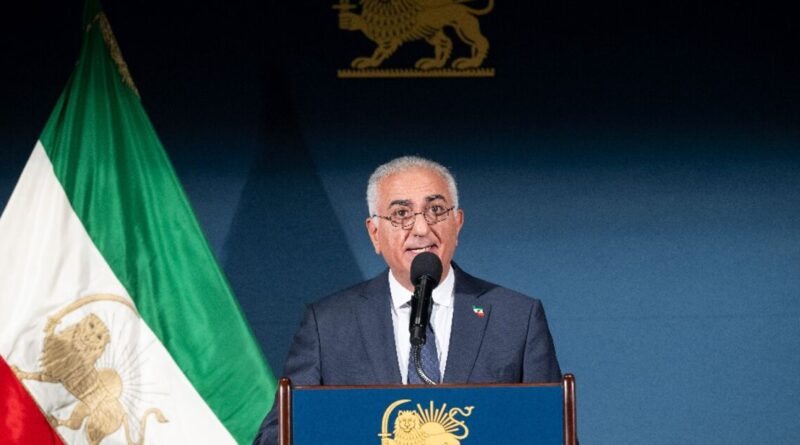
Reza Pahlavi, who lives in exile in the Washington area, has presented himself as leader of the opposition as the cleric-run state ruthlessly represses mass protests.
“The Islamic republic will fall — not if, but when,” Pahlavi told a news conference in Washington.
Since the demonstrations erupted in the waning days of 2025 with a rallying cry of solving Iran’s severe economic woes, Pahlavi has urged intervention by the United States.
Trump had repeatedly warned Iran that if it kills protesters, the United States would intervene militarily. He also encouraged Iranians to take over state institutions, saying “help is on the way.”
But two weeks after he first suggested help, and after Iranian forces by some estimates have killed thousands of protesters, Trump has not acted.
Trump instead has highlighted what he said was an end to the killing of protesters, as the size of demonstrations diminished in recent days.
“I believe that President Trump is a man of his word and ultimately he will stand with the Iranian people as he has said,” Pahlavi said when asked if Trump had given false hope.
“Iranian people are taking decisive actions on the ground. It is now time for the international community to join them fully.”
Gulf Arab monarchies, despite frequent friction with Iran, have urged Trump to show caution due to uncertainties about the future.
– ‘Surgical’ strikes –
Pahlavi called for the targeting of the command structure of the Revolutionary Guards, the elite unit of the Islamic republic.
“I’m calling for a surgical strike,” said Pahlavi, who controversially backed Israel’s military campaign on Iran in June.
Pahlavi said the priority should be to “weaken the regime’s first and foremost means of instituting terror at home or terrorism abroad.”
He also called on all countries to expel diplomats from Iran.
Many protesters have chanted the name of Pahlavi, whose pro-Western father fled in 1979 in the Islamic revolution.
Pahlavi says he wants to be a figurehead to lead a transition to a secular democracy, although he has plenty of detractors who suspect a desire to restore the monarchy and want instead to empower opposition still in Iran.
“I reaffirm my lifelong pledge to lead the movement that will take back our country from the anti-Iranian hostile force that occupies it and kills its children,” Pahlavi said.
“I will return to Iran.”
He described the cleric-run state as an “occupying force” that has committed “mass crimes.”
He also pointed to the pledges by Shiite militant movements from Lebanon and Iraq to help the Iranian clerical government, their longtime patron.
“This is a clear indication of the regime’s weakness that it cannot even tackle its own forces to do the dirty job.”
Pahlavi promised that a new Iran would have better relations with the Islamic republic’s sworn enemies — the United States and Israel — and integrate into the global economy.
He said that Iran would quickly normalize relations with Israel in a “Cyrus Accord,” a reference to Cyrus the Great, the celebrated Persian emperor who freed Jews from Babylonian captivity.
“Iran today should have been the next South Korea of the Middle East,” he said. “Today we have become North Korea.”