Perfect Sous Vide Steak (Every Time!)
Since learning to sous vide steak years ago, it’s now the ONLY way I cook it at home. My husband is obsessed with having his steak perfectly medium-rare, and there is no other way to get that level of precision.
Sous vide cooking started as a restaurant cooking method, but now home cooks can achieve the same restaurant-quality steak right in their own kitchen. It’s truly a game-changer for anyone who loves a tender, juicy steak every single time.
Sous vide steak is a method of cooking steak in water at precise, controlled low temperatures for a set amount of time. Seal the steak in a bag with butter, herbs, and sous vide steak seasonings, then gently cook in a water bath.
- Perfectly even cooking: There’s no more worrying about overcooked edges or undercooked centers. The whole steak cooks evenly from edge to edge, hands-off.
- Control like a chef: You choose the exact temperature to hit your desired doneness. For medium-rare, I set mine to 125-128ºF. A quick sear brings it up to about 130ºF.
- Restaurant-level steak at home: If you’ve ever ordered a steak that came out perfectly cooked in minutes, it was probably sous vide. Now, I get that same result in my kitchen.
Sous vide steak is simple once you know the steps. The key is prep, precision, and finishing with a good sear. Here’s my step-by-step process:
- Set up a water bath. Fill a large container or pot with water, attach the sous vide, and set the temperature. Check my temperature guide below for precise temps.
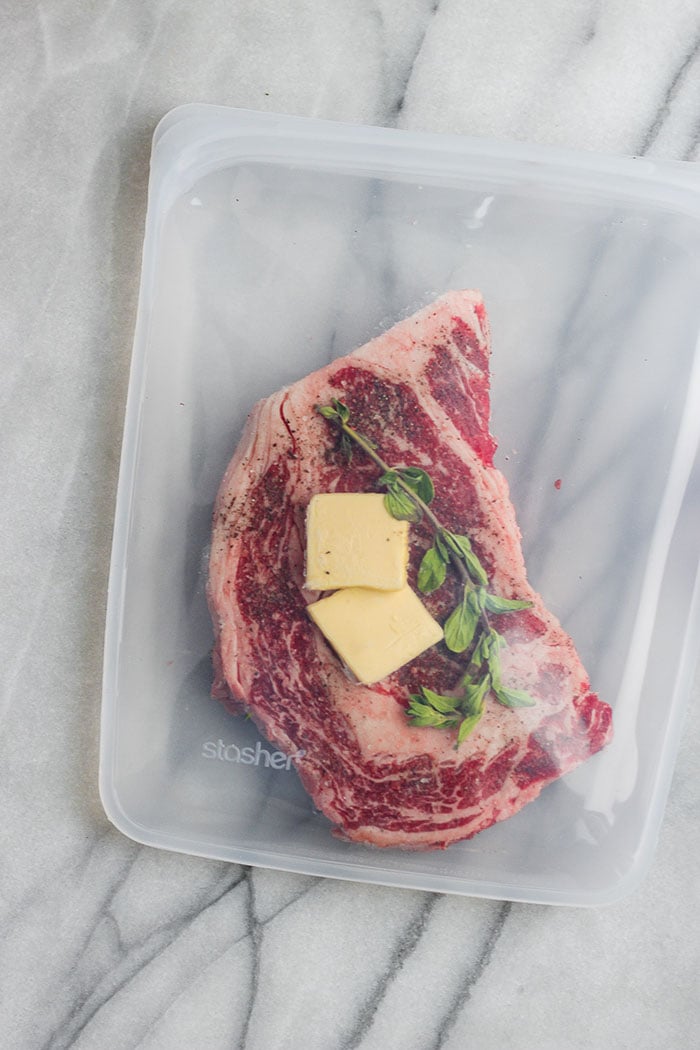
- Season and bag the steak. Generously salt and pepper the steak. Place it in a Stasher, Ziploc, or FoodSaver bag with a tablespoon of butter and a sprig of herbs. Remove as much air as possible from the bag for even cooking and to keep the steak from floating.
- Let the sous vide machine work. Submerge the bag in the water bath and cook for 2-4 hours. Two hours is perfect for medium-rare, but for an extra-tender steak, leave it for up to 4 hours. The steak won’t overcook.
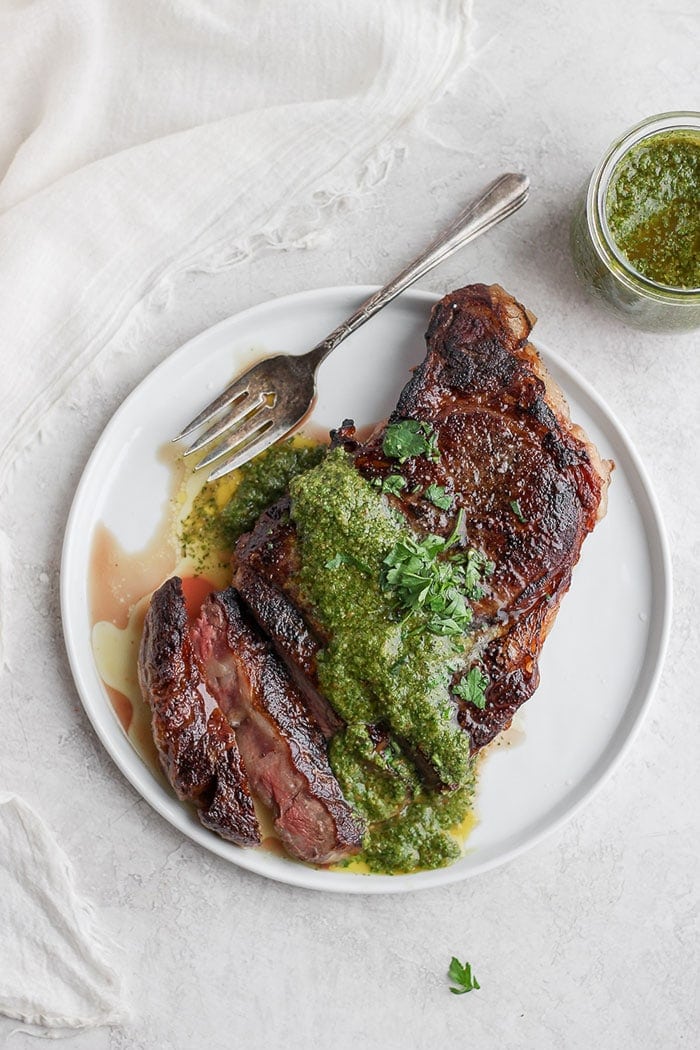
- Sear for flavor and texture. Remove the steak from the bag, discard the juices, and pat it dry with a paper towel. Heat a cast-iron skillet over medium-high heat and add olive oil or more butter. Sear the steak for about 1 minute per side until the outside is golden brown. You can baste the steak with extra butter and herbs here.
- Rest and serve. Let the steak rest for 5 minutes before slicing. Serve it with a chimichurri sauce, roasted veggies, or any favorite sides.
You can eat sous vide steak straight from the water bath, but a quick sear adds flavor, texture, and that restaurant-quality crust. You can also baste for extra richness.
Searing Methods:
- Stovetop: Heat a cast-iron skillet with olive oil or butter. Sear steak 1 minute per side, then rest 5 minutes. To baste, add herbs and spoon melted butter over the steak for extra flavor while it’s in the pan.
- Grill: Preheat the grill to 450ºF and sear for one minute on each side over direct heat. Let the steak rest for 5 minutes before eating.
One of the best things about sous vide is the precision. You can hit your ideal doneness every single time. If you’re going to sear your steak after, the temperature of your meat will rise by a few degrees, so you should set your sous vide about 5 degrees below your preferred doneness.
Here’s my go-to guide, pre-sear:
- Rare: 120-129ºF
- Medium-Rare: 130-134ºF
- Medium: 135-144ºF
- Medium-Well: 145-155ºF
- Well-Done: 156ºF and up
Use a good meat thermometer to check the internal temperature if you want to be extra precise. I swear by the Thermapen from ThermoWorks. I like to set the sous vide to 125-128ºF for medium-rare. The steak comes out juicy, tender, and evenly cooked from edge to edge, with just enough of a rise from the sear.
One of the best things about sous vide is that you can use nearly any cut of steak, as long as it’s at least 1 inch thick. Thicker steaks take longer to reach the target temperature, but they come out extra tender.
I’ve tested everything from smaller ½-pound steaks to 1-pound T-bones, and they all turned out delicious. Here are my favorite cuts for sous vide:
- New York Strip: This is my personal favorite. It’s juicy, tender, and perfect for medium-rare.
- Ribeye: Ribeye steaks are rich and flavorful with a bit more marbling.
- T-Bone & Porterhouse: These are great for a show-stopping steak dinner. Just make sure the thickness is consistent so both sides cook evenly.
- Skirt or Flank: Leaner cuts benefit from the gentle sous vide cook, which keeps them tender rather than chewy. Sliced flank steak is delicious in my steak tacos recipe!
You only need a few ingredients before you add your steak to the sous vide. Here are the essentials:
- Steak: I used New York strip for this sous vide steak recipe, but any cut of steak will work. Just be sure the steak is at least 1 inch thick!
- Coarse sea salt + black pepper: Always season before the water bath. Coarse salt and pepper give the best flavor and texture. Skip the finely ground stuff here.
- Fresh herbs: Rosemary, thyme, and oregano are my favorites. Adding them to the bag infuses the steak with subtle herb flavor as it cooks.
- Butter: Don’t forget to add the butter to the sous vide bag before you add it to the sous vide. The butter melts in the sous vide and adds a rich, buttery flavor to the steak.
- Olive oil: The olive oil is used for searing after sous vide. If preferred, swap it for more butter to get a golden, flavorful crust.
Sous vide steak is pretty easy, but a few key tools make the process foolproof. Here’s what you’ll need:
- Sous Vide Immersion Circulator: This is essential. It heats and maintains the water at the exact temperature set. If you don’t have one, there are plenty of reliable, budget-friendly options available online.
- Container or Pot: You need something deep enough to fully submerge the steak. I use a large pot, but a plastic bin, a small cooler, or even a kitchen sink works in a pinch.
- Bags for Cooking: Stasher bags, vacuum-seal bags, or Ziploc freezer bags are all great. The key is to remove as much air as possible so the steak stays fully submerged. You can use a vacuum sealer for this if you have vacuum-seal bags.
- Cast Iron Skillet or Grill: These are optional but highly recommended for searing. A hot cast-iron skillet is my preferred method for that perfect crust. Add tongs for flipping.
- Meat Thermometer: This is highly recommended for precision and peace of mind. I use the Thermapen from ThermoWorks for my steaks.
Yes! You can sous vide steak straight from the freezer, with no need to thaw it first. The process is almost identical to cooking fresh steak, but you’ll need to add extra time, usually about 30-60 minutes longer, depending on the thickness.
The texture and flavor are virtually the same as fresh steak. Sous vide gently brings the steak up to the target temperature, so it doesn’t lose moisture, and the meat remains tender and juicy. After cooking, just sear it the same way you would a fresh steak to get that golden-brown crust.
To store, let the steak cool slightly, then wrap it tightly in plastic wrap or place it in an airtight container. Store in the fridge for up to 3-4 days.
To reheat, the best method is a warm water bath, just like the original sous vide. Set the water bath to 120-130ºF and let the steak warm for 5-8 minutes. (Thicker steaks will need more time.) This keeps it juicy without overcooking.
If you don’t want to sous vide again, you can also reheat in a skillet over low heat or in the oven at 250ºF until warmed through, then quickly sear for a fresh crust. Avoid microwaving, as it can dry out the steak and ruin that tender texture.
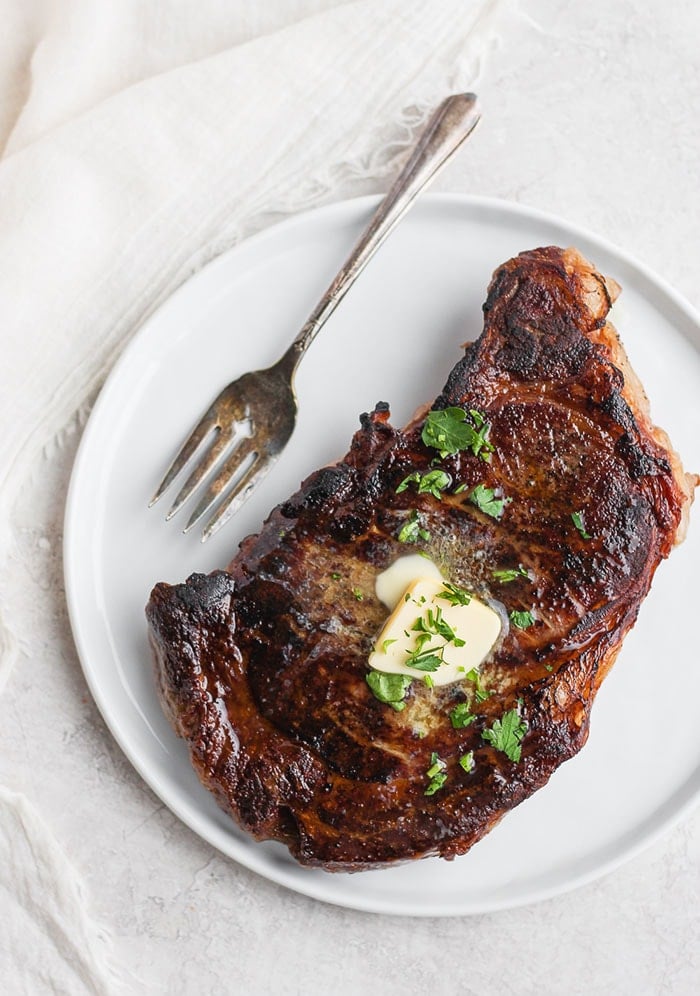
The steak is the star of the meal, but the right sides take it to the next level. I love it with a chimichurri sauce, but here are a few more of my favorites:
Sous vide steak is versatile. It’s perfect for a special dinner, a holiday feast, or even a summer barbecue. With the right sides, it’s easy to make it feel like a restaurant-quality meal at home.
Can you overcook steak with sous vide?
Technically, you can’t overcook steak in the sous vide, as it will stay at the same temperature in the water for however long you leave it. That means you won’t have a well-done steak just because it’s been in there all day. However, if you let your steak sit for longer than 4 hours, the tendons will begin to break down, and it will no longer have that fabulous chew.
What are the pros and cons of sous vide steak?
Sous vide meals guarantee perfectly cooked meat from edge to edge, staying juicy, tender, and full of flavor. You also get complete control over doneness, so hitting medium-rare on steaks is effortless, and the timing is forgiving.
On the flip side, it requires a sous vide setup, takes longer than a quick grill or pan-sear, and you still need a brief sear for the best steak.
Which containers work best when using a sous vide?
There are many types of containers for sous vide steak. My go-to is a large pot, but make sure it’s large enough to fully submerge the steak in water.
Here are some options:
What are common mistakes to avoid when cooking steak sous vide?
A few common mistakes can trip up even experienced cooks. Seal the bag well, as air pockets can keep the steak from cooking evenly. Set the water bath to the right temperature, remembering that the sear will raise the final doneness.
Be mindful of steak thickness. Thinner steaks heat up faster and can overcook during searing, while thick steaks may need more time in the water bath to reach the desired temperature. And don’t skip the sear! Without it, you won’t get that golden, flavorful crust.
-
Prepare a sous vide water bath by filling a large pot with water. The pot needs to be large enough to hold your steak, and the water needs to be deep enough to hit the water line on your sous vide.
-
Place your sous vide into the water bath. For a medium-rare steak, set the water bath to 125-128ºF. See the recipe notes for other temperature recommendations.
-
Generously salt and pepper both sides of the steak and place it into a medium-sized Stasher bag or FoodSaver bag. Each steak should have its own bag, so if you’re cooking 4 steaks, use 4 bags.
-
Place 1 tablespoon of butter on top of each steak and a sprig of herb.
-
Remove the air from all of the bags and tightly seal them. If you’re using a Stasher bag or a plastic bag, try to remove as much air as possible.
-
Place steaks into the preheated water bath and cook at 125-128ºF for 2-4 hours. Two hours is enough time to get the entire steak to the proper temperature, but you can cook it for up to 4 hours before the tendons start to break down.
-
After 2 hours, remove the steak from the water bath and transfer it to a plate.
-
Heat a cast-iron skillet over medium-high heat. When the pan is hot, add the olive oil.
-
When olive oil is fragrant, place the steak in the pan and sear for 1 minute per side, then immediately remove it from the heat.
-
Serve with chimichurri or a delicious vegetable side.
A mini-guide to sous steak temps, pre-sear:
- Rare: 120-129ºF
- Medium-Rare: 130-134ºF
- Medium: 135-144ºF
- Medium-Well: 145-155ºF
- Well-Done: 156ºF and up
Grilling directions: Instead of my stovetop method, sear the steak on the grill by heating it to 450ºF and searing each side for 1 minute.
While sous vide cooking is amazing on its own, a sous vide steak marinade can boost its flavor. Use my favorite steak marinade, a mix of olive oil, fresh herbs, garlic cloves, and acid.
[adthrive-in-post-video-player video-id=”ohr7BX7J” upload-date=”2019-05-27T00:00:00.000Z” name=”Sous Vide Steak” description=”Want perfectly cooked stead every time? Follow our Sous Vide Steak recipe to make an amazing tender, juicy steak!”]
Serving: 1 /4, Calories: 739 kcal, Carbohydrates: 1 g, Protein: 58 g, Fat: 55 g, Fiber: 0 g, Sugar: 0 g
Nutrition information is automatically calculated, so should only be used as an approximation.