No easy way out for tens of thousands looking to leave Gulf amid Iran conflict
By Federico Maccioni, Lucy Craymer and Rachna Uppal
DUBAI, March 3 (Reuters) – As Middle East tensions rise ever higher, tens of thousands of people are finding themselves stranded across the Gulf with few options for leaving a region suddenly engulfed by war.
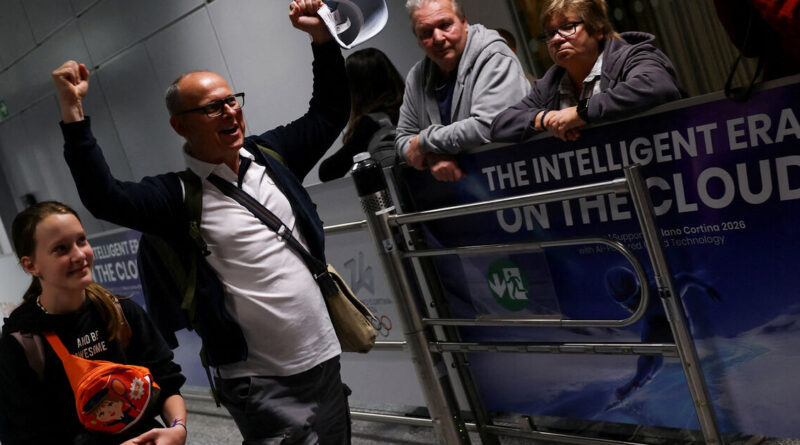
Airspace remains closed in Qatar, where 8,000 travellers who had been in transit became marooned following the start of U.S.-Israeli attacks on Iran. Only a limited number of flights were allowed to depart the United Arab Emirates starting from Monday, leaving tourists and some expatriates scrambling for a way out, as Iran launched strikes across the Gulf.
Dubai and neighbouring Doha sit at the crossroads of east-west air travel, funnelling long-haul traffic between Europe and Asia and handling tens of thousands of passengers every day
THIRTY-THREE HOURS TO DUSSELDORF
Dubai resident Sara, who asked her last name not be used, plans a roughly 33-hour journey to Germany on Wednesday to ensure she does not miss being best-woman at her brother’s wedding next week.
“I was supposed to have a flight next week, but I just really cannot risk it being delayed whatsoever,” she said.
Sara said a driver she found online – the one that seemed the most reliable – will pick her up at 5 a.m. on Wednesday and drive her across the border to Muscat, Oman. From there she plans to fly to Jeddah, Saudi Arabia, and spend the night. She said then she flies to Amsterdam and then on to Dusseldorf.
“So it’s a very long journey, but for me, it was just important,” she said.
U.S. President Donald Trump initially projected the conflict would last four to five weeks, but has since sought to justify a broad, open-ended war. The conflict has seen Iran launch missile and drone strikes against not only Israel and U.S. forces but also a host of countries across the region allied to the U.S.
U.S. embassies in Kuwait and Saudi Arabia came under fire and the U.S. State Department called on Americans to immediately leave more than a dozen countries in the region.
Other governments have started evacuations, including the United Kingdom, Spain, Italy and Germany, which chartered two flights – one in Riyadh and another in Oman’s Muscat – to bring home particularly vulnerable citizens initially out of the roughly 30,000 currently stranded in the region.
Slovenia said it had organised four buses escorted by police to take its citizens from Dubai to Muscat airport, but it remained unclear how travellers from other countries would reach gateways to leave the region.
In the UAE, normally a bustling tourism destination and a business hub, many desperate to travel like Sara have resorted to shuttle buses and private car rides to cross into Oman.
AN EIGHT-HOUR BUS TO OMAN
Oman, which has so far suffered fewer attacks compared to its neighbours, has kept its airspace open, and while flights to other Gulf destinations have been cancelled in recent days, services to other regions remain largely unaffected.
State carrier Oman Air and budget airline SalamAir have arranged shuttle buses from a station in Sharjah, north of Dubai, to Oman’s capital Muscat, which will run from Tuesday to Thursday. The journey takes about eight hours.
Facebook groups and Reddit threads online showed tens of queries from expatriates in the UAE looking for ways to reach Muscat’s airport.
A tour operator agent told Reuters he had received around 30 calls since Monday from people seeking a private ride to the border inHatta, a UAE mountain town an hour outside Dubai.
Until last week, the 150 km (93 mile) distance was generally covered by Omanis travelling to spend a few days in glitzy Dubai or by hikers and nature enthusiasts heading in the opposite direction to enjoy Oman’s pristine mountain landscapes.
However, the agent said that he was now driving Ukrainian citizens looking to leave the UAE.
He noted there would be Omani taxis and private ride providers waiting on the other side of the border, as cars with a UAE plate cannot be driven in Oman unless they are fully owned by the driver.
SAUDI OPTION
Saudi Arabia is another route for people stranded in neighbouring countries seeking to fly out of the Middle East.
A British citizen living in the kingdom told Reuters he was in Dubai for the weekend when the strikes began and managed to return to Riyadh after an 11-hour journey late on Monday, which he described as smooth.
“I got driven to the Saudi border (Al Ghuwaifat) from my hotel in Dubai…I had a driver lined up on the other side to take me back home in Riyadh,” the British expatriate said, adding WhatsApp groups to coordinate ride shares had been set up to arrange trips via Saudi Arabia or Oman.
The Dubai-Riyadh trip cost over $1,000 in total, a steep increase from the average ticket of an economy class one-way flight between the two Gulf hubs of around $200.
(Reporting by Federico Maccioni, Lucy Craymer, Rachna Uppal; additional reporting by Nadine Awadalla and Tala Ramadan, Editing by William Maclean)