Meta and Google liable for social media harm to children’s mental health in landmark US case
Unlock the Editor’s Digest for free
Roula Khalaf, Editor of the FT, selects her favourite stories in this weekly newsletter.
Meta and Google were held liable in a landmark legal case that found social media platforms are designed to be addictive to children, opening up the tech giants to penalties in thousands of similar claims filed around the US.
A jury in the Los Angeles trial on Wednesday returned a verdict after nine days of deliberation, finding Meta’s platforms such as Instagram and Google’s YouTube were harmful to children and teenagers and that the companies failed to warn users of the dangers.
The jury awarded $3mn in compensatory damages to the 20-year-old plaintiff who claimed that a social media addiction during childhood harmed her mental health — including by leading to anxiety, depression and body dysmorphia.
The case will set a precedent for a flood of similar suits and has been compared to the 1990s crackdown on Big Tobacco. Thousands of individuals, school districts and state attorneys-general have filed similar claims against social media platforms seeking damages and design changes.
Meta was found liable for 70 per cent of damages — equivalent to $2.1mn — while Google was liable for 30 per cent. The jury said that punitive damages are also warranted. The amount will be determined after further proceedings.
Meta said: “We respectfully disagree with the verdict and are evaluating our legal options.”
“We disagree with the verdict and plan to appeal. This case misunderstands YouTube, which is a responsibly built streaming platform, not a social media site,” a Google spokesperson said.
Snap and TikTok settled for undisclosed amounts before the trial.
The verdict is another blow for Meta after a jury in New Mexico on Tuesday found it liable for failing to protect children from sexually explicit content, solicitation and human trafficking. The company was ordered to pay $375mn in civil penalties, but said it would appeal against the decision.
The wave of US lawsuits are part of a global backlash against Big Tech that has seen Spain and Australia ban social media access for under-16s. The UK and France are also considering similar measures.
The EU is investigating whether social media harms users’ physical and mental wellbeing by utilising addictive features, such as endlessly scrolling feeds, to boost user engagement and thereby show more adverts.
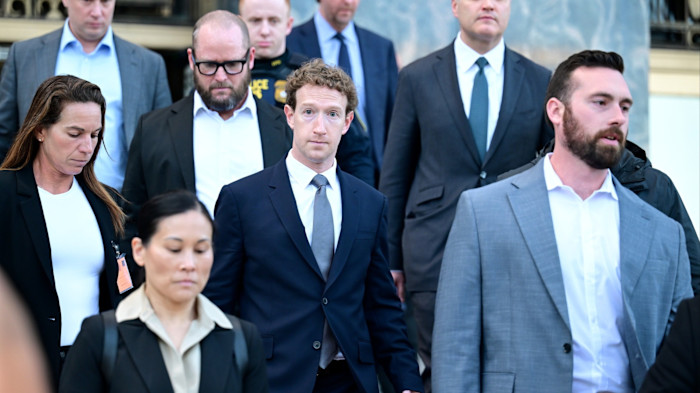
Meta boss Mark Zuckerberg was the most high-profile executive to testify in the Los Angeles case. He acknowledged that he overruled a ban on Instagram beauty filters — despite expert advice that they encourage body dysmorphia — because he was more concerned about “free expression”.
He also said Meta no longer sets internal targets for the time users spend on the platform. The jury was shown internal documents from 2013 and 2022 in which he and other employees explicitly stated that boosting time spent was a goal or milestone, including among teenage users.
Other emails show employees acknowledging the potential addictiveness of the social platform. “IG [Instagram] is a drug . . . We’re basically pushers,” one researcher wrote in an email. They added that Instagram chief Adam Mosseri “freaked out” when they had raised the topic of dopamine hits from social media usage.
Meta and Google had hoped that Section 230 of the US Communications Decency Act would protect them. The legal provision holds that social platforms are not liable for user-generated content.
However, the plaintiffs’ lawyers successfully argued that the case was not about content, but rather how the platforms are designed with addictive features such as “likes” that encourage social comparison, “infinite scroll” and push notifications.
Meta said that there were “significant free speech implications at stake”, adding that the cases “threaten to erode Section 230 and First Amendment protections that safeguard free expression online”.