Lina Khan on Big Tech, Affordability, and What New Yorkers Really Want
On a quiet day at the Museum of the Moving Image, New Yorkers lined up not to be spoken to, but to be heard. The gathering, hosted by newly-elected Mayor Zohran Mamdani, was intentionally simple: individual residents, face-to-face with members of the incoming administration, sharing what life in this city actually feels like right now, and what they need to see change.
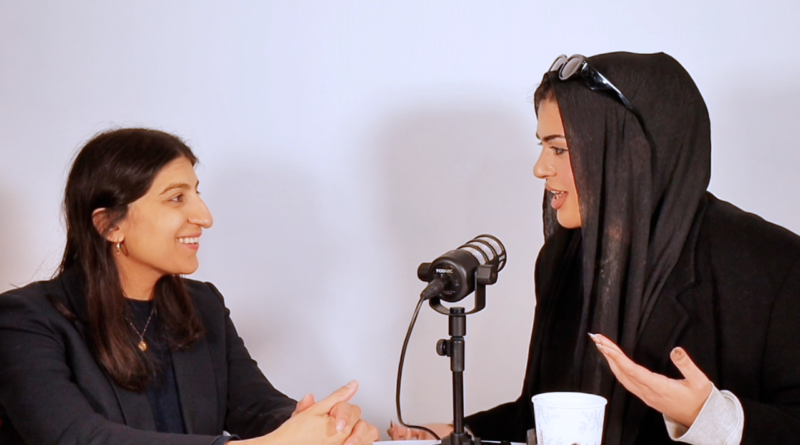
Muslim Girl founder Amani Al-Khatahtbeh sat down with Lina Khan, the nationally recognized antitrust leader and co-chair of Mamdani’s mayoral transition, whose role is to help shape an affordability-first agenda and ensure the new administration is grounded in public accountability rather than corporate influence.
In their conversation, Lina reflects on what she heard directly from New Yorkers: the fear of living one emergency away from falling behind, the frustration with unchecked corporate power, and the stakes of social media platforms that can silence entire communities overnight. At a moment when underrepresented voices are routinely sidelined, this exchange captures something rare: governance grounded in listening — and a city demanding to be taken seriously by those who claim to serve it.
MUSLIM GIRL: You’re co-chairing one of the most historic transition teams in New York’s history what have been some of the main takeaways that you got from the public about the changes that they’d like to see?
There’s a lot of excitement, but there’s also a lot of urgency. People really gravitated towards electing this mayor because he was talking about how the city has become too unaffordable, how it’s too hard to just get by, and for so many working families they feel like they’re just one illness or one disaster away from just falling behind entirely. That sense of economic precariousness is real and it’s something that defines so many people’s lives and it’s something he really wants to take seriously. People are gonna hold onto that and have expectations and be a little impatient about when the first public grocery store is going to come up and when their buses are going to get fast. So, I think there’s both a lot of excitement and a lot of interest in how do we stay involved. This was a a campaign that saw historic levels of engagement.
I was just talking to a couple of 16-year-olds that had been field organizers and they’re sophomores in high school. I’ve talked to, especially in the immigrant community, people who had never voted before. They’ve lived here for decades and this was the first time they’d actually voted in New York City elections. So, I think there’s been a degree of civic engagement that people want to know, okay, what do we now do next? How do we make sure, now that Zohran Mamdani is going to be mayor, how we can best support him in getting his agenda through? Those are some of the things that we’ve been hearing.
Obviously, with your background, you bring such a breath of insight and expertise into implementing these changes and making them possible. A lot of the background that you have is directly connected to the affordability agenda that we have for New York City and that we’ve seen across many other communities across the country. I’m curious if any of that has come up — ways that your background is going to apply to the changes that people want to see or the issues that are the top of mind for them, especially among young people. There’s been a lot of concerns about the growth of big tech and AI going unregulated and all of the ways that that’s going to be impacting people’s everyday lives.
Yeah, definitely. Especially among some of the young people who came and and spoke with me, they were asking, what are you going to do to hold corporations accountable? When we see the biggest of the big seeming to get away with abusing their power, and then if they’re stopped at all they seem to get off light, what’s up with that? How do we actually make sure we’re bringing real accountability and making sure that violating the law, that abusing people, is not just the part of doing business?
A huge reason why we’ve been able to mobilize so many young people behind Zohran to make it such a historic campaign has been through social media. We see a lot of issues going on with ownership over social media and the rules and the algorithms — is there anything that we can do to preserve the sanctity of social media or the open forum that it allows for unrepresented voices like ours to be heard?
It’s a really interesting question. Social media is an area where we have seen more and more consolidation, so there aren’t that many platforms where you can go. And, if one of those platforms decides that they don’t like your content, even if you’ve amassed millions of followers, they can just blacklist you, delist you, and overnight you’ve lost that entirely. Sometimes you don’t even have any recourse.
They work hand in hand with governments sometimes.
They work hand in hand and with governments sometimes. This is how people are making a living or getting the word out if they’re living somewhere where there’s real media repression. There can be a level of unaccountability that we see when you have just a handful or a very small number of platforms that are calling all the shots, so making sure we have markets where more companies can get in — where there is a bit more accountability as to what’s really going on so that you don’t have that degree of arbitrary power — is something that’s important.
Right now, we’re in this era that’s like an anti-woke, anti-DEI kind of reactionary moment in the sociopolitical climate. Clearly, in rooms like this, we see that this is kind of the push back against that. Coming from an underrepresented background and talking to members of the community that don’t always get to be heard or even get the chance to speak with members of their own government, why is it so important to make sure that underrepresented voices are being heard and contributing to these policy changes?
One of the biggest challenges that we have is that leaders in government all too often are primarily hearing from people who already have power — from very established corporate executives, from financial elite — and that can give them a very skewed understanding of what are the problems out there. If I take this step to help these constituents, what’s the feedback going to be? So, you really need to make sure you’re hearing from a much broader swath of people so you’re not just in a little bubble and you actually are connected to the very people you represent. That’s why these types of initiatives, where you’re directly opening your doors and literally anybody in New York City can come and sign up and talk directly to people who have policymaking authority, is so important: so that our officials are actually hearing from people who are living these challenges day to day.