Lebanon says four months needed for second phase of Hezbollah disarmament
Announcement comes as Hezbollah rejects calls to dismantle its arsenals north of the Litani River, describing pressure to do so as a ‘grave sin’.
Lebanon’s government has said that its military will need at least four months to complete the second phase of its plan to dismantle Hezbollah’s arsenals in the country’s south.
The announcement by Minister of Information Paul Morcos on Monday comes amid growing pressure from the United States and Israel to disarm Hezbollah, including near-daily Israeli attacks on the country.
Recommended Stories
list of 4 itemsend of list
The bombings come despite Israel agreeing to a US-brokered ceasefire in 2024 to end more than a year of cross-border hostilities with Hezbollah.
The conflict left the Lebanese armed group badly weakened, with much of its leadership killed.
Under the ceasefire deal, Lebanon’s government committed to dismantling Hezbollah’s arsenal and tasked its military with drawing up a plan to do so.
The military said last month that it had completed the first phase of the five stage plan, covering the area between the Litani River and the country’s southern border with Israel.
The second phase concerns the area between the Litani and the Awali rivers, about 40km (25 miles) south of the Lebanese capital, Beirut.
Morcos, the Lebanese information minister, told a news conference after a cabinet session that the government “took note of the army leadership’s presentation” on the second stage of the plan.
“There is a timeframe of four months, extendable depending on available capabilities, Israeli attacks and hindrances on the ground,” he said.
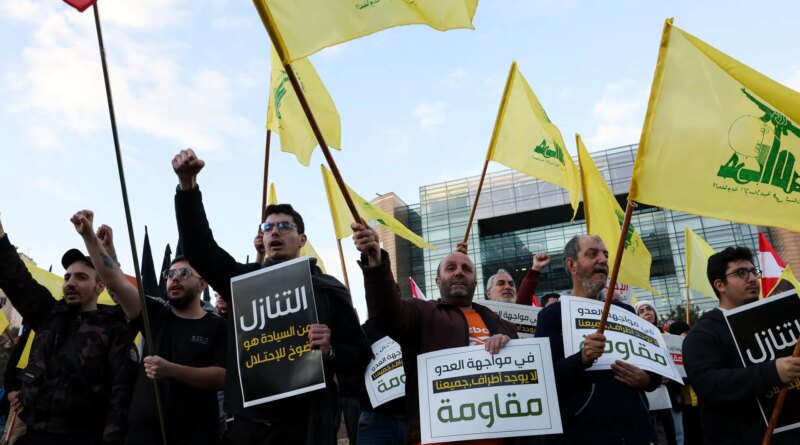
Hezbollah, which has dismissed efforts to disarm it as a US-Israeli plan, has rejected calls to surrender weapons north of the Litani River, saying it understands the ceasefire agreement to apply “exclusively south” of the waterway.
Before the cabinet session on Monday, Hezbollah chief Naim Qassem said that “what the Lebanese government is doing in focusing on disarmament is a grave sin, because this issue serves the goals of the Israeli aggression”.
“Stop all action to restrict weapons,” he added in a televised address, saying the government’s “successive concessions” were partly to blame for Israel’s persistent attacks.
Qassem’s comments came as the Israeli military launched new raids on southern Lebanon, striking a bus in the town of Hanin and a car in the town of Talloussah and killing at least two people.
The Israeli military confirmed the attack on Talloussah, saying it attacked a Hezbollah fighter who was trying to rebuild the group’s infrastructure in southern Lebanon.
Israel has previously criticised the Lebanese military’s progress on disarming Hezbollah as insufficient.
In addition to the regular strikes, it also continues to occupy five areas in Lebanese territory, blocking the reconstruction of destroyed border villages and preventing tens of thousands of displaced people from returning to their homes.
According to Lebanese authorities, Israeli forces have killed more than 370 people since the ceasefire, while the United Nations said Israel has launched more than 10,000 air and ground attacks in the year since it agreed to halt hostilities.
Lebanon filed a complaint with the UN last month about the repeated Israeli violations, urging the UN Security Council to push Israel to end its attacks and fully withdraw from the country.
The complaint said Israel violated Lebanon’s sovereignty at least 2,036 times in the last three months of 2025 alone.