Keir Starmer says he is frustrated at pace of change in New Year message
Unlock the Editor’s Digest for free
Roula Khalaf, Editor of the FT, selects her favourite stories in this weekly newsletter.
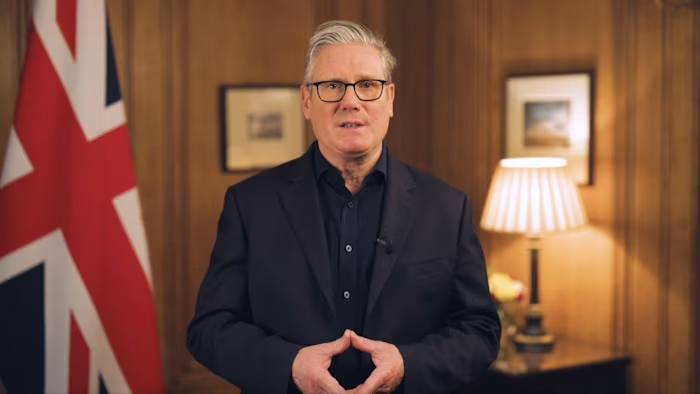
Sir Keir Starmer has admitted he is frustrated with the pace of change in Britain but would defeat the “division offered by others” as the prime minister issued a veiled attack on Nigel Farage’s Reform UK party to usher in the new year.
In his New Year’s address, Starmer said, “I share the frustration about the pace of change”, acknowledging that “for many, life is still harder than it should be”.
But he insisted “we are getting Britain back on track”, adding that “by staying the course, we will defeat the decline and division offered by others”.
In another sign that major political parties in Britain see Reform as their main competition in the year ahead, Liberal Democrat leader Ed Davey also outlined his own work “taking the fight to Nigel Farage — and winning”.
In his New Year’s address, Davey vowed to spend 2026 working to “stop [Donald] Trump’s America becoming Farage’s Britain and change our country for the better”.
Reform is soaring ahead in public opinion polls, on about 30 per cent. The Conservatives are on 18 per cent and both Labour and the Greens are on 16 per cent. Amid growing support, Farage’s rightwing populist party has also spent much of the year driving the national debate and influencing policy on immigrationcrime and welfare.
Labour and the Tories expect to face damaging election results at elections in Scotland, Wales and across local councils in May, while Reform is widely expected to make huge gains.
Conservative leader Kemi Badenoch used her address to acknowledge that “many in our country are finding it harder and harder to imagine life getting better”, while insisting “Britain is not destined for decline”.
“We are a great country full of talent, humour and strength. Things can change, but only if we have a plan for change,” she said, adding, in another apparent attack on Reform: “don’t let the politics of grievance tell you that we’re destined to stay the same”.
Farage, meanwhile, claimed his was the “party offering hope”, and offered “the last chance for Britain”.
“We may well be the last chance this country has to restore some proper values: of family, community and country,” he wrote in an op-ed for the Daily Mail ahead of his New Year’s address.
In his somewhat downbeat message, and amid speculation that there could be a leadership challenge following local elections in May 2026, Starmer said “the challenges we face were decades in the making, and renewal is not an overnight job”. But he insisted that “putting our country back on a stable footing will become our strength”.
In a signal of Starmer’s intention to focus his messaging on the cost of living in the new year, he pointed in particular to the government’s reduction in energy bills, announced at the autumn Budget, increases in the national minimum wage, and significant cuts to the cost of childcare.
Starmer said “in 2026, the choices we’ve made will mean more people will begin to feel positive change in your bills, your communities and your health service”, adding “even more people will feel once again a sense of hope, a belief that things can and will get better”.