Kavanaugh in dissent: Bad policy or not, Trump's tariffs were 'clearly lawful'
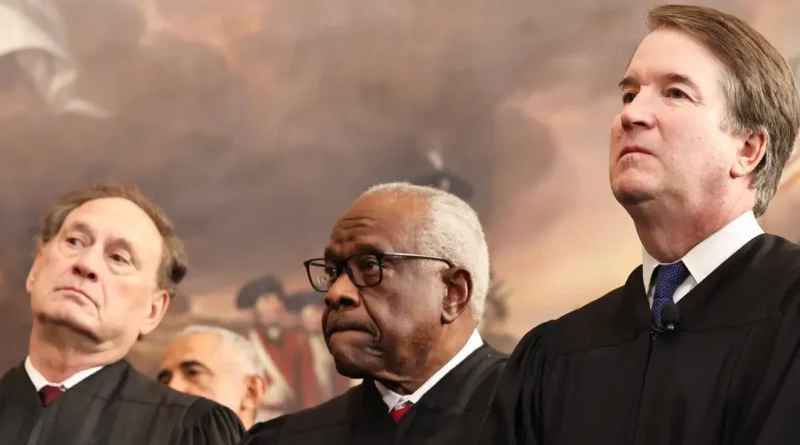
Three conservative justices of the US Supreme Court — Brett Kavanaugh, Clarence Thomas, and Samuel Alito — broke with the majority Friday, arguing that President Donald Trump had clear authority to impose his sweeping tariff policy.
The three dissenting justices said the president’s tariffs were perfectly legal under the 1970-era law Trump used that says presidents can “regulate” importation in the case of emergencies.
“The tariffs at issue here may or may not be wise policy,” Kavanaugh wrote. “But as a matter of text, history, and precedent, they are clearly lawful.”
The three justices also noted that the majority 6-3 decision is silent on how to return billions of dollars in tariffs that have already been collected.
That process “is likely to be a ‘mess,'” as was acknowledged at oral arguments, Kavanaugh wrote in a lengthy dissent that Thomas and Alito joined.
The two dissents differed with the majority on two fronts: Trump’s bypassing of Congress in imposing tariffs, and the legality of the president’s invocation of the International Emergency Economic Powers Act, or IEEPA.
In the dissent written by Kavanaugh, the justices argued that presidents have “commonly” imposed tariffs to regulate imports throughout American history.
Interpreting IEEPA to exclude tariffs “creates nonsensical textual and practical anomalies,” Kavanaugh wrote. As with quotas and embargoes, tariffs are a “traditional and common tool to regulate importation,” he said.
“It does not make much sense to think that IEEPA allows the President in a declared national emergency to, for example, shut off all or most imports from China, but not to impose even a $1 tariff on imports from China,” Kavanaugh wrote.
Reversing the tariffs may be an exercise in futility, Kavanaugh added. Even without IEPPA, “numerous other federal statutes authorize the president to impose tariffs and might justify most (if not all) of the tariffs at issue in this case,” Kavanaugh wrote.
In a separate dissent, Thomas tackled the constitutional question, arguing that the Constitution allows Congress to delegate tariff authority to the president.
“Historical practice and precedent confirm that Congress can delegate the power to impose duties on imports,” he said.