Iran could emerge from the war stronger and more dangerous
Unlock the White House Watch newsletter for free
Your guide to what Trump’s second term means for Washington, business and the world
Donald Trump has a perverse genius for driving American adversaries to discover new forms of leverage over the US. His trade war with China persuaded Beijing to exploit its domination of rare earths and critical minerals, forcing the US to reduce its tariffs.
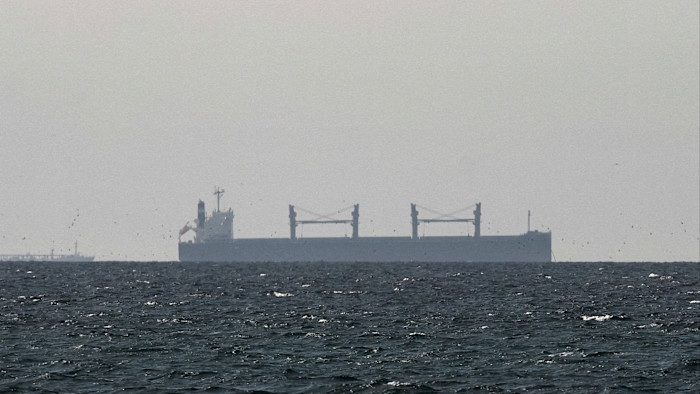
In a similar fashion, Iran has now finally carried through on a longstanding threat and in effect closed the Strait of Hormuz. Tehran, like Beijing, will have been delighted to discover how quickly it can inflict economic pain on the west.
Iran’s exploitation of its control over the strait means that the Islamic republic can now aspire to do far more than merely survive the US-Israeli assault. It has a real prospect of emerging from the war in a strengthened international position.
There is no doubt that Iran has suffered some savage blows. The country’s leader and many of his most senior advisers were killed on the first day of the conflict. Its ships, missile launchers and command centres have been struck repeatedly. The Iranian economy is in deep trouble and inflation is rampant.
But Iran is not merely fighting on. It has demonstrated that it can inflict real damage on its Gulf neighbours, such as Saudi Arabia and the UAE — placing big question marks over their long-term futures. Crucially, the Strait of Hormuz also provides the Islamic republic with a significant potential future revenue stream that could prove extremely valuable.
Iran has charged a reported $2mn each to allow ships safe passage through the strait. In normal times, about 140 ships a day make the journey. So a crude calculation suggests that, if Iran succeeds in setting up a toll booth on the strait, it could add billions of dollars a month to the state coffers.
Marco Rubio warned last week of the danger that Iran will seek to charge ships passing through the strait. The US secretary of state said that this would be illegal and unacceptable. He is right on both counts. The question is: what can the US do about it?
The discouraging answer is that there may be no military solution to this problem, short of regime change in Tehran. The US is currently dispatching ground troops to the region. But the seizure of Kharg Island, which Trump has floated in a recent interview with the FTwould not necessarily solve the strait problem.
In fact, western military planners are very pessimistic about the chances of reopening the strait by military means alone. The geography of the area and the technology available to Iran — including drones that can be operated many miles from the shoreline — mean that even naval escorts cannot guarantee the safety of commercial traffic.
That leaves a negotiated agreement with Iran as the most realistic option. But Iran is likely to demand a very high price. The Iranian regime has its eye on potentially game-changing future revenues — as well as a means of dispensing favours or punishments to countries all over the world.
Trump, the self-styled master negotiator, is floundering. He recently admitted that he finds the Iranian negotiating style very “strange”. The previous week the US president had suggested that “me and the ayatollah” might jointly manage the strait — which some have interpreted as a bid to split potential tolls with Tehran. But the Iranians seem uninterested.
Iran’s neighbours are horrified at the idea of Tehran emerging from the war with practical control over Gulf energy exports as well as a new stream of income. There is much speculation that the UAE and Saudi Arabia could join the conflict rather than accept that outcome. But those countries are also well aware that Iranian strikes on their oil installations or desalination plants could wreak long-term havoc on their economies and societies. They may ultimately decide that paying protection money to Iran is a better option than escalation.
Asian nations — which are the main markets for Gulf energy exports and are not in Iran’s line of fire — may also consider paying up. US allies, such as Japan and the EU, will know that paying off Iran would provoke American wrath. But European relations with the Trump administration are already so bad — and the president so erratic — that the Europeans might risk it, rather than accepting permanently higher energy prices or going back to buying Russian oil and gas.
Of course, there are still many “known unknowns”, to quote Donald Rumsfeld, an architect of the invasion of Iraq in 2003. The intervention of US land forces would be a dramatic escalation. It is possible that the social and economic pressures within Iran will eventually cause the regime to implode. But, so far, it looks remarkably resilient.
Some of those who detest Trump, Israel or Saudi Arabia will enjoy the sight of the Islamic republic turning the tables on its enemies. But that is very short-sighted. The Iranian regime has sponsored violent Islamist groups across the Middle East and massacred its own people in the streets — as well as providing vital support for Russia in its war on Ukraine. If it emerges from this war embittered and emboldened, that will be bad news for global security, the world economy — and the Iranian people themselves. Unfortunately, that currently looks like a plausible outcome.