Hunger is looming over Yemen, urgent action is needed
While international attention is focused on the conflict in Iran and its regional spillover, a devastating crisis in Yemen is drawing almost no notice. The Yemeni people are starving in silence. More than half the population, 18 million people, is projected to face worsening levels of food insecurity in early 2026. To grasp the scale of this crisis, imagine the entire population of the Netherlands going hungry.
In a survey conducted by the International Rescue Committee (IRC) last year, nearly every respondent identified food as their most urgent need, with almost 80 percent of families reporting severe hunger. These are not isolated hardships, but a widespread reality shaping daily survival across communities.
Our findings echo the most recent Integrated Food Security Phase Classification (IPC) projectionswhich warn that another one million people are currently at risk of slipping into life-threatening hunger, classified as IPC Phase 3+. IPC Phase 3 and above means families are routinely missing meals, relying on debt, and selling off what little they have left— jewellery, livestock, tools, even doors and cooking gas cylinders—to buy food. It also means children are more likely to become acutely malnourished, and illnesses that would normally be survivable become deadly.
Even more alarming, pockets of famine affecting more than 40,000 people are expected to emerge across four districts within the next two months, marking Yemen’s bleakest food security outlook since 2022. For many families, meals have become a daily ration of bread and water. For others, adults go without food so their children can eat.
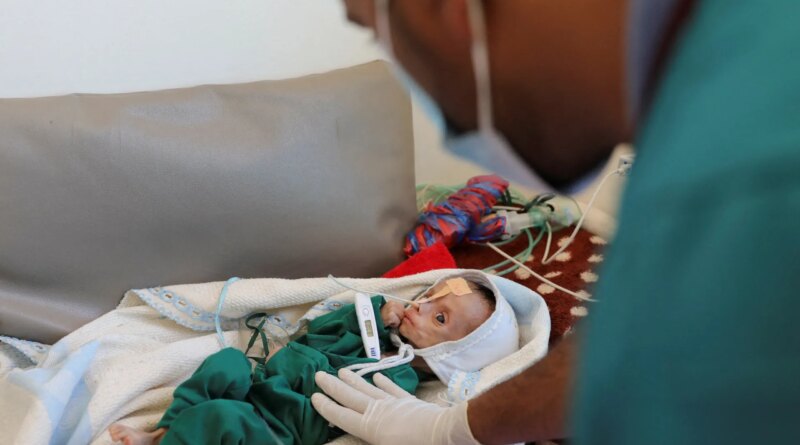
In health facilities, we see the consequences: children dangerously weakened by malnutrition, and nursing mothers, themselves undernourished, doing everything they can to sustain their babies.
In these conditions, hunger is not just the absence of food, it is the steady shutdown of the body. Parents are forced to stretch tiny amounts of flour into flatbread or water down lentils until they are mostly broth. These coping mechanisms are now commonplace in communities we visited where families survive on one meal per day because prices have soared and incomes have collapsed.
Yemen has historically produced only a small fraction of its own food, relying on imports for roughly 80–90 percent of staple grains. A structural vulnerability that has been made worse by years of conflict and economic contraction. The fighting has curtailed many people’s ability to work their lands or tend livestock, pushed rural families from fields into displacement, and severed supply chains for fuel, fertiliser and seeds.
Erratic rainfall and higher temperatures linked to climate change have further reduced agricultural productivity. Even in seasons when rain falls, families report that water scarcity and degraded soils make farming a gamble, and without security and market functionality, local production cannot come close to meeting needs.
Yemen has teetered on the precipice for way too long. But what makes this moment different – and more dangerous – is that the humanitarian funding that once acted as a fragile guardrail against catastrophe has been cut back severely. As accelerating economic collapse converges with shrinking aid, climate shocks, and renewed military escalations, millions are now being pushed closer to irreversible crisis.
By the end of 2025, the humanitarian response in Yemen was funded at less than 25 percent, marking the lowest funding level in a decade. Lifesaving nutrition assistance received only 10 percent of the funding required to help those in need.
At International Rescue Committee, we have seen first-hand that the consequences of aid cuts were both immediate and devastating. As critical nutrition services were halted, the amount of people reached fell by more than half. Therapeutic feeding centres and clinics closed their doors, and admissions to medical centres for severe acute malnutrition dropped. Not because fewer children needed support, but because there was simply nowhere left for them to receive treatment.
Yemen’s full-scale food security crisis is not inevitable, and the priority actions needed to change course are clear.
To help Yemeni families stand back on their own feet, first, donors must urgently restore and scale up integrated food security and nutrition funding in the worst affected areas. Second, funding must prioritise nutrition treatment for children and pregnant and breastfeeding women, including an uninterrupted supply of ready-to-use therapeutic food.
Yemen also needs support in building shared systems that track food availability and people’s nutrition so that potential hotspots can be spotted early, and humanitarian actors can respond quickly and in a coordinated way.
Immediate, targeted donor action – and investment in proven humanitarian solutions such as targeted cash assistance for families at risk of malnutrition – can prevent widespread loss of life this year and help communities begin to genuinely recover. It is not too late to avert an even greater tragedy.
The views expressed in this article are the author’s own and do not necessarily reflect Al Jazeera’s editorial stance.