How Wagner Moura Won Social Media Without Being On It
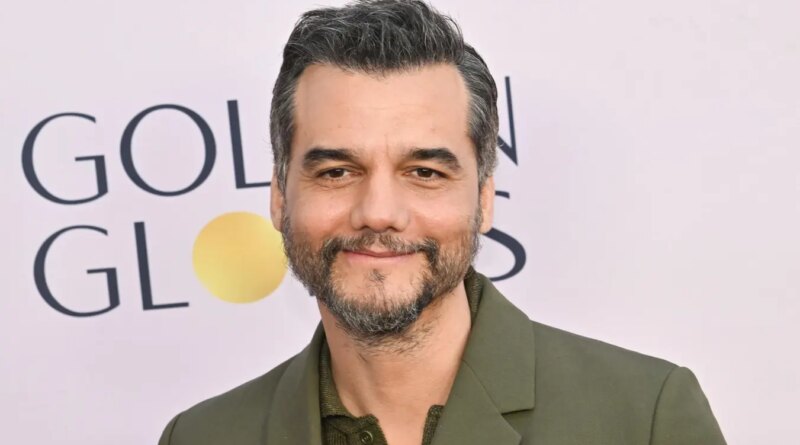
Wagner Moura at the Golden Globes’ First Time Nominees Luncheon held at the Maybourne Beverly Hills on Dec. 17, 2025, in Beverly Hills, California. (Photo by Earl Gibson III/Penske Media via Getty Images)
Penske Media via Getty Images
Social media was taken by storm this week by news that Brazilian actor Wagner Moura won the Golden Globes award for best actor in a drama movie for his performance in The Secret Agent. Images, videos and memes flooded platforms while Brazilians celebrated on the Golden Globes’ Instagram profile—but one person was missing amid all of the buzz: Moura himself, as the actor does not have a social media presence.
On more than one occasion, Moura expressed his lack of interest in having a profile on Instagram or any other platform. Similar to actors like Keanu Reeves, Brad Pitt and Sandra Bullock, he avoids producing content online: “I don’t miss having an online presence,” Moura said in an interview to Brazilian news portal Metropolis. “Social media is a place with a lot of rage going on, and self-preservation is good.”
Indeed, Moura did not have to deal with the negative effects of social media exposure many public figures are now trying to remediate, from hate speech to comparison and social isolation. But he has been able to benefit from all the online attention without maintaining his own corner on the internet, and cyberpsychology offers insight into why.
The Labor Behind Online Influence
How do celebrities maintain influence online in the first place? Despite many having a handle on Instagram or TikTok, they are often not producing the content themselves. A common practice is delegating creation to professional ghostwriters who replicate the celebrity’s unique style and voice.
Fan communities also sustain that influence. Core fans can mobilize millions of general fans, according to a study published at the Conference on Human Factors in Computing Systems last year. This is done through large-scale collective actions such as controlling comment sections, promoting specific hashtags and engaging in repetitive muted video plays to artificially boost visibility and rankings.
This fan-driven ecosystem also ensures that a celebrity remains a trending topic and a commercially viable figure, the researchers noted, as brands often value data performance as a decisive factor in collaborations.
Prestige Does It
Beyond traditional dynamics on social media, what appears to be the case is that figures whose presence is gaining online traction like Moura might not even need to have a social media profile after all. The current online frenzy around him does not depend on what he does or does not do on social networks, but on how the public psychologically processes his image through media channels.
That is because of the fundamental nature of parasocial involvement, which are mediated forms of social interactions between a media user and a media figure. This involvement also relates to the intensity with which users consume influencer content on social networks and how they interact with that content through commenting, liking and sharing.
Parasocial involvement in Moura’s case means that he does not necessarily have to interact directly with the public through social networks. Even without having an official profile anywhere, content posted about him — be it videos of the Golden Globes ceremony, interviews, clips of the movie he’s starring in — serves as the means through which the public consumes his image.
Prestige bias also plays a role, since individuals tend to prefer learning from and sharing content associated with prestigious figures, according to an article published by Takuro Niitsuma and colleagues in Nature last year.
Since content by prestigious people accounts for about half of the information flow in social networks, the mere association with such celebrities is enough to drive viral spread and sustain their digital authority, even when they are brokers rather than spreaders of that content.
Becoming A Lighthouse
Identification, belonging and loyalty are elements that also play out strongly in online reactions such as Moura being awarded at the Golden Globes.
That sense of identification means that whom fans choose to follow or support says something about themselves, their values (values was, interestingly, a point mentioned by Moura in his acceptance speech) and lifestyle. So celebrating Moura online is a means for fans to celebrate their own identities online, as well as what they believe in.
An online frenzy such as what is taking place now also creates a community of followers who share a sense of loyalty. That sense of belonging to a group that validates and values the actor caters to fundamental human needs, even when Moura himself is not directly involved in the conversation.
Interestingly, the absence of Moura on social networks might even strengthen the parasocial bond between him and the audience. That is because, with the lack of everyday exposure where the actor might share his everyday life or opinions, his image remains idealized.
Much like a radio DJ who is only heard but never seen and yet feels like an old friend, this idealization allows fans to project the qualities they admire the most onto the actor, without the interference of social media noise. Within that context, Moura becomes a relational surrogate that offers validation, comfort and a sense of shared identity. Whether this new momentum will be sustained in the long run remains to be seen.
As the Brazilian actor is lifted to new heights of online stardom, it also makes us reflect on what it truly means for celebrities to be present on social networks. They can be understood as lighthouses that do not need added bricks to be seen. Rather, their established position and prestige, as well as the power of the light they already own, allows others (such as professional writers and devoted fans) to navigate the complexities of digital seas and lets them spread their idol’s signal far beyond the tower itself.