Exclusive-Early indications show Israel tank fire hit UN Lebanon base, source says
By John Irish
PARIS, March 17 (Reuters) – Initial findings by an internal U.N. inquiry suggest Israeli tank fire hit a U.N. position in southern Lebanon on March 6, wounding Ghanaian peacekeepers, according to a Western military source, underscoring the growing risks as Israeli operations expand.
The U.N. peacekeeping mission known as UNIFIL is stationed in southern Lebanon to monitor hostilities along the demarcation line with Israel – an area that is at the heart of clashes between Israeli troops and Iran-backed Hezbollah fighters.
The mission, which will be halted at the end of 2026, has been sporadically caught in the crosshairs of both Israel and Hezbollah over the last couple of years, but with Israel considering a broader ground operation, the risks could be greater in the coming weeks.
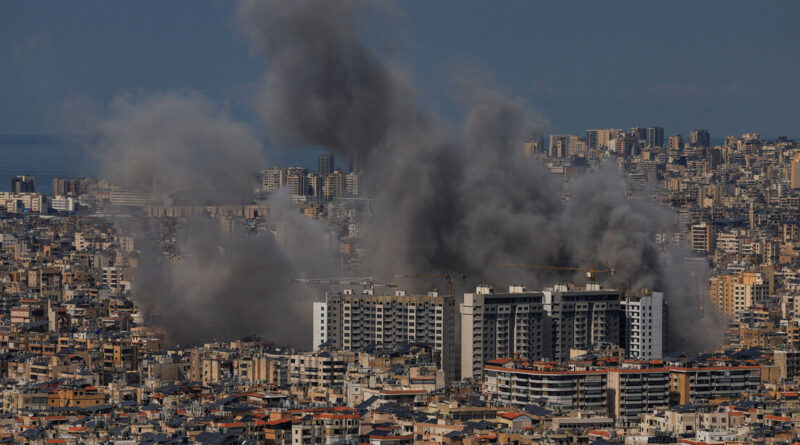
Lebanon was pulled into the war in the Middle East when Hezbollah fired rockets at Israel that ignited a new Israeli offensive against the group.
THREE SHELLS FIRED FROM ISRAELI TANK
According to the source, the preliminary conclusions led by UNIFIL’s Force Commander Reserve with support from explosive ordnance disposal specialists indicated that three strikes at the al-Qawzah base were direct hits from the main gun of an Israeli battle tank.
They were fired using 120-mm M339 HE-MP-T shells, the source said.
“Israeli involvement in the attack against UNIFIL is undeniable, given that these munitions are manufactured by Israel Military Industries (IMI),” the source said.
The findings of UNIFIL’s probe have not been previously reported. UNIFIL had said on March 6 that Ghanaian peacekeepers were wounded amid heavy firing and called the incident “unacceptable,” but did not say at the time who was responsible.
“That investigation is not yet complete. Once it is finalized, it will be shared with the parties, per usual practice,” said UNIFIL spokesperson Kandice Ardiel.
“Nonetheless, we reiterate the obligation of all actors to ensure the safety and security of peacekeepers and avoid harm to civilians. Any deliberate attack on peacekeepers is a grave violation of international humanitarian law and a violation of resolution 1701.”
Israel’s military did not immediately respond to a request for comment.IMI could not immediately be reached for comment. Elbit Systems, a major Israeli defense contractor that owns IMI, also did not immediately respond to a request for comment.
The Lebanese prime minister’s office did not immediately respond to a request for comment.
Highlighting the concerns surrounding U.N. peacekeepers, UNIFIL said on Sunday that another group of peacekeepers were likely fired upon earlier that day on three separate occasions in southern Lebanon, “likely by non-state armed groups.” It said no peacekeepers were injured.
UNIFIL ABILITY TO CARRY OUT MISSION TESTED
The M339 HE‑MP‑T round can be used in anti-personnel, anti-helicopter, anti-materiel, anti-armour and anti-structure roles.
The shots were fired within a five-minute window, indicating repeated fire rather than a single stray round, the source said, adding that the base’s location and coordinates were well known to all parties operating in the area, raising serious concerns over the safety of U.N. personnel.
Three Ghanaian soldiers were wounded, according to the Ghanaian army.
“This escalation, far from being isolated, is part of a worrying dynamic, severely testing UNIFIL’s ability to carry out its peacekeeping mission,” the source said.
The Israeli military occupies five posts within Lebanon and despite a ceasefire last year had frequently carried out airstrikes in the country’s south that it says are targeting Iran-backed militant group Hezbollah.
U.N. Security Council Resolution 1701, among other provisions, states that no armed forces should be operating in southern Lebanon except the U.N. peacekeepers and the Lebanese military.
Israel has repeatedly accused Hezbollah of trying to rearm and the Lebanese armed forces of failing to disarm the group.
(Additional reporting by Maya Gebeily, David Brunnstrom and Rami Ayyub; Editing by Daniel Wallis)