Donald Trump says regime change ‘the best thing that could happen’ in Iran
Unlock the White House Watch newsletter for free
Your guide to what Trump’s second term means for Washington, business and the world
Donald Trump has said regime change in Iran would be “the best thing that could happen”, as he dispatched a second aircraft carrier to the Middle East that could be used to strike the Islamic republic.
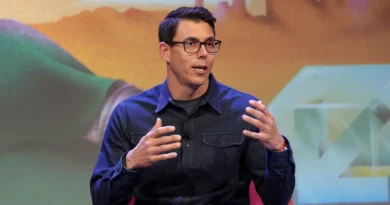
The US president spoke to reporters on Friday during a visit to troops at the Fort Bragg military base in North Carolina, in comments that signal a potential escalation of tensions with Iran.
When asked if he wanted “regime change” in Iran, he answered: “Seems like that would be the best thing that could happen. For 47 years, they’ve been talking and talking and talking . . . we’ve been going on for a long time.”
Trump’s comments were among the most pessimistic about the negotiations with Tehran in several weeks, which included his emphasis on the growing US military presence in the Middle East.
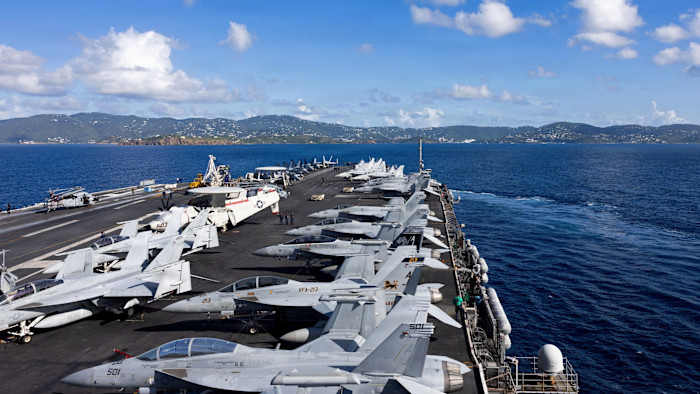
They came after he said earlier on Friday that he was dispatching a second aircraft carrier strike group, the USS Gerald R Ford, to the region from the Caribbean Sea.
“Tremendous power has arrived, and additional power, as you know, and other carriers going out shortly, so we’ll see it now, if we could get it settled for once.”
Trump also appeared to minimise the challenge of finding new leaders in Iran if Washington were to topple the regime. When asked who he would like to see “take over” the country, he replied: “There are people.”
In January, the president sent the USS Abraham Lincoln aircraft carrier group from the South China Sea to the Middle East as tensions with Iran rose over the regime’s brutal crackdown against pro-democracy protesters.
The US already has 10 ships in the region, including the Abraham Lincoln. The Gerald R Ford is the US’s largest and newest aircraft carrier and its strike group includes three destroyers, thousands of troops and dozens of aircraft.
Washington had two aircraft carrier strike groups positioned in the region when it struck three of Iran’s nuclear facilities last June.
The US has also shifted more missile defences, along with additional fighter jets, to the Middle East as part of its military build-up.
But the White House has also been holding negotiations with senior Iranian officials to try to find a resolution to their disputes over Tehran’s nuclear programme and its support for regional proxy groups in the Middle East.
The Gerald R Ford has been in the Caribbean region since last summer as Trump waged his military campaign against alleged drug boats off the coasts of Latin America and raided the Venezuelan capital of Caracas to capture its revolutionary socialist strongman leader Nicolás Maduro.
US Southern Command, which oversees American operations in Latin America and the Caribbean, said that its ability to act in the region would not be diminished as a result of the Gerald R Ford’s redeployment.
“While force posture evolves, our operational capability does not. Southcom forces remain fully ready to project power, defend themselves and protect US interests in the region,” it said, adding that it would “continue mission-focused operations to counter illicit activities and malign actors in the Western Hemisphere”.
US Central Command, which oversees American military operations in the Middle East, and the Pentagon, declined to comment. The White House also declined to comment.
Trump’s decision to send a second aircraft carrier to the Middle East came after he hosted Israeli Prime Minister Benjamin Netanyahu at the White House for talks on Iran this week.
Speaking before he flew back from Washington, Netanyahu said he had told Trump he was sceptical “regarding the nature of any agreement with Iran”, and added that, if a deal were reached, it must cover not only Iran’s nuclear programme but “also the ballistic missiles and the Iranian proxies”.