Democratic congressman Ro Khanna wants creators to have their own 'bill of rights'
Congress will dig into a new question this week: Do influencers need special labor protections?
An April report from the Interactive Advertising Bureau estimated there were about 1.5 million full-time digital creators in the US. It’s a growing job category, and Democratic Rep. Ro Khanna of California told Business Insider he wants to help make it feel more stable.
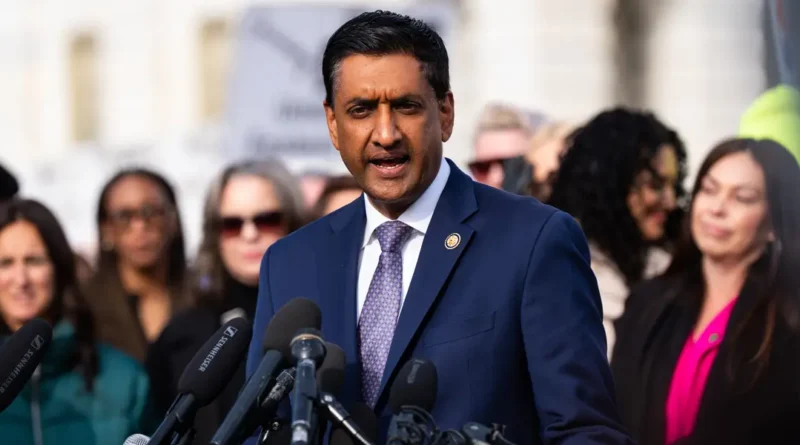
The progressive congressman is planning to introduce a House resolution on Thursday, the “Creator Bill of Rights,” which offers a series of policy recommendations meant to address some of the headaches that come with working as a TikTok or Instagram influencer.
“As we have such a large and growing segment of people who rely on content creation to be part of the middle class, we need to make sure that these jobs are good jobs,” Khanna said in an interview.
Khanna’s planned resolution — like all House resolutions — is aspirational and will function more as a conversation starter rather than changing existing law. He developed it in partnership with creators and industry advocates like Shira Lazar and Lisandra Vásquez.
The proposals range from AI to healthcare
Khanna is asking Congress to consider a new set of standards for digital platforms and creators.
Among the asks is a push for platforms to share clear and predictable revenue-sharing terms with their users. Some platforms, like YouTube, already excel in this area, but others have more opaque “creator funds” that result in unpredictable payouts.
The bill of rights advocates for platform transparency regarding artificial intelligence and other synthetic media that could impact creators’ livelihoods, a contentious issue in the creator industry.
Khanna is also proposing that customer service appeals run more smoothly for creators when their accounts are impacted by “platform actions,” a change that would likely be welcomed by influencers who sometimes find their accounts have been demonetized through automated systems. Such a policy could add costs for tech platforms.
And the legislator hopes to give creators access to portable benefits, such as health insurance and retirement plans, since they’re generally independent contractors who are not tied to a single employer.
Reshaping the creator workforce could run into obstacles
Khanna said that while some of the costs for his proposals, such as expanding healthcare coverage for creators, would be borne by the government through a “Medicare-for-all” style program, others would result in additional costs for tech platforms.
That could draw pushback from both the tech companies and some of his colleagues in Congress who oppose expanding government involvement in private companies and healthcare.
Platforms like YouTube, which have paid out billions of dollars to creators via ad-revenue sharing, may not take kindly to new government rules that dictate how they must approach paying talent.
Khanna said his colleagues “may not agree with every one of the ideas, but there will be an openness to engage to see if we can do something.”
Creators are taking on a bigger role in politics
Khanna’s resolution arrives at a time when just under half of Gen Z said their “ideal career” includes being a professional content creator, according to a July Morning Consult report.
The life of a digital creator might seem glamorous from the outside. You can get showered in freebies, invited on all-expenses-paid influencer trips, and often set your own work hours.
The job also has its downsides.
Creators are usually self-employed, meaning they don’t get workplace benefits such as subsidized health insurance. Platforms like TikTok or Instagram host content from millions of creators, meaning they’re not tuned for the income stability of any one user. A slight algorithm tweak can kill or grow a creator’s traffic and revenue. Creator income inequality has been on the rise as more dollars go to mega stars.
The challenges of working in the industry are sometimes lost on members of Congress who did not grow up with social media.
Khanna said there are too many people in Congress who think of TikTok as “that song and dance” app.
Some politicians have been paying closer attention to the category in recent months, though, particularly after digital influencers assumed a large role in campaigning in the 2024 elections.
In June, Reps. Yvette D. Clarke of New York and Beth Van Duyne of Texas announced plans to launch a Congressional Creators Caucus to “bring the voices and perspectives of online content creators into the public policy arena.”
Other organizations beyond Washington, such as the union SAG-AFTRA and the interest group The Creators Guild of America, have also been focused on finding new ways to bring new labor protections to digital creators.