'Decline and recline': Uber and Lyft drivers are rethinking what trips to accept to navigate soaring gas prices
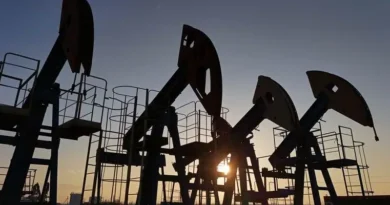
War in the Middle East is fuelling a surge in US gas prices — and drivers for services like Uber and Lyft are among the first to feel the pain.
Several ride-hailing drivers told Business Insider they’re prioritizing the most profitable trips offered by the Uber and Lyft apps to protect their earnings from rising gas prices, while dozens bemoaned the “insane” price spike on Reddit.
Oil prices blew past the $100-a-barrel mark on Monday, before falling back to around $90 after President Donald Trump suggested the war with Iran could soon come to a close.
The impact is already being felt at the pumps. The average price of a gallon of gasoline in the US has jumped by about $0.40 over the past week, according to AAA data.
Justin Fisher, who works as a ride-hailing driver for Uber in Houston, told Business Insider that he has changed which rides he accepts on the app in response to gas prices. He now focuses on taking the most profitable rides, even if they involve going to areas that he doesn’t believe are safe.
“The cost of gas is an unpleasant reality,” Fisher said.
Sergio Avedian, a former Wall Street trader who now drives for Uber and Lyft in Southern California, told Business Insider that the price of a gallon of gas at his two local gas stations in suburban Los Angeles had increased by $1 over the past week.
“It’s been extremely noticeable,” Avedian said.
Avedian said he expected Uber and Lyft drivers to adapt by accepting fewer short city trips, which often consume more gas due to frequent stopping and starting in traffic, and instead target longer trips and freeway rides that offer superior gas mileage.
The primary issue for drivers, he said, is that Uber and Lyft control fare prices, meaning drivers can’t raise their prices when their operating costs soar.
“We do not call the shots. The fares are not going up, and Uber and Lyft are not paying us more to make up this difference, which is immense,” Avedian said.
Uber and Lyft did not respond to inquiries about whether they are considering introducing a surcharge, as they did in 2022 after oil prices spiked following the Russian invasion of Ukraine.
EV drivers take a victory lap
One group of drivers appears to be reaping the benefits of the gas price volatility. Jaret, an Uber and Lyft driver in North Carolina, told Business Insider that the past weekend was one of the best he had had on Lyft.
The Tesla driver said owning an EV meant he didn’t have to worry about gas price increases.
“I don’t pay attention, because I haven’t been in a gas station in forever,” he said.
Jaret estimated that charging his Tesla Model Y at home means $1 out of every $14 he earns goes toward refuelling, compared to $1 in every $3 with a gas-powered car.
“I love having an EV,” he said. “I’m not happy that gas prices are going up, but I’m happy that it’s not affecting me.”
Temporary surcharge?
Uber and Lyft both introduced a temporary surcharge of $0.45 to $0.55 per ride to help cover the soaring cost of gas following Russia’s invasion of Ukraine in 2022.
Avedian and Jaret both said that doing the same again would help, but that it would only be a partial fix amid ballooning gas prices and shrinking payouts from rides.
“It isn’t really solving the problem,” said Jaret. “It’s a Band-Aid; it’s treating a symptom more than you’re treating a cause. But will it help? Of course.”
Avedian said he would advise rideshare drivers to take extra care when deciding which trips are profitable, and to decline those that aren’t.
“If a trip that is offered to you as a driver is not profitable, I tell them to ‘decline and recline.’ You have to decline bad offers, because this is not a public service,” he said.
Do you work for Uber, Lyft, or another ride-hailing service? Contact this reporter at abitter@businessinsider.com or via encrypted messaging app Signal at 808-854-4501. Use a personal email address, a nonwork WiFi network, and a nonwork device; here’s our guide to sharing information securely.