Christians in Lebanon's south fear expanding war will reach their towns
By Nazih Osseiran and Maya Gebeily
April 1 (Reuters) – Thousands of Christians still living in a cluster of towns along Lebanon’s southern border say they are trapped and terrified after an Israeli military advance nearby triggered the withdrawal of Lebanese troops from the area.
Residents of Rmeich, Ain Ebel and Debel had stayed in place despite Israel’s mass evacuation orders for southern Lebanon, hoping their hometowns would be spared despite the expanding conflict between Israel and Lebanese armed group Hezbollah.
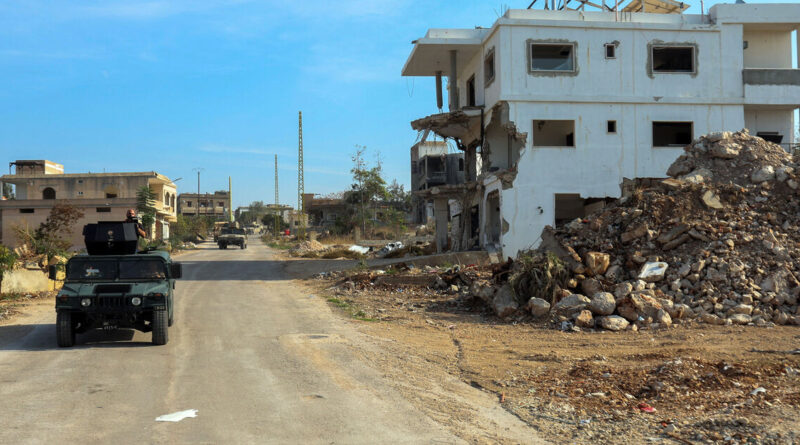
Lebanon’s army has pulled out of swathes of the border area, whose towns are predominantly Shi’ite Muslim, but had kept some soldiers stationed around the Christian towns to protect residents and escort them as they drove to nearby cities to get food, medicine and other basic goods.
But a new troop withdrawal on Tuesdayprompted panic among south Lebanon’s ancient Christian community, as they prepared to mark Easter Sunday, the culmination of the most important week in the Christian calendar.
ARMY GAVE US STRENGTH, PRIEST SAYS
“The Lebanese army was our guarantee and gave us strength,” Fadi Falfil, a priest in Debel, told Reuters from his hometown. The withdrawal “created a feeling of insecurity among the people”, he said.
Falfil said there was limited food and fuel for the town’s 1,650 residents, who were bracing themselves for the possibility that escalating hostilities might lead to mass shortages of water, electricity and medicine.
“What’s happening to us is that we’re caught between a rock and a hard place,” he said, with missiles and rockets flying to and fro above the town.
“God willing, the war will end by Easter – a resurrection for Lebanon – and the situation in Lebanon will improve, and there will be true peace.”
U.S. ENVOY RECEIVED ‘PROMISE’ TO SPARE CHRISTIAN VILLAGES
Israel’s strikes have killed nearly 1,300 people in Lebanon and its evacuation orders have displaced more than 1 million people. Israel says it intends to control a “security zone” as deep as 30 km (20 miles) into Lebanese territory.
Lebanon was pulled into the war when Hezbollah fired rockets at Israel in solidarity with Tehran, two days after Iran was attacked by Israel and the United States on February 28. The Hezbollah attack prompted the new Israeli ground and air offensive.
In a statement on Wednesday, the Lebanese army said Israel’s military advances in the south had “encircled and isolated” its troops, which had redeployed elsewhere as a result. It did not say how many troops had been redeployed and how far they had moved.
The Israeli military did not immediately respond to questions from Reuters on whether they had offered specific guarantees to Rmeich, Debel and Ain Ebel after the Lebanese army’s withdrawal.
U.S. ambassador to Lebanon Michel Issa said last month that the United States had asked Israel to spare Christian border villages from bombing and had “received a promise to that effect, on the condition that Hezbollah members do not infiltrate these villages”.
At the time, an Israeli military official said the military had not given evacuation orders to Christian towns and that most Christian communities “were able to keep away Hezbollah operatives from entering the villages, and we act accordingly, so we don’t shoot at them”.
Najib Amil, a priest in the town of Rmeich, said the Israeli military had contacted some townspeople to urge them not to leave.
“But you know, you stay on edge,” Amil told Reuters, saying residents were starting to feel the hostilities inch closer.
VILLAGERS VOW TO REMAIN
Israeli interceptions of drones fired by Hezbollah have shattered the windows of at least five houses in Rmeich. On Wednesday morning, shrapnel from another interception had landed in the heart of town, Amil said.
He said Israeli troops had demolished four homes close to the border. Israeli Defense Minister Israel Katz on Tuesday said the military would destroy all homes on the Lebanese side of the frontier.
Townspeople were taking precautions in the lead-up to EasterSunday, Amil said.
“For example, instead of holding mass at night, we hold it during the day. We make it a little earlier so that people don’t go out in the dark and so nothing happens,” Amil told Reuters.
The town, home to 6,500 people, had prepared some provisions but had no medical facility, so any injuries could be fatal.
Ayoub Khreish, mayor of nearby Ain Ebel, said the village had stocked supplies that would last them two months, including fuel, food, and medicine. He said supply lines remained open to the village, which lies about 5 km (3 miles) from the border.
Residents are determined to stay.
“If you remove a tree from the soil, would it survive? If you remove us from our lands, we would want to die or return to them,” Khreish told Reuters.
“We are attached to the soil, to our homes and our church – to everything in this village. This is why we decided not to leave.”
(Reporting by Nazih Osseiran and Maya Gebeily; Editing by Alison Williams)