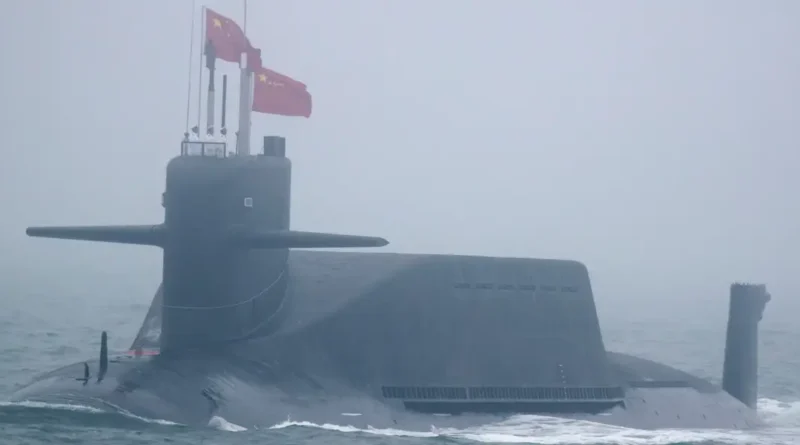
China is moving toward all-nuclear submarine construction in a major strategic shift, US Navy intel chief says
China’s navy is moving toward all-nuclear submarine construction, the US Navy’s intelligence lead said, describing a long-term shift in how Beijing builds its undersea force as it expands its capacity to produce more vessels in the coming decades.
China operates one of the largest submarine forces in the world, but it’s mostly composed of diesel-electric vessels. Expanding its nuclear fleet would allow Chinese submarines to stay submerged longer and operate farther from home without surfacing, potentially complicating US naval operations in the Pacific and beyond.
Of more than 60 submarines in service, the People’s Liberation Army Navy has at least 14 nuclear-powered boats — including attack, ballistic missile, and guided missile submarines — with the rest made up of diesel-electric vessels. US projections indicate that while diesel submarines will remain part of the fleet, a growing share of new construction is expected to be nuclear-powered.
Describing it as a force in transition, Rear Adm. Mike Brookes, intelligence director of the Navy, said that the PLAN “is executing a significant strategic shift from diesel-electric to all-nuclear construction, representing a fundamental departure from historical construction patterns.”
In his written testimony to the US-China Economic and Security Review Commission this week, Brookes said expanded investments at three shipyards, major construction efforts, and infrastructure upgrades have increased China’s nuclear submarine production rate from less than one boat a year “to significantly higher rates.”
China’s shipbuilding empire is enabling it to build more vessels at a faster rate. Kevin Frayer/Getty Images
These investments date back more than a decade and will allow China to sustain submarine expansion into the 2030s and beyond, he added. By 2027, the PLAN is expected to field roughly 70 submarines, even as it retires older Chinese- and Russian-built vessels. By 2035, the fleet could grow to around 80 boats, with about half being nuclear-powered.
That change would represent a marked shift from today’s diesel-heavy force.
A notable element of the transition is the Type 041 Zhou-class nuclear-powered attack submarine, a smaller, lower-power design similar in size to a diesel-electric sub.
Unlike the traditional large nuclear-powered submarines built for long-range missions, the Zhou-class could offer greater endurance than diesel-electric vessels while operating at lower cost and complexity than the full-size nuclear attack or missile submarines.
The first Zhou-class submarine previously sank pier-side at a Wuchang shipyard near Wuhan as it prepared for sea trials between May and June 2024, an incident the US Department of Defense report on China’s military last year suggested could’ve been due to corruption in defense procurement leading to capability shortfalls.
China is expected to launch two new types of nuclear-powered submarinesthe Type 095 guided-missile submarines and Type 096 ballistic missile submarines, later this decade and into the 2030s.
“These submarines will incorporate substantial advancements in nuclear reactor design, sensor performance, weapons integration, and noise quieting technologies,” Brookes said. The Type 096, equipped with the JL-4 submarine-launched ballistic missiles, “will be able to target large portions of the US from protected waters,” those close to China, he said.
China’s undersea networks provide better surveillance of adversary submarine movements. US Navy photo by Lt. James Caliva
The PLAN is also improving some of its modern diesel-electric submarines, like its Yuan-class vessels, with technology to increase endurance, Brookes said. Such improvements suggest diesel submarines will continue to play a role in Chinese naval operations even as nuclear construction expands.
US officials and top China watchers have previously said Beijing has lagged behind on nuclear propulsion technologies, primarily because of training, technical issues, and equipment quality. Pentagon reports have said China’s ongoing developments in propulsion technology have improved in recent years.
China’s investments in its submarine forces are part of its blue-water goals to grow its naval reach past the First Island Chain and beyond the larger Indo-Pacific region, potentially into the Arctic and Atlantic Ocean.
US officials have said China’s growing submarine force as well as undersea and seabed sensors and capabilities could challenge the US and its allies and partners, particularly in areas in and around the First Island Chain.
In Brookes’ testimony, he said China’s undersea surveillance network includes platforms, satellite-linked buoys, uncrewed undersea vehicles, and underwater sonar arrays that gather data to consistently monitor potential submarine movements in critical waterways like the South China Sea. Systems like these could help China track foreign submarines while protecting its own expanding nuclear fleet.
UUVs, which Beijing’s been working on for decades, are major platforms that could be used in strike or surveillance capacities, and China’s concepts for these systems focus on having modular payload designs for various weapons and sensors.