A Small Election with Historic Consequences
What should Muslims voting in the Gorton and Denton By-Election consider?
In the name of Allah, may His peace and blessings be upon His final Messenger, Muhammad, his family, and his companions.
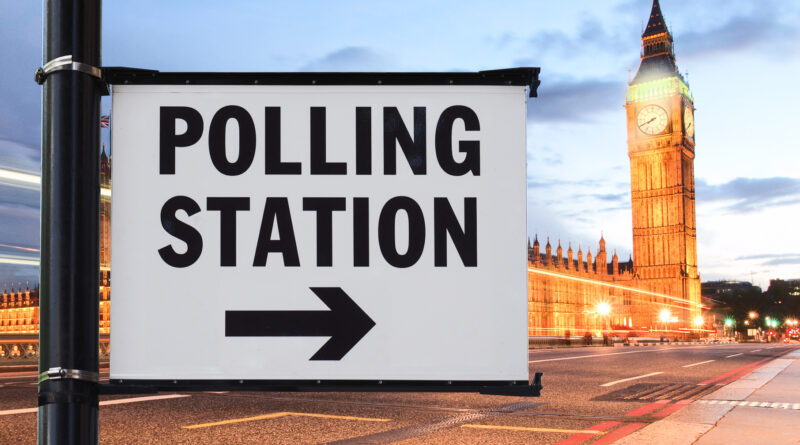
The UK could be about to witness a transformative moment in its political history. What this change could look like comes down to the result of the upcoming by-election for the Greater Manchester seat of Gorton and Denton, which will take place on Thursday 26 February inshaAllah.
If the latest polling is to be believed, the current contest is a two-horse race. A voting-intentions poll in the constituency has said as much, ranking the top three competing parties as follows:
- First place: the Green Party (20%)
- Second place: Reform UK (17%)
- Third place: the Labour Party (15%)
The numbers are there, this election is a straight battle between the Green Party and Reform UK, with the governing Labour Party falling behind into third place.[1] The result of this election is important, not only for the Muslims living in the constituency – who, according to the last census make up around 29% of the local community – but also for the entire UK, and of course, the Ummah abroad, not least in Palestine.
What is clear, is that the large number of Muslim voters in Gorton and Denton have a unique opportunity to make a powerful impact by taking part in this election. Let me explain why.
First things first, generally speaking, as a member of The Muslim Vote initiative, I strongly encourage Muslims up and down the UK to take part in the political process. As a general rule, the minimum we should do is register to vote. By doing this, we become a person who political parties need to win over if they want to stay in power. It makes politicians more responsive to our views, and means they have to support policies that benefit our communities if they want to keep us on side.
We should also remember that Muslims are not supposed to act on their whims and desires, but rather on the basis of our Islamic principles. We need to think not only about which candidates will meet our local concerns like protecting the NHS, making housing and living more affordable, and improving community safety, but also look at the bigger picture. We have to ask ourselves, how the way we vote can impact Muslims globally. After all, we have a moral responsibility to these brothers and sisters as well.
The point here is that even though we may not always feel comfortable with some of the social values that British political parties and candidates align with, these issues can be overlooked in pursuit of more urgent matters, for instance, protecting our brothers and sisters facing genocide in Gaza, or at the very least reducing harm against them.
We should remember, for example, that Allah allowed the Muslim to utter words of kufr if his life is under a real threat, saying “Whosoever disbelieves in Allah after believing—except he who is forced while his heart remains in his belief—but he who [willingly] opens his chest for disbelief, shall receive the Anger of Allah and for such awaits a mighty punishment.” (16:106)
We should keep this in mind, because as voters, we can demand that our elected officials take action, whether on assisting our brothers and sisters in Palestine, countering Islamophobia at home, or making our local areas better places to be for everyone. Meanwhile, these politicians have an incentive to make good on these demands, especially if they want to win again. By the same token, if they fail to do so, they can be confident that we will make a statement by voting them out the next time and throwing our support behind a different party or candidate.
We must no longer vote for people just because they represent the Labour Party or just because they have a Muslim name. We must also continue to uphold our own moral red lines like opposing those who supported the Zionists as they committed genocide against our brothers and sisters.
Against this backdrop, the Muslim voters in Gorton and Denton are front and centre in this national conversation. It is as if Allah has favoured these brothers and sisters with the ability to make a decision that could help decide the whole country’s long-term future.
Since this election is not a general election – which would need stronger coordination among Muslims at the national level – it is not my place to tell the community in Gorton and Denton how to vote. This decision belongs first and foremost with the constituency’s Muslims, in consultation with Muslim community leaders in the UK.
However, I would like to offer some of my own observations and thoughts, and invite local brothers and sisters to consider these as they think about where to put their cross on the ballot this Thursday.
What is clear in Gorton and Denton is that the frontrunner and second party in the polls offer two very different visions for Muslims in Britain. The Green candidate, Hannah Spencer, a local plumber, has condemned the ongoing genocide in Gaza, offered solidarity to British Muslims and denounced racism and Islamophobia. Reform UK’s candidate Matthew Goodwin on the other hand, is a presenter on GB News, a channel whose content the Centre for Media Monitoring has said: “risks inciting violence and discrimination against Muslim communities”,[2] and who has himself called for a halt to Muslim migration to Britain, and accused British Muslims of having “views that are fundamentally opposed to British values and ways of life”.[3]
You might ask where the Labour Party is in all this? On the national stage, Labour is being squeezed on all sides, losing its traditional voters to Reform UK on the right, and ‘progressive’ parties such as the Greens on the left.
The outcome of the Gorton and Denton by-election is likely to impact which parts of its rapidly disintegrating voter coalition that the current Labour Government will try and hold on to. The party has already tried shifting to the right. We saw this in Prime Minister Keir Starmer’s infamous “island of strangers” speech, and his targeting of the Bangladeshi community in his general election campaign. But, left-wing, ‘progressive’ and Muslim campaigners have also successfully won concessions, such as the Government’s recognition of Palestine last September amid the ongoing genocide in Gaza.
A Green victory in Gorton and Denton could force Labour to take more positive steps that match with the interests and values of people of conscience nationwide, including British Muslims, and disempower the growing far right. It is clear the Government are already panicking about the Green threat, with a once senior figure in the party already admitting that “A Reform win would be terrible. But a Green win would be existential.”[4] Isn’t this enough proof that this by-election is a fantastic opportunity to put more pressure on Labour to drastically change its course?
It’s also worth remembering that Labour has historically enjoyed overwhelming Muslim support nationwide. Some local Muslim voters may still prefer Labour to the Greens too. But this attitude raises important questions. Do Labour really deserve Muslim support?
After all, in recent years they have:
- armed and enabled the genocide of the people of Gaza,
- contributed to the hostile environment against British Muslims, migrants, refugees and people of colour,
- and failed to address the cost-of-living crisis and the struggling NHS.
Would voting for them now not just be rewarding this appalling record?
If Muslim voters still back Labour in these circumstances, why should we really expect anything different from them? After all, if you do what you’ve always done, you get what you’ve always got.
What other arguments for voting Labour are really left? Some may say voting Green would be splitting the anti-Reform vote in Gorton and Denton, that it would increase the chances of the far right taking the seat in the area, which has long been a Labour stronghold.
And yet, it wouldn’t be the first time that a ‘progressive’ challenger has triumphed over Reform in a traditionally Labour dominated locality. Last October, we saw the left-leaning Welsh nationalists Plaid Cymru see off Reform at the Caerphilly by-election to the Welsh Parliament or Senedd. Plaid pushed Reform into second place, and took the seat from Labour who had held the area for 100 years.
In Gorton and Denton, the local polls are telling a similar story. With the Greens firmly in front, it could be fairly argued that holding on to support for Labour increases the chances of another Reform MP entering the UK Parliament. Couldn’t it?
I would like to invite my beloved brothers and sisters in Gorton and Denton to ask Allah for guidance and support, to reflect on my observations and the questions they raise, and to share and discuss them with family, friends, neighbours and the wider community. The choice you make could have a much larger impact for years to come.
Let me conclude my thoughts with a reminder from Allah, as He says in His Qur’an,
“And cooperate in righteousness and piety, but do not cooperate in sin and aggression.”
(5:2)
Source: Islam21c
Notes:
[1] Could Labour lose Gorton and Denton? New polling puts Greens ahead for first time
[2] GB News: A Snapshot of Anti-Muslim Hate
[3] Reform candidate Matthew Goodwin’s horror views – Muslim ‘ban’ to deportation horror
[4] A Green victory would change politics forever