Qatar PM meets Pezeshkian, Rezaee as Doha seeks US-Iran mediation
Qatar‘s top diplomat discussed the war and the Strait of Hormuz with senior Iranian officials in Tehran on Thursday, as the Islamic Republic ups its engagement with regional mediators seeking to bring back talks with the United States.
One Iranian commander told Qatari Prime Minister and Foreign Minister Sheikh Mohammed al-Thani that Iran does not trust the US, while Qatar sought to highlight the importance of dialogue and freedom of navigation in Hormuz.
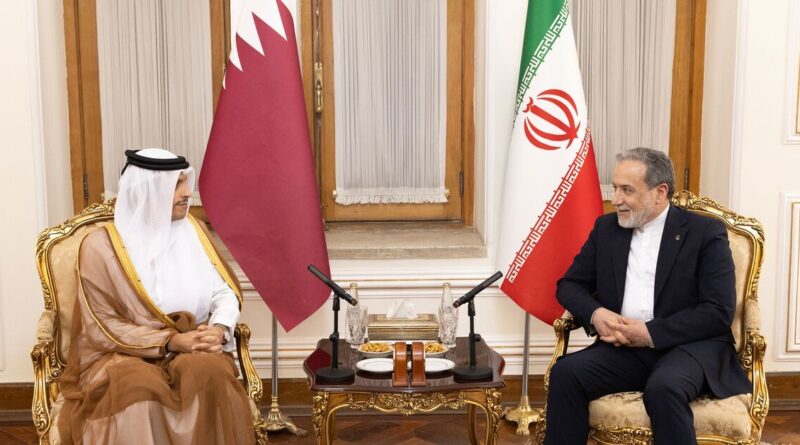
What happened: Sheikh Mohammed’s first meeting in Tehran was with his Iranian counterpart, Abbas Araghchi. The two discussed regional developments as well as plans for a temporary joint shipping corridor through the Strait of Hormuz and a joint project to clear the waterway of mines. The Qatari official “stressed the necessity of respecting the sovereignty of neighboring countries and freedom of navigation, emphasizing the importance of continuing diplomatic efforts to de-escalate tensions,” Qatar’s Foreign Ministry said in a statement.
Foreign Minister Abbas Araghchi has met with his Qatari counterpart, Sheikh Mohammed bin Abdulrahman Al Thani.https://t.co/RuOVoNy2cH pic.twitter.com/75YuMTnYU1
— IRNA News Agency ☫ (@IrnaEnglish) August 27, 2026
Oman and Iran issued a joint statement on Tuesday after Omani Foreign Minister Badr Albusaidi’s visit to Tehran, saying they discussed “the establishment of a joint temporary navigational corridor through the Strait of Hormuz and an agreement to implement a joint project to clear the Strait of mines.”
Sheikh Mohammed next met Iranian President Masoud Pezeshkian. The state-run Press TV reported Pezeshkian as saying that Iran will “not succumb to pressure and bullying” and that “Iran and Qatar can resume their cooperation by moving past bitter incidents.”
It was not immediately clear which incidents Pezeshkian was referring to, but Iran has carried out several strikes on US military and civilian targets in Qatar during the war, most recently against the Al Udeid Air Base last month.
Sheikh Mohammed then met Iranian parliamentary speaker Mohammed Bagher Ghalibaf. The Qatari Foreign Ministry said that Sheikh Mohammed “stressed the necessity of resuming the diplomatic process” during the talks with Ghalibaf, who also serves as a chief negotiator for Iran.
The official Islamic Republic News Agency reported that Ghalibaf said the US must return to the June memorandum of understanding and dismissed the Trump administration’s economic campaign against Iran.
Pakistan mediated the June MoU between the US and Iran, which ended the war and stipulated a 60-day period of nuclear talks, but the deal fell apart the following month over disagreements on navigation through the Strait of Hormuz. Qatar helped mediate the so-called Islamabad MoU.
Thani’s final meeting was with the secretary of Iran’s Supreme National Security Council, Gen. Mohsen Rezaee. During the meeting, Rezaee said, “we do not trust America and that they have repeatedly betrayed diplomacy and negotiations,” adding that Iran will “bring a calamity” to US economic and military interests if Washington starts a new war.
The Qatari Foreign Ministry said the two discussed de-escalation and regional security.
Thani’s visit was the third this week by a senior official from a mediating country. In addition to the Omani foreign minister, Pakistani army chief of staff Field Marshal Asim Munir was in Iran on Monday for talks with Pezeshkian.
Why it matters: Arash Azizi, a lecturer at Yale University, said that hosting Sheikh Mohammed and the other officials “certainly signals a desire on the part of Iran to seek dialogue with the US,” adding that there has been a “shift” away from escalation within the Iranian establishment in recent days.
“Iran knows it is well poised for an end to the conflict on relatively favorable terms. The establishment knows the MoU they got in June was a pretty good deal,” Azizi told Al-Monitor. “They were not sure if the US would hold its side of the bargain. It makes sense they would find their way back to the table.”
The June agreement contained a number of terms widely seen as favorable to Tehran, including an end to the US naval blockade, a $300 billion reconstruction plan and a call for dialogue with Oman on the future management of Hormuz. The US ended up resuming heavy strikes on Iran in late July after Iranian attacks on ships in the Gulf.
Azizi said that renewed escalation was the “likelier route” until a few days ago. Iran threatened 45 ships with fines and confiscation earlier this week, accusing them of not following its rules for traversing Hormuz, and carried out several strikes on vessels in the Gulf earlier this month. The Trump administration has been focusing on adding economic pressure on Iran.
Decision-making in Iran is being complicated by the status of Supreme Leader Mojtaba Khamenei and divisions within the establishment, according to Azizi.
“The supreme leader, if he’s alive and well, meets nobody and is nowhere to be seen. Internal disagreements have no easy way to resolve themselves,” he said. Khamenei has not been seen in public since the start of the war and was reportedly injured in the late February Israeli strike that killed his father and predecessor, Ayatollah Ali Khamenei.
Azizi noted disagreements between “ultra hard-liners” within the establishment and the larger, “more pragmatic” group of figures who believe Iran needs to make a deal.
Know more: The impasse over Hormuz is especially troublesome for Qatar, whose liquefied natural gas exports have been severely curtailed by the disruptions there. Reuters reported on Tuesday that Qatari LNG exports have fallen 96% since the war began, resulting in $24 billion in losses.
AL-MONITOR All-Access gives you unlimited access to all our journalism, the full Daily Briefing, exclusive interviews, premium newsletters, and live events — for less than $2/week.