Syria foreign minister sees Israel security talks resuming despite no trust
By Tom Perry and Feras Dalatey
DAMASCUS, Aug 23 (Reuters) – Syria expects negotiations to resume soon with Israel over a security deal it hopes will lead to Israel’s withdrawal from Syrian land, a top Syrian minister said, urging Israel to seize a “historic opportunity” as the door for diplomacy is open.
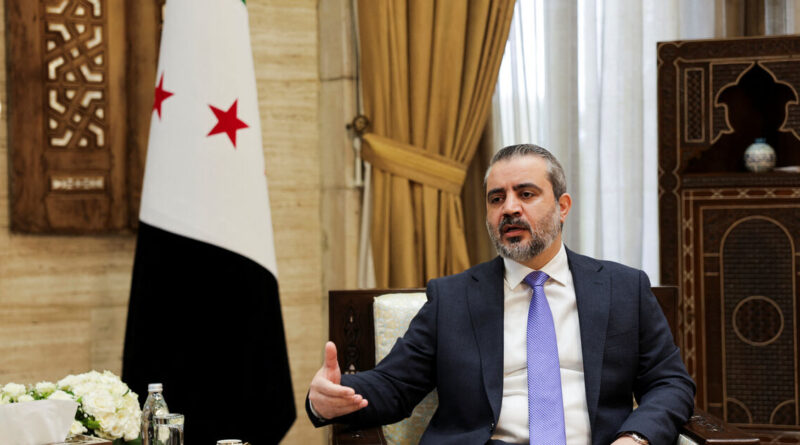
In a Reuters interview in Damascus on Saturday, days after Israel bombed a Syrian airbase, Foreign Minister Asaad al-Shaibani also stressed that Damascus’ priority is to halt Israeli attacks, saying confidence-building steps were needed in this direction.
Washington has been seeking to forge a security deal between Israel and the governmentof Syrian President Ahmed al-Sharaa, a new U.S. ally in the Middle East, for over a year. But it has proven elusive as Israel has sent troops into Syrian territory and attacked government assets, citing threats to its security.
Shaibani said negotiations over the security agreement had been frozen since the start of the Iran war, but he expected them to restart. Contact between Syria and Israel was cut after the airbase strike, he said.
“We believe there should be contact, especially with a party that constantly threatens the security of Syria. But if this contact doesn’t bring results, then we don’t need it,” Shaibani said. “We do not trust Israel currently.”
The Israeli prime minister’s office did not respond to a request for comment.
U.S. PRESSURE
Sharaa has said Syria poses no threat to other countries, with Damascus focused on rebuilding from 14 years of war.
Israeli officials have talked about a range of potential dangers in Syria since Bashar al-Assad was toppled, with some describing the new rulers as barely disguised jihadists last year, even as Sharaa forged close U.S. ties.
In the days after Assad fell in 2024, Israel seized territory in southwest Syria, citing the need to safeguard its citizens against attack, and bombed scores of Syrian military sites.
“Israel has tried to maintain its security through brute force and it hasn’t succeeded” anywhere, Shaibani said. “I believe negotiations will resume soon.”
No date has been set.
“The U.S. is trying continuously to put pressure on Israel to return to the dialogue table,” he added.
Asked how optimistic he was, Shaibani said: “It’s very hard to bet on Israel.” But Syria had “very great hope” of building stable relationships with its neighbours.
“Syria is extending its hand for understandings, for peace, for diplomacy” and regional stability.
SYRIA DID NOT SEE ISRAELI WILL TO MAKE DEAL
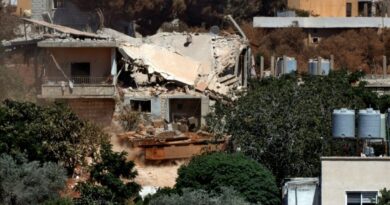
Tensions over Syria were brought into focus on Tuesday when Israel bombed the Abu al-Duhur airbase, saying Damascus was about to allow Turkish forces to deploy there. Syria and Turkey denied the claim.
Shaibani said Syria respected Israel’s security concerns but that Israel must respect those of Syria, including Israel’s use of its airspace, Israeli raids and arrests in the south.
He said that around the beginning of the year, the sides had “agreed on paper to almost everything” regarding a security deal that would require Israel to stop attacking Syria and was tied to its withdrawal from territory seized after Assad fell.
The deal would include several security zones in Syrian territory near the Israeli border, including a buffer zone where only the United Nations would be present, and others where Syrian forces would deploy in varying degrees of force.
But he said Israel had sought to evade implementation, adding: “We did not see they had the real will to reach an agreement.”
GOLAN HEIGHTS
Syria and Israel have technically been in a state of war since 1948. Israel seized the Golan Heights from Syria in a 1967 war.
The priority now is to “stop Israeli aggression even before reaching a security agreement”, Shaibani said. “Then perhaps we can open the topics of peace and the Golan.”
U.S. special envoy for Syria Tom Barrack said on Tuesday that Washington was working to establish a mechanism to prevent conflictamong Israel, Turkey and Syria.
Shaibani said there was no agreement yet on the mechanism, which he said must stop attacks and pave the way for the security deal rather than “entrenching … Israeli occupation.”
The U.S. State Department did not immediately respond to a request for comment.
Shaibani said Israel had bombed Abu al-Duhur even after Syria conveyed a message that it would not be a Turkish base.
Syria draws on Turkish support in military training and cooperation, he said, noting that this was also the case with Jordan, Saudi Arabia and others.
Damascus was thankful for Turkey’s support in rebuilding its military “and we won’t forgo support”, he said.
(Additional reporting by Maayan Lubell in Jerusalem; Writing by Tom Perry and Feras Dalatey; Editing by Rod Nickel)