I'm 68 and chose 'soft retirement.' I work 3 days a week and keep my benefits.
This story is based on an interview with Tina Bonanno, 68, a KPMG information architect, from Northern New Jersey. It has been edited for length and clarity.
I was seriously ill in 2022 and 2023, which led me to having a knee replacement removed and a revision after being treated for an infection.
It meant five months of disability leave from my IT job at KPMG, but I pushed through and returned to my position.
However, the sickness had taken its toll. I suffered extreme brain fog and was unable to concentrate. It became harder to manage up to 10 projects at a time during my typical 50 to 60-hour workweek.
I was heading toward burnout and considered full retirement when I reached my Social Security age of 66.
Courtesy of Tina Bonanno
Still, I had to acknowledge that I was woefully unprepared monetarily and had no one else’s income to rely on.
I’d talked to my financial advisor at the end of 2024 and said, “How do I look for a retirement?” We came up with a number of what I’d need in replacement income plus Social Security.
He said I’d be good as long as I didn’t live past 87. Longevity runs in my family, and I was reluctant to take the risk.
I retained my benefits
I didn’t feel comfortable jumping off the cliff after 10 years at KPMG, so I said, “I need a ladder.” That ladder came in the form of a so-called “soft retirement.”
I’m a great believer in putting forward solutions, rather than complaining to your manager. And after a lot of research, I found that my company would keep on someone who wanted to reduce their hours to about 20 hours a week.
I bothered HR more times than I can admit. They told me I could earn half my regular salary and receive half of my PTO while retaining my benefits.
So I devised a career plan by demonstrating my continued value to them. I’m a subject-matter expert in several areas and have legacy knowledge. I framed the change as meeting the firm’s needs.
My proposal was reasonable and gave a lot of thought to business continuity. I said I’d work eight hours on Tuesdays and Thursdays, and a half-day on Wednesday in the afternoon.
If they needed me for meetings outside those times, I’d be willing to attend, within reason.
My hobbies included DIY projects
They agreed to my terms in January 2025, which coincidentally lined up with my house move to an adorable place that needed some TLC.
My newfound four-day weekends allowed me to unpack pretty quickly. Three months in, people were asking how many years I’d lived there because I seemed so settled.
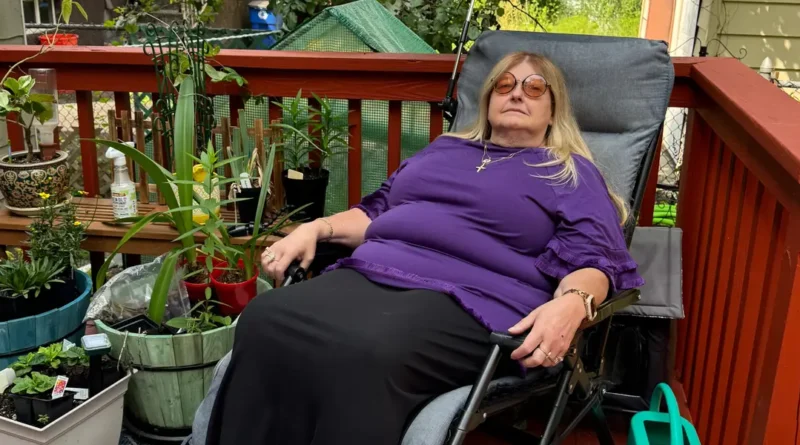
The yard was completely bare with 14ft hedges. I’m really into gardening, and the landlord was delighted. “Go crazy, and do whatever you want to do,” he said.
One of my other hobbies was DIY, specifically woodworking, and I made little tables and shelves. The house really took shape.
Courtesy of Tina Bonanno
The half-in, half-out arrangement has mostly been embraced by my clients and colleagues. I typed my working hours in red under my email signature, and people usually respect them.
We rarely have meetings outside those designated times.
Recently, I started my pet project of writing a book. It’s early days, but I’m disciplining myself and enjoying the challenge.
I needed to decompress
The dramatic change in my schedule had allowed me to breathe again. My anxiety levels have diminished, and I’ve found peace.
I have a zero-gravity lounge chair where I sit out on my deck. I look up at the trees and use an app to identify bird song. It makes me happy.
Working five days a week no longer suited me because I needed more than Saturday and Sunday to decompress. I get stimulation and a decent wage from my job Tuesday through Thursday, and the rest of the time is mine.