What To Know About The WNBA’s Drama Around Transgender Players
Topline
A pair of former NBA players have taken a mocking stance amid the ongoing debate about transgender athletes in women’s sports and said they’ll “declare” for the 2027 WNBA Draft in a test of the league’s eligibility standards.
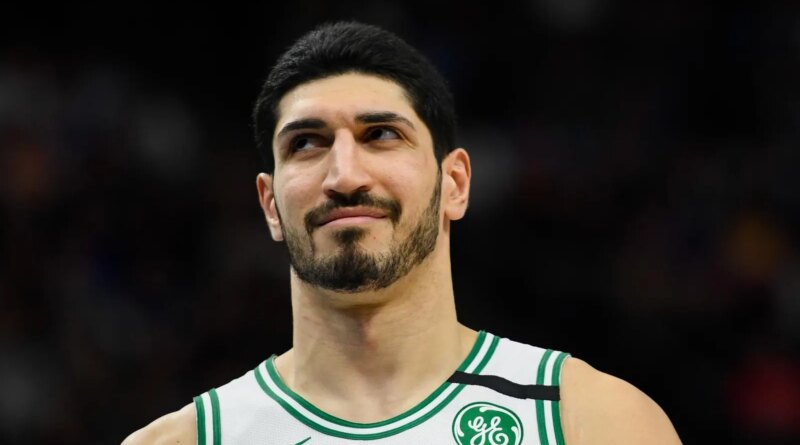
Enes Kanter on Feb. 26, 2020.
Getty Images
Key Facts
Royce White, who played in three games of a singular NBA season more than 10 years ago, and former NBA center Enes Kanter Freedom have both said they’ll try to be drafted by the women’s league next year and that, under the league’s inclusionary approach, they should be eligible.
Kanter, who legally changed his name to include “Freedom” after becoming a U.S. citizen in 2021, said he’d reviewed the league’s eligibility framework and should qualify under the “self-identification and inclusion” rules.
His declaration went viral Friday night and was quickly followed by a similar one from White, who told Fox News, “I identify as sometimes identifying as a woman for purposes of… professional basketball.”
Kanter said his statement did not intend to “mock, make fun of, or disrespect any community or personal choices,” but that he was pushing the WNBA to refine its guidelines around who could play in the league.
White, who said he thinks he’d be “unstoppable” in the WNBA, said he, too, was trying to challenge the WNBA: “I’d like to know what the parameters are.”
The pair are weighing in on a conversation sparked by Indiana Fever star Sophie Cunningham, who last month said she would not support transgender women playing in the league, and later fueled by Fox News-owned sports outlet OutKick, which goaded a French transgender basketball player into admitting she’d like to play in the league in an effort to push the WNBA to change its noncommittal stance.
CRUCIAL QUOTE
“If simply declaring who you are is all that’s required, then I meet every single requirement necessary to compete in the WNBA,” Kanter said.
WHAT DO THE WNBA RULES SAY ABOUT ELIGIBILITY?
Article XIII, Section 1(a) of the WNBA Collective Bargaining Agreement says, “Only players who are women are eligible to play in the WNBA.” The policy does not explicitly define the term “woman” or specify any criteria about biological sex, hormone levels or physical attributes. There is no clause that allows someone to be eligible simply by declaring or self-identifying as a woman.
WHAT HAS THE WNBA SAID ABOUT TRANSGENDER PLAYERS?
Not much. On Friday, WNBA Commissioner Cathy Engelbert sent a memo to teams that said a task force of team presidents and general managers will discuss the issue of transgender players at a meeting next week. WNBA player eligibility rules are governed by the Collective Bargaining Agreement, meaning they aren’t at the sole discretion of WNBA leadership, but she did say “preserving the integrity of our game and ensuring fair competition will always remain among the league’s highest priorities.” The WNBA Players Association issued a formal statement Friday, emphasizing diversity and inclusion while saying the organization “will not be used as political pawns.” The statement said the union hopes to “protect women’s sports while creating transformational change,” adding, “Hate, abuse, and demonization of any person or group of people, including transgender people, only fuel fear, division, and harm.”
Key background
The current push to solidify the eligibility requirements comes after Cunningham who has been described as “MAGA Barbie” online, last month said she wants to “protect women’s sports” and doesn’t think people born male should be allowed into the league. Her remarks have since triggered small rallies both supporting and opposing her at WNBA games, and gained more visibility after OutKick sent a direct message to transgender French basketball player Julie Tétart asking if she’d like to play in the WNBA. Tétart, a 34-year-old who plays for Monaco in second-tier French women’s basketball Ligue 2, said it would be a dream come true but reportedly added, “you have to be realistic: I’m old, and there are far better players than me!” OutKick then published an article slamming the “inclusive” WNBA for not having called up the player after her dominating season in France’s second division, and Outkick founder Clay Travis called the league “transphobic” on X.