India’s ‘cockroach’ movement halts protests after minister quits
Unlock the Editor’s Digest for free
Roula Khalaf, Editor of the FT, selects her favourite stories in this weekly newsletter.
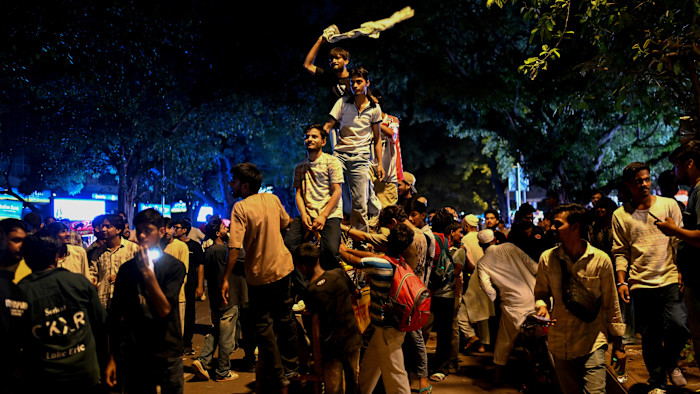
India’s student movement has promised to end weeks of protests after Prime Minister Narendra Modi’s government agreed to all its main demands, in a major victory for the country’s Gen Z demonstrators.
After initial concessions failed to calm growing nationwide protests, education minister Dharmendra Pradhan resigned on Saturday. A few hours later, government negotiators accepted the students’ other conditions including a charter for exam reform, a rare concession by the Modi government to public pressure.
“India won. Gen Z won. We won,” the Cockroach Janta Party, which spearheaded the protests, posted on its X account.
“We are withdrawing the movement in good faith,” CJP spokesperson Ashutosh Ranka posted on X. “All students should return home peacefully.”
Government media posted a video of two government ministers sitting stony-faced at a table as the CJP negotiators announced their wins, which included a government pledge to drop prosecutions against demonstrators.
“The youngsters who came and protested and [got] a person as strong as Narendra Modi to yield to their demand, they will go back with a sense of achievement,” said Nilanjan Mukhopadhyay, a writer and expert on Hindu nationalist politics. “They have in a way reignited the romantic passion for the politics of protest . . . This is a great fall in the image of Mr Modi.”
The CJP began in May as an online satirical campaign to protest against a leak of questions in the national entry examination for medical school taken by 2.2mn Indians.
It started holding demonstrations last month, tapping into youth anger over wider problems in the education system and graduate unemployment, mushrooming into one of India’s most potent recent student movements.
From the start it demanded the resignation of Pradhan, a key minister in the Modi government who served in various posts before taking the education portfolio in 2021. He had at one point dismissed the protesters as a “B team of terrorists”.
Modi, 75, initially ignored the protests and had struggled in the past week to find an effective response to the students’ growing anger.
India’s premier directly addressed protesters for the first time in a selfie-style video posted around midnight on Thursday but his promise of swift justice for those who leaked exam questions did not satisfy the students.
Neerja Chowdhury, a political columnist, said the government had misjudged the protests. “They have been complacent and arrogant,” she said. “But then wise counsels prevailed and [Modi] decided to let go of Dharmendra Pradhan in order to defuse the situation.”
The students’ anger had increased after a heavy-handed police response to a big demonstration in Delhi on Monday, when protesters were repeatedly tear-gassed and beaten with wooden sticks.
CJP leader Abhijeet Dipke heard the news of Pradhan’s resignation while camping at the main protest site in central Delhi and immediately responded. “We have done it!” he said in a video posted on Instagram. Protesters at the site wept and hugged after hearing the news.
Top officials in Modi’s Bharatiya Janata Party (BJP) stood by Pradhan. Nitin Nabin, the party’s president, said the minister’s decision to resign “reflects the highest standards of integrity and selfless service in public life”.
Dipke, a former postgraduate student in the US city of Boston, gave the ‘cockroach’ movement its name after India’s chief justice compared unemployed young Indians with cockroaches. It is also a wordplay on Modi’s Bharatiya Janata Party.
The authorities this week tried to curb protests in the capital by closing 17 metro stations serving the city centre, blocking mobile data and even warning drivers for food delivery apps not to enter the main protest area at Jantar Mantar, an 18th-century observatory.
But the demonstrators’ anger only grew and protests spread to other cities around the country including Kolkata, Pune and Hyderabad.
Modi remains broadly popular and has won a string of regional elections in the past two years, giving him a degree of political dominance not seen in India since the 1980s. But after 12 years in power, his critics accuse him of becoming out of touch and intolerant of criticism.
He promised rapid economic development and presided over a huge infrastructure boom but stagnant wages and a worsening job market for graduates have fuelled discontent among the world’s largest youth population.
India has 370mn people between the ages of 15 and 29 and the student protests were among the biggest India has seen since farmers forced concessions from Modi in demonstrations in 2020-21.
It was not immediately clear whether the protesters, who have mobilised in large numbers over the past few weeks, will now heed the CJP’s call to halt the protests.