Andy Burnham Becomes Labour Leader and Is Set to Be UK Prime Minister: Live Updates
Britain has become accustomed to shuffling through prime ministers at a rapid pace and is now poised to have its seventh leader in a decade. But the transition still requires a few steps.
Last month, Prime Minister Keir Starmer, amid a mutiny from within his party, announced his plans to resign. That made way for Andy Burnham, the former mayor of Manchester, who became eligible by winning a special vote for a seat in Parliament.
Because of Britain’s parliamentary system, voters don’t elect an individual to serve as prime minister but rather cast their ballots for a party to govern. It is the party in power, in this case Labour, that gets to decide who is at the helm.
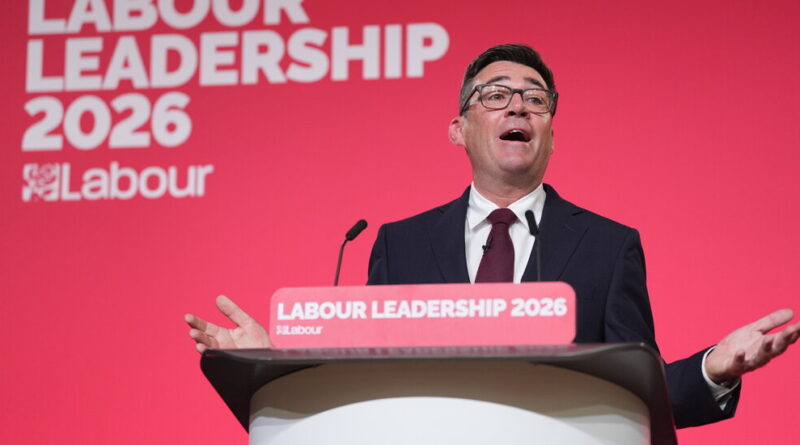
Mr. Burnham has made an uncontested bid for leadership of the governing Labour Party, with the backing of almost 95 percent of his party’s lawmakers in Parliament. Once he becomes Labour leader, his path to the premiership will mostly be a matter of formality.
Mr. Burnham is expected to officially become Britain’s prime minister on Monday. Here’s how everything is expected to play out:
Step 1. Burnham will be officially named Labour leader.
On Friday, the Labour Party is holding a special conference to announce the result of its leadership race and officially appoint Mr. Burnham. The announcement is expected in the early afternoon.
It won’t be a surprise, since it’s been a one-man race, as no other Labour lawmakers threw their hats into the ring. Mr. Burnham secured so much of the party’s support, it made it impossible for any other candidate to receive enough nominations to run against him. So after Friday’s announcement, he will be the head of the Labour Party.
2. Starmer will go see the king to resign.
There will apparently be a two-day period when Mr. Burnham is the head of his party but is not yet the prime minister. While Mr. Starmer is likely to have already packed his bags (moving vans were spotted at the prime minister’s official residence almost immediately after he announced his resignation last month), Mr. Starmer will remain as the country’s prime minister through the weekend. Then, on Monday morning, he is expected to travel by car the short distance to Buckingham Palace where, according to custom, he will tender his resignation to King Charles III.
It’s a well-rehearsed sequence of events — and the king, who has been on the throne for less than four years, has already had a good deal of practice. In that time, he’s ushered out Liz Truss, appointed and later bid farewell to Rishi Sunak, and then appointed Mr. Starmer, to whom he will now also bid farewell.
3. Then it’s Burnham’s turn.
Almost immediately after Mr. Starmer leaves, Mr. Burnham will make his way to the palace, where the king will ask him to form a government.
This audience with the king is known as “kissing hands,” which dates to a time when incoming prime ministers literally kissed the reigning sovereign’s hand to show their loyalty to the crown. These days, incoming prime ministers simply shake hands with the sovereign during the short meeting.
4. First moments at Downing Street.
Once he officially has the king’s request, Mr. Burnham will travel to Downing Street, where members of the press will be waiting to capture his entrance to his new home. In a scene that has grown familiar in Britain, the incoming prime minister will typically make a speech at a lectern set up outside (keep your eyes peeled for everyone’s favorite sound engineer) before heading inside.
5. Then the work begins.
The Burnham era will officially begin when he walks through the doors of 10 Downing Street. It’s then that the real work of governing begins. He will set about appointing his cabinet of ministers to carry out Labour’s plans as well as pursue some of his own goals. He’s made pledges to raise living standards, shift power from London to other cities and regions and even set up a branch of the prime minister’s official office in Manchester.