Amid political setbacks, Kurds shine at the World Cup
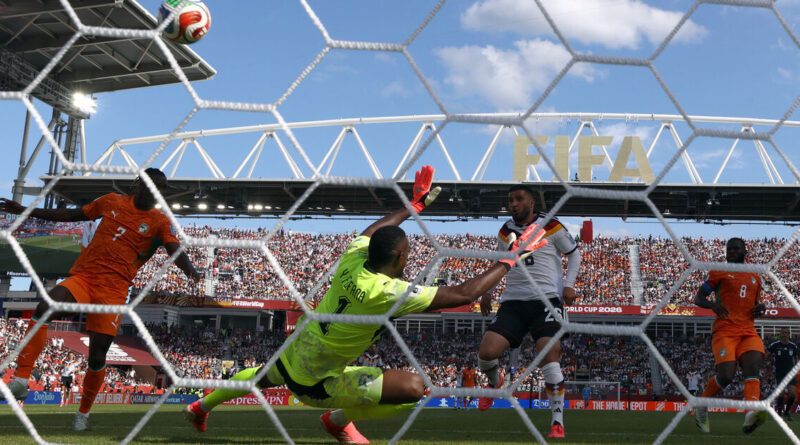
Politically, 2026 started off horribly for the Kurds when their brethren in northeast Syria saw their self-declared statelet nearly collapse, and their brethren in Iran faced the United States reversing course on earlier pledges of armed support for efforts to overthrow the regime. The 2026 FIFA World Cup has given their battered spirits a sorely needed boost with an ethnic Kurd, Deniz Undav, becoming one of the biggest stars of the tournament, scoring three critical goals for the German national team. Kurdish soccer is on a roll, and Kurds the world over are celebrating.
On Sunday, Alireza Beiranvand, Iran’s goalkeeper who is believed to be an ethnic Lak Kurd from Lorestan, kept his country’s hopes alive, making a string of dramatic saves against favorites Belgium. The game at Los Angeles’ SoFi Stadium ended with neither side scoring. Iran drew 2-2 in its opening match with New Zealand. Beiranvand’s saves proved crucial then, too.
In a further twist, Undav is not only Kurdish but also Yazidi and openly identifies as both. The obscure ethno-religious group made international headlines when the Islamic State (ISIS) embarked on a genocidal campaign against them in 2014, slaughtering thousands of men and abducting many more of their women and children. “Undav’s success fills us with pride as Yazidis and Kurds. It provides balm to our wounds,” Sepan Ajo, a Yazidi woman who was enslaved and abused by a top ISIS emir for many years and now lives in Germany, told Al-Monitor.
Deniz Undav of Germany looks on during a Germany team training session at Winston-Salem State University on June 21, 2026, in Winston-Salem, North Carolina. (Photo by Alexander Hassenstein/Getty Images)
“Yazidis love soccer, and Undav is the first to make it to the World Cup. I am sure this will motivate other Yazidis to follow in his steps,” Murad Ismail, a Yazidi member of the Iraqi parliament, told Al-Monitor. Ismail shares Undav’s roots in the township of Viransehir in Turkey’s southeastern province of Urfa. In Turkey, Yazidis suffered immense discrimination and economic hardship, prompting thousands to seek a better life abroad.
Many headed to Germany in search of blue-collar jobs, as did Undav’s father. The 29-year-old center-forward faced his own struggles growing up as the child of an immigrant. He worked in a factory to help his family make ends meet and faced repeated rejection in Germany’s lower divisions before clawing his way to the country’s top division, Bundesliga, signing with VfB Stuttgart in 2023.
Undav had already triggered a wave of euphoria following his first goal against Curacao on June 14. His two goals against Ivory Coast on Saturday, however, elevated him to rock star status. He gained 1 million followers on Instagram, almost double the number he had prior to the World Cup. Instagram creator Steven Wommack was moved to craft a short anime movie on Undav’s “crazy performance.” It’s gone viral.
“Internationally, the Kurdish people are often associated with conflict — cast as victims of war, threats to states and borders, or skilled fighters,” Meghan Bodette, head of research for the Kurdish Peace Institute, noted. She was referring in particular to the Syrian Kurdish men and women fighters who played a decisive role in dismantling the ISIS “caliphate” in Syria with the help of the United States. “But these stereotypes are reductive and can even reinforce state repression. Like any other nation, Kurds have achievements in civilian fields like art, music, science and, of course, sport. When Kurdish athletes or teams succeed, it’s a source of national pride and a challenge to harmful stereotypes,” Bodette told Al-Monitor.
Deniz Undav: tonight pic.twitter.com/D5xmNIBpoZ
— Kurdistan (@Kurdistan_C) June 20, 2026
“Kurdish victories outside the political sphere can thus become a focal point for an identity that is not well represented or easily expressed elsewhere,” Bodette added.
Kurds on the rise everywhere
Kurdish soccer successes have stretched beyond the World Cup this year. In Turkey, Amedspor, the indomitable soccer team based in the largest Kurdish-majority province, Diyarbakir, rose to the Super League, making it the first Kurdish club to achieve that distinction. In Syria, Al-Hilal SC, a team from Hasakah province, a major Kurdish cultural and political hub, broke into the country’s top division for the first time this year as well.
Amedspor’s ascent is all the more remarkable for the sustained racist abuse and physical attacks by nationalist vigilantes that the team members and their fans faced in games outside the Kurdish region. Undav was targeted last year during a match between Stuttgart and Istanbul’s Fenerbahce as the latter’s fans shouted “traitor” and “terrorist” at him. Kurdish football teams have faced racist slurs in neighboring Iraq as well. At least four members of Iraq’s World Cup team are ethnic Kurds.
Against this backdrop, it’s hardly surprising that many Kurds gloated on social media over Turkey’s lackluster performance in the World Cup after a 24-year-long absence from the event. Studded with international stars such as Real Madrid attacking midfielder Arda Guler and fellow striker Kenan Yildiz of Juventus, the team lost both its matches against Australia and Paraguay without scoring a single goal. The last time it qualified — in 2002 — Turkey pulled in a historic third.
Even if Turkey wins against the United States on Friday, it will be its last fixture in the competition. Turkish fans are furious. The jingoistic bombast heralding the players did not help — least of all a controversial video clip featuring Turkish military drones and the country’s president, Recep Tayyip Erdogan, a modestly successful footballer in his early youth, grinning on the pitch in an orange jersey.
The casual observer may, nonetheless, be surprised that a recent survey indicated that most Kurds in Turkey support the Turkish national squad when it plays a foreign one, said Roj Girasun, founding co-director of RAWEST, a research and polling outfit in Diyarbakir. “The share of those who say they don’t want Turkey to win is at around 9%, and the more politicized they are, the more vocal they get,” Girasun told Al-Monitor. The survey was done in 2023, before Erdogan’s government embarked on a third round of peace talks with Turkish Kurd insurgents led by imprisoned Kurdistan Workers Party leader Abdullah Ocalan.
Amedspor supporters gather and wave their flags during a celebration at Newroz Park in Diyarbakir, Turkey, on May 10, 2026. (Photo by Bilal Seckin / Middle East Images / AFP via Getty Images)
With four ethnic Kurds in Turkey’s World Cup lineup and Amedspor in the top division, a burgeoning sense of belonging may prompt even more Kurds to support the country’s national team against foreign rivals. The ceasefire, which was declared in March last year, has certainly shifted the mood, Girasun observed, as a previous one in 1999 did with top PKK leaders rooting for Turkey in the 2002 World Cup. But past history has shown that such “Kurdish openings” last for as long as they serve the government’s interests, leaving ordinary Turks and Kurds to overcome or sharpen their differences, including on the soccer pitch.