
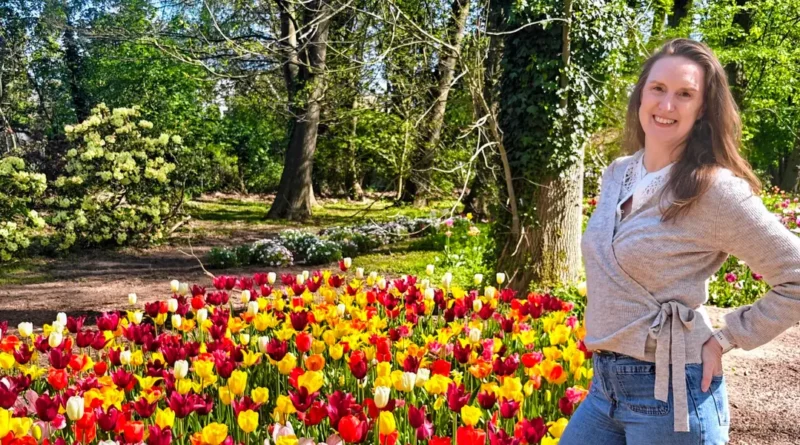
I followed love to a European city that people often overlook. Living here made me see what others miss.
When I tell people I live in Brussels, they often ask how I ended up here. The truth is, it wasn’t my original plan. I came for love, and didn’t know how long I would stay.
There was a heat wave when I arrived in Belgium. It was May 2015, and I was moving in with my partner. We’d met in New Zealand while on a career break to traveland after returning home, he was rehired at his old job.
To avoid a long-distance relationshipI took a chance. I packed up my belongings and left my home in London to see if we could build a life together. As I took French classes and interviewed for jobs in the sunshine, people insisted on telling me, “Don’t get used to this weather,” as if obliged to manage my expectations.
This was a year before the Brexit vote, when the UK was still part of the European Union, making my relocation — with a British passport — easy.
But I wondered if I’d made the right decision: The streets were clogged with traffic, and there didn’t seem to be much to see or do.
The city revealed itself slowly
Much of what I knew about Belgium proved to be true. Chocolate shops and friteries serving crispy Belgian fries with 20 different sauces are everywhere. Waffle vans in the park sell warm, vanilla-infused snacks. And, there are over a thousand Belgian beers, each with its own branded glass.
The first thing that pleasantly surprised me about Brussels was the property prices. We found an apartment to rent in a leafy neighborhood and paid almost half the price of my London flat.
Drinkwater was happy with the waffles, Belgian fries, and property prices. Provided by Claire Drinkwater
I was delighted to discover that Belgium has one of the world’s highest concentrations of Michelin-starred restaurants, and even these days, it’s one of the most affordable countries for fine dining. A top-tier tasting menu here costs an average of 135 euros, or $144.
That first year, when summer arrived, my new colleagues explained that taking extended vacations was normal. Back when I worked in the London media industry, asking for more than a two-week vacation felt irresponsible, so this was eye-opening.
Life in Brussels was more fun than I expected. We enjoyed al fresco after-work drinks in the city’s squares, shopped at the street markets, and dined on the terraces. Open-air bars appeared in parks across the city. There were free DJ parties and concerts.
Part of what makes the city so vibrant is its international community. Around 50,000 people work for EU institutions in Brussels, creating one of the most diverse workforces in Europe. I enjoy hearing different languages spoken in the streets, parks, and cafés.
The longer I stayed, the more I found
In the years that followed, I learned that Brussels is at the heart of Europe in more ways than one. We could go to Paris by train in just over an hour. Returning to London took two hours on the Eurostar — I’d do it in a day sometimes for work trips.
My partner and I went on a road trip around France, stopping in the Champagne region on the way back. Sometimes we’d drive a couple of hours north to Amsterdam or east to Cologne for the weekend.
After spending a year traveling around the worldI had ended up in a city where the rest of Europe was on my doorstep without boarding a single plane.
Talking to other people who’d moved here from abroad, it became clear that I wasn’t alone in appreciating Belgium’s excellent healthcare system and the way its national football team unites its population. Many told me they only intended to come for a few months and ended up staying for years.
After Brexit, I applied for and was granted Belgian citizenship, which meant I could keep my EU rights.
Brussels may be an important city, but in many ways it’s like a village. You can walk from one end of the city center to the other in 30 minutes. Recently, while at an outdoor café, a guy said hello with a big smile. I realized he was my tire mechanic from a garage on the other side of the city — this is what happens in Brussels.
Enjoying an after-work summer event in Brussels. Provided by Claire Drinkwater
I came for love, and now I’m staying for love
Brussels is not a classic postcard tourist city. It has highlights like the golden Grand Place, the futuristic Atomium building, and the Manneken Pis, a small statue of a boy peeing into a fountain that reflects the city’s playful sense of humor.
The people who stay here longer find a city that’s cosmopolitan yet affordable, where the income tax is high, but so is the quality of life.
Over a decade later, I’m still living in Brussels with my partner, in the same neighborhood we adore. Another unseasonal heat wave arrived this May — it turns out this is something I could get used to after all.
Moving to Brussels was never part of my plan. I came here for love, and now I’m staying for the same reason.