
ChatGPT has 230 million people asking for health advice weekly. It wants more.
OpenAI is pushing further into its health research as more people turn to ChatGPT for pressing medical questions.
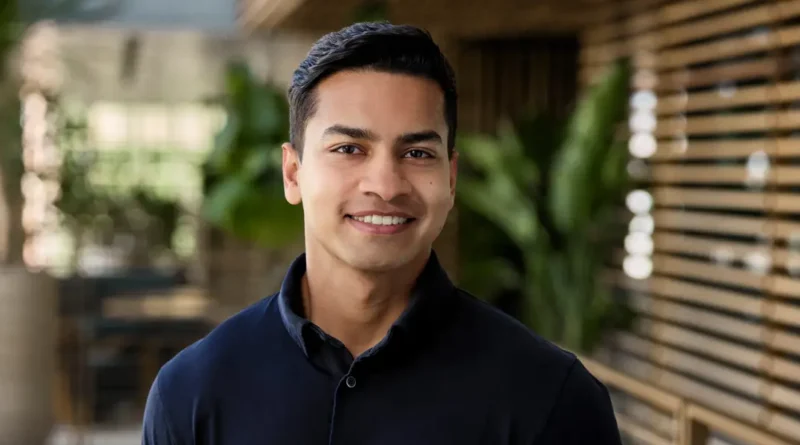
More than 230 million people use the tool for health and wellness advice each week, according to OpenAI. That growth is partially thanks to researcher Karan Singhal, who spoke exclusively with Business Insider about the company’s lofty healthcare ambitions.
Singhal leads a high-stakes goal: make ChatGPT so good on health that it changes people’s lives for the better, avoids calamity, and sways the skeptics. He wants to aid a shift he already sees underway, in which more patients trust OpenAI’s latest model as a “protector in their care journey.”
OpenAI’s GPT-5 model family is the company’s first to be trained specifically at every stage of development to be better at health advice, he said.
“You definitely want the models to be ahead of everything else,” Singhal said.
At OpenAI, healthcare has grown into a top priority
Before joining OpenAI, Singhal made his name as a researcher at Google, helping develop a series of AI models known as Med-PaLM, specifically designed for medical questions. Since then, Google has cut investment in Med-PaLM, Singhal said, because AI developers favor general-purpose models.
In the middle of 2024, when Singhal joined OpenAI, GPT-4o was the company’s flagship model. It would later come under fire in lawsuits alleging that it had encouraged suicidal ideation and given harmful advice. Those lawsuits are still unfolding — OpenAI has denied liability and wrongdoing.
In the meantime, the company hasn’t shied away from health-related use. In fact, it has dug in further.
Singhal said that when he joined, he felt a “responsibility” to improve the quality of the models’ health answers. He quickly set about building a new team of health researchers, and kicked off partnerships with more than 200 physicians — a bet, as he put it, on “aggregating the wisdom of the crowd.”
About a year later, he helped launch HealthBench, a series of evaluations that the company created with the physician group to measure AI systems’ health capabilities.
“Once you know how to evaluate it, it becomes a lot easier to improve it,” Singhal said.
OpenAI’s latest free model, GPT-5.5 Instant, scored better than both physician-written answers and GPT-4o in tests, the company said Thursday. Comparing billions of anonymized messages about health, they also said they found a 71% drop over the last two months in responses that were flagged for inaccuracy.
There’s pressure to keep those improvements going for both patients and clinicians who use the tools. Singhal said he’s seen doctors rapidly adopt ChatGPT for Clinicians and other AI tools, and he doesn’t feel that hospitals and clinics are resistant to AI.
“If you think about the adoption of technology in healthcare broadly, it’s actually incredibly, insanely fast,” Singhal said.
Singhal wants ChatGPT to get to know you better
Google Search has, for years, been the dominant peddler of healthcare information online, connecting users to websites like WebMD. Singhal sees chatbots as an upgrade, where back-and-forth conversations give people more specific advice.
One of the biggest challenges to getting valuable health information from a chatbot is how little it knows about the patient. A doctor might have your medical records in their hand or know you from a yearslong relationship. OpenAI is trying to simulate both.
For one, in January, the company announced a health-focused product within ChatGPT that connects to health apps and lets users upload medical records. Singhal gave the example of uploading his sleep data from his Apple Watch. He let the app analyze it, and learned that he was missing out on deep sleep because his bedroom was too warm.
ChatGPT Health still has a waitlist more than five months after its launch.
Singhal’s team sees the effort to make an AI model seek additional information as a top priority: a chatbot should ask questions like a doctor would, so it can say the right thing.
The team also wants to make the case that AI can bring value to everyone in health, not just “power users.”
“People’s adoption will only move at the speed of people’s readiness in practice, and so you have to guide people towards that, especially as the technology improves,” Singhal said.
Have a tip? Contact this reporter via email at scouncil@businessinsider.comor over text, Signal, Telegram, or WhatsApp at 415-757-8198. Use a personal email address, a nonwork WiFi network, and a nonwork device; here’s our guide to sharing information securely.