
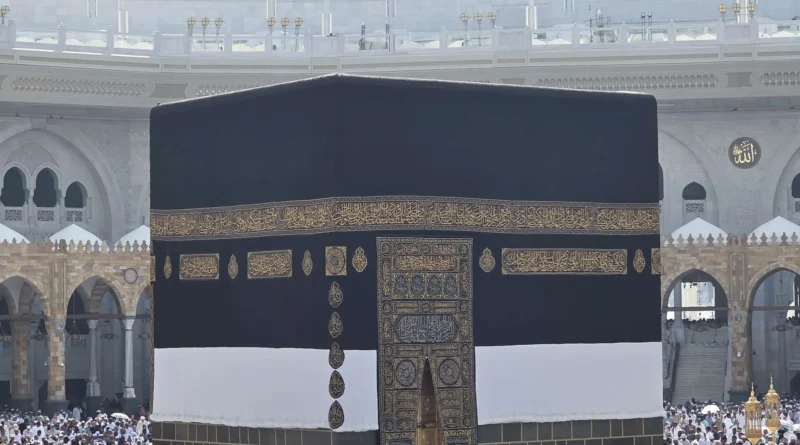
2026 Kiswah: All You Need To Know About New Kaaba's Kiswah
Mecca, Saudi Arabia — Muslims around the world are preparing to witness one of Islam’s most significant annual ceremonies: the replacement of the Holy Kaaba’s Kiswah. The new Kiswah will be installed on the Kaaba at Masjid al-Haram on the night of 1 Muharram 1448 AHmarking the beginning of the new Hijri year.
The Kiswah, the black silk covering that adorns the Holy Kaaba, represents a remarkable blend of craftsmanship, faith, and heritage. Produced exclusively by the King Abdulaziz Complex for the Holy Kaaba’s Kiswah in Makkah, the cover is renewed annually through a process that takes nearly a year to complete.
A Masterpiece of Islamic Craftsmanship
The production of the Kiswah requires 10 to 11 months of continuous work and involves 150 Saudi artisans and specialists working across multiple departments.
The completed Kiswah weighs approximately 1,415 kilograms and consists of two complete layers:
- An outer layer made of black embroidered silk.
- An inner lining made of off-white cotton.
The cover is manufactured using 47 rolls of natural silkwhich are woven into panels that cover the entire exterior of the Holy Kaaba.
Each meter of the patterned fabric contains approximately 9,986 threadsreflecting the exceptional precision and quality standards maintained throughout production.
Quranic Verses Embroidered in Gold and Silver
One of the most striking features of the Kiswah is its intricate Islamic calligraphy.
The new Kiswah contains 30 Quranic verseswritten in the elegant Jali Thuluth script and embroidered using gold-plated silver and pure silver threads.
To complete the embroidery and decorative elements, craftsmen use:
- 120 kilograms of gold-plated silver thread
- 60 kilograms of silver thread
- 10 kilograms of pure silver
The embroidered Quranic verses, medallions, and decorative bands are among the most recognizable features of the Holy Kaaba.
Materials Used in the Kiswah
The annual Kiswah is manufactured using premium materials sourced specifically for this sacred project.
Main Materials
- 850 kilograms of natural silk
- 47 rolls of black silk
- 400–410 kilograms of raw cotton
- 120 kilograms of gold-plated silver
- 10 kilograms of pure silver
The combination of these materials ensures durability, beauty, and the highest standards of craftsmanship befitting Islam’s holiest site.
Seven Stages of Kiswah Production
The manufacturing process passes through seven major stages before the Kiswah is ready for installation.
1. Desalination
Water is purified and prepared for use during silk processing, washing, and dyeing.
2. Washing and Dyeing
Natural silk is cleaned to remove wax and impurities before being dyed the distinctive black color associated with the Kiswah.
3. Weaving
The silk threads are woven into fabric panels using advanced weaving technologies and specialized looms.
4. Printing
Quranic verses and decorative patterns are printed onto the fabric to guide the embroidery process.
5. Assembly and Sewing
Individual fabric sections are joined together and prepared as complete panels for the Kiswah.
6. Gold Embroidery
The Quranic inscriptions and decorative elements are embroidered using silver and gold-plated silver threads.
7. Quality Control
Every component undergoes rigorous inspection to ensure perfection before installation on the Holy Kaaba.
The World’s Longest Sewing Machine
Among the most impressive technologies used in the production process is what is regarded as the world’s longest sewing machinedesigned specifically for assembling the Kiswah.
The process begins with a woven white cotton lining, which is attached to the patterned silk fabric. Each silk panel measures approximately 14 meters in length and 1 meter in width and features repeated woven inscriptions and decorative motifs.
The machine uses advanced laser-guided technology to ensure perfect alignment and stitching precision while joining the panels into a single unified cover.
This highly specialized equipment allows craftsmen to maintain exceptionally accurate straight stitching lines while controlling needle and thread movement with remarkable precision.
Securing the Kiswah
Once installed, the Kiswah is firmly secured to the Holy Kaaba using approximately 100 ropesensuring the cover remains properly positioned throughout the year despite weather conditions and the large number of pilgrims visiting the Grand Mosque.
More Than 80 Years of Service
The Kiswah is produced at the King Abdulaziz Complex for the Holy Kaaba’s Kiswah in the Umm Al-Joud district of Makkah.
The institution traces its roots back to 1346 AHwhen the first Saudi facility dedicated to manufacturing the Kiswah was established in the Ajyad district by order of King Abdulaziz Al Saud.
Originally known as Dar Al-Kiswahthe facility later expanded and relocated to Umm Al-Joud, where modern technologies and specialized production departments were introduced.
For more than eight decades, the complex has remained committed to producing the Kiswah entirely within Saudi Arabia while preserving traditional Islamic craftsmanship and embracing modern manufacturing techniques.
A Legacy Preserved by Saudi Leadership
Successive Saudi kings have overseen the continued development of Kiswah production:
- King Abdulaziz Al Saud (1345 AH): Ordered the establishment of the first Saudi Kiswah manufacturing facility in Makkah.
- King Saud bin Abdulaziz (1382 AH): Continued supervision and preservation of the manufacturing tradition.
- King Faisal bin Abdulaziz (1392–1397 AH): Expanded and modernized the factory.
- King Khalid bin Abdulaziz (1397–1402 AH): Continued supporting operational development.
- King Fahd bin Abdulaziz (1402–1426 AH): Introduced significant technical modernization.
- King Abdullah bin Abdulaziz (1426–1436 AH): Oversaw quality enhancement through the King Abdulaziz Complex.
- King Salman bin Abdulaziz (1436 AH–Present): Continues advancing production methods, materials, and manufacturing standards.
An Annual Symbol of Faith
The annual replacement of the Kiswah remains one of the most symbolic events in the Islamic world. Combining centuries-old traditions with modern technology, the process reflects the care and reverence dedicated to the Holy Kaaba.
With a production cost exceeding 25 million Saudi Riyalsthe Kiswah stands not only as a remarkable work of Islamic art but also as a testament to the expertise, devotion, and craftsmanship invested each year in preparing the sacred covering of Islam’s holiest site.


![[Podcast] Stoning the Jamaraat: Naming the Enemy | Ustadh Justin Parrott](https://themuslimpress.com/wp-content/uploads/2026/06/Podcast-Stoning-the-Jamaraat-Naming-the-Enemy-Ustadh-Justin-390x205.png)