Rare Ancient Rock Text Mentioning Umar (R.A.) Found in Madinah
Key Takeaways
- Saudi Arabia’s Heritage Commission found a rock inscription from the early Islamic period naming Umar ibn al-Khattab (R.A.), written in Hijazi script — one of the oldest known forms of Islamic Arabic writing
- The find is part of 1,774 archaeological discoveries made across two survey seasons in Al Mahd Governorate, Medina
- Survey teams also mapped 156 previously unrecorded archaeological sites across three areas in the region
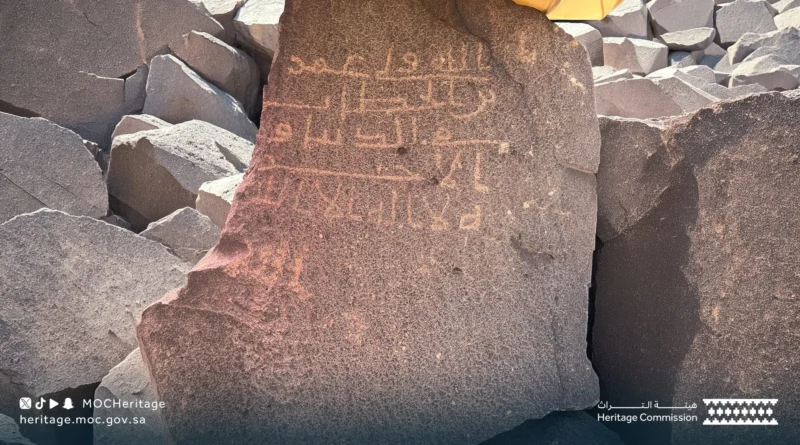
Saudi Arabia’s Heritage Commission has found a rock inscription from the early Islamic period bearing the name of Umar ibn al-Khattab (R.A.), the second caliph of Islam, during survey work in Al Mahd Governorate in the Medina region.
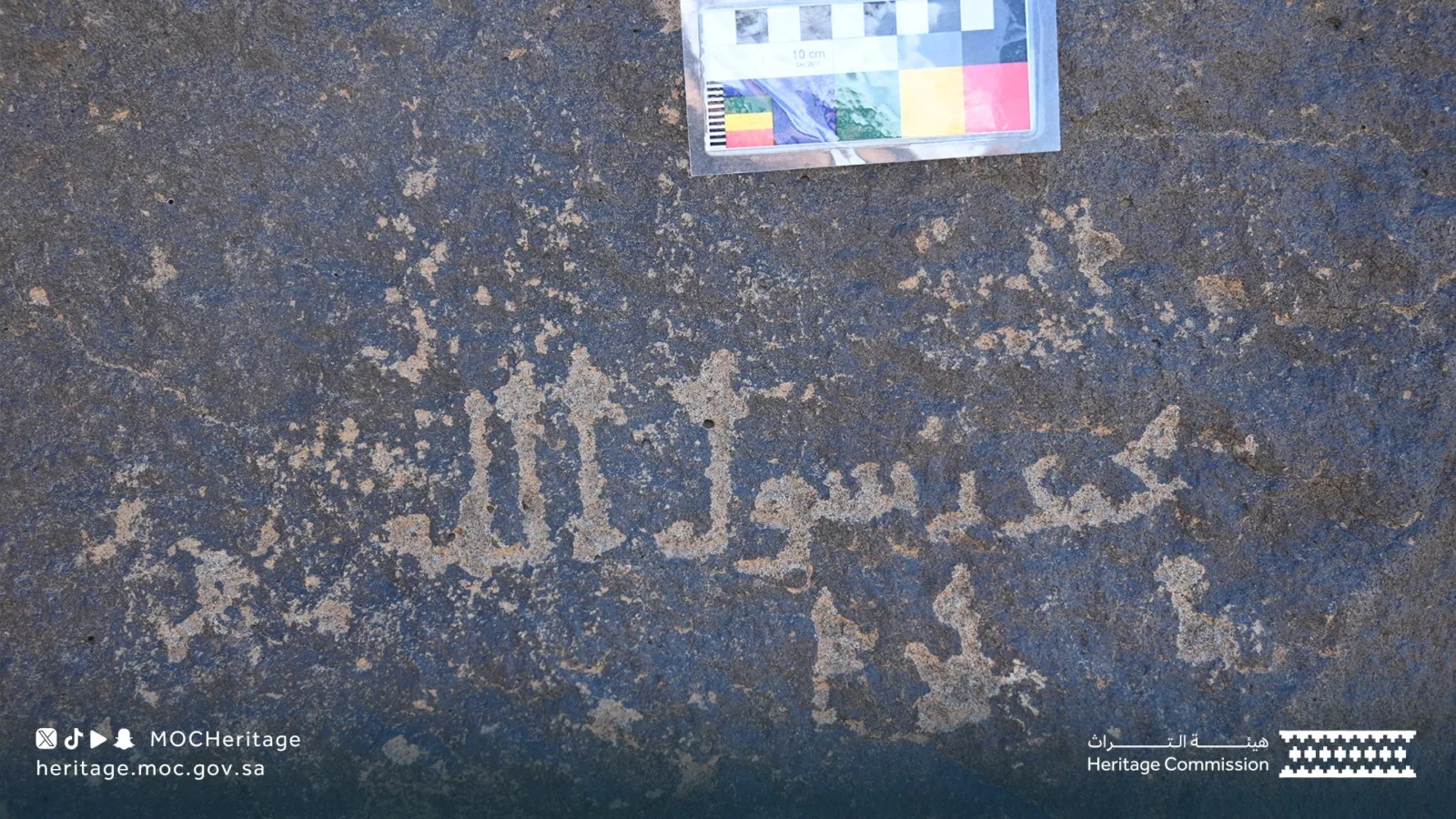
The inscription, written in Hijazi script — among the oldest recorded forms of Islamic Arabic writing — carries two lines: “May Allah be the guardian of Umar ibn al-Khattab in this world and the Hereafter” and “There is no god but Allah.”
The Discovery
The inscription was one of 1,774 archaeological finds documented during two seasons of fieldwork conducted in Al Mahd Governorate.
Survey teams worked across three areas: Al Suwayriqiyah, Al Muwayhiyah, and Hadhah. In addition to the inscriptions, teams mapped 156 previously unknown archaeological sites across the governorate.
What Was Found
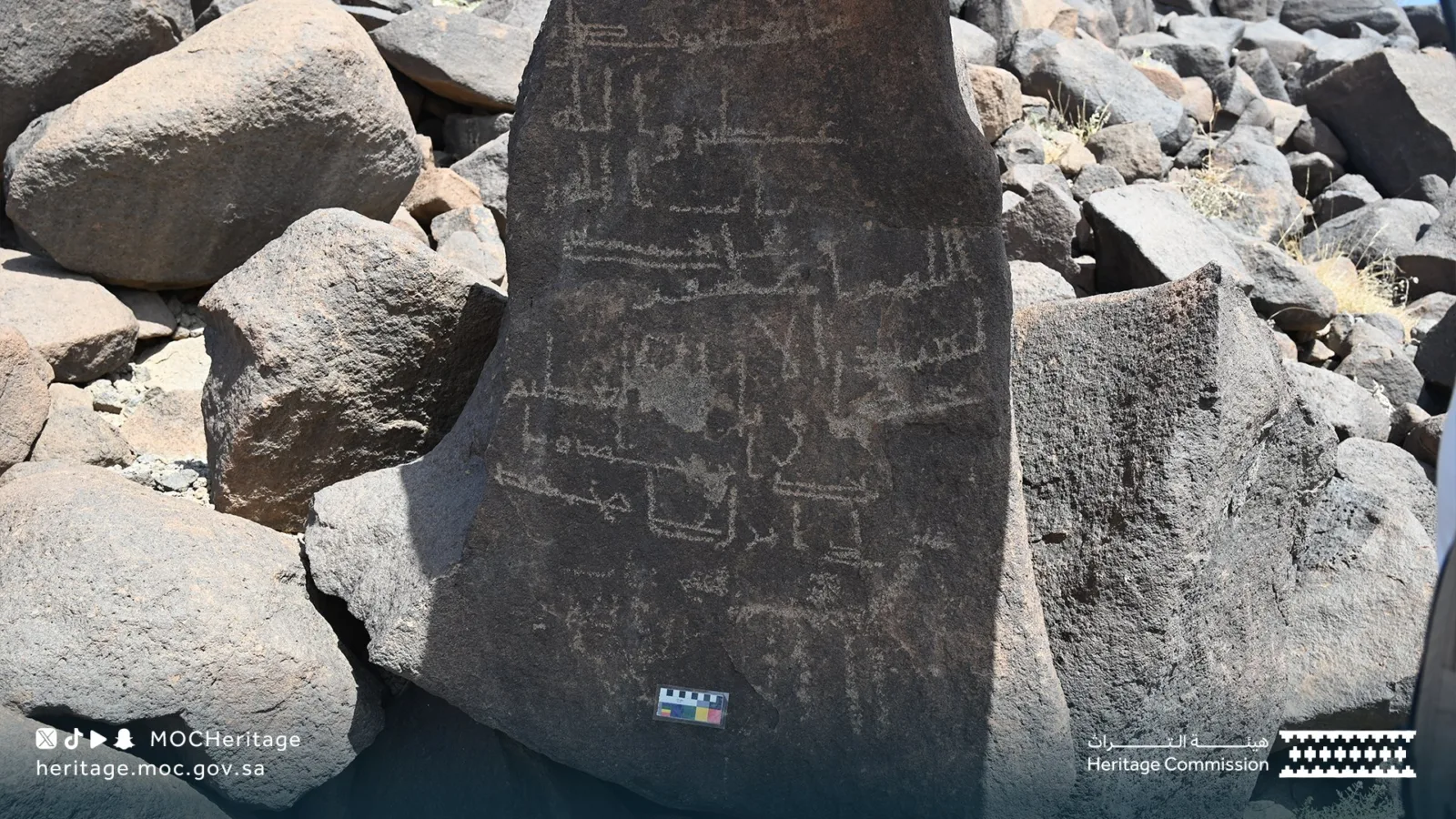
The full body of discoveries includes 1,259 rock art drawings, 461 Islamic inscriptions, 34 inscriptions in the Thamudic language, 11 stone structures, three historical palaces, two caravan route milestones, and four wells. Ancient Arabic poetry carved into rock was also recorded during the surveys.
Who Was Umar ibn al-Khattab (R.A.)
Umar ibn al-Khattab (R.A.) ruled as the second Rashidun Caliph from 634 CE to 644 CE. His caliphate saw the rapid expansion of the early Islamic state across much of the Middle East and North Africa.
Finding his name preserved in Hijazi script on rock in the Medina region places this inscription among the earliest physical records from that period of Islamic history.