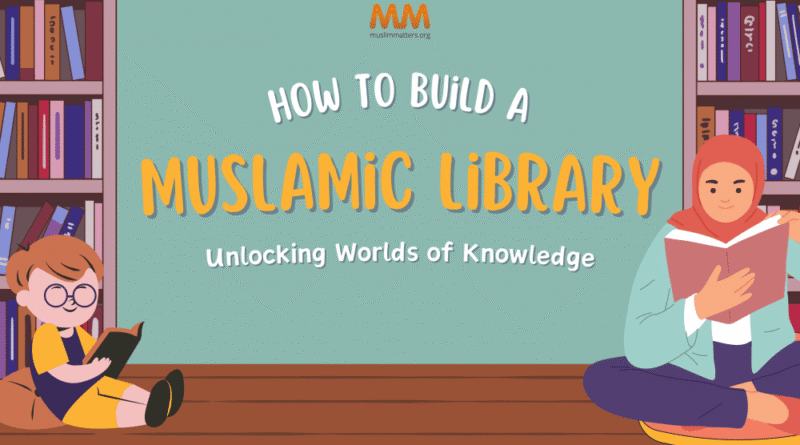
How to Build a (Muslamic) Library
From the moment that the first ayah of the Qur’an was revealed – “Iqra!” – reading has been a foundational part of the Islamic tradition. The Qur’an was the first book established by the Muslim community, heralding the beginning of a long, rich literary tradition. The early Abbasid era marked a true love affair between Muslims and books, which in turn led to the establishment of public and private libraries across the Muslim world (pg 8-9, on the love of books in the Islamic tradition). The Great Library of Baghdad, housed in Bayt al-Hikmah, was one of the world’s largest public libraries and its destruction by the Mongols remains the source of much grief. That was then – but what about now?
Libraries continue to play a deeply important role in society. Reading remains a signifier of emotional intelligence as well as intellectual knowledge. Unfortunately, we find that many Muslims discount the value of reading, especially fiction, without understanding that even fiction exists in our historic tradition. Not all fiction is “haram”! At the same time, Muslim parents, especially in the West, often bemoan that their children are always on screens, or consuming unIslamic content. Admittedly, the cost of books has gone up (along with groceries, gas, and everything else!)… So where are we supposed to get halal Muslim books from without bankrupting ourselves?
Cue the concept of a local Muslim library. Imagine a resource where books by Muslims, for Muslims, can be found in one place, free of cost for patrons! While this sounds amazing, someone has to actually put one together. AlHamdulillah, more and more Muslim communities are taking on the responsibility of establishing libraries in our communal spaces. As one of those who took on this project in my own community, I’ll be sharing an outline of what you need to know before you go about creating a Muslim library of your very own.
Intention/ Purpose
Keep supporting MuslimMatters for the sake of Allah
Alhamdulillah, we’re at over 850 supporters. Help us get to 900 supporters this month. All it takes is a small gift from a reader like you to keep us going, for just $2 / month.
The Prophet (SAW) has taught us the best of deeds are those that done consistently, even if they are small.
Click here to support MuslimMatters with a monthly donation of $2 per month. Set it and collect blessings from Allah (swt) for the khayr you’re supporting without thinking about it.
What kind of library do you want to establish? This might sound like a silly question, but the truth is that there’s a world of difference between an Islamic library and what I call a “Muslamic” library. Islamic libraries are focused on Islamic content; that is, Islamic knowledge across various genres, maintaining a strict adherence to solely what is Islamically correct. This has incredible value of its own, and is a fantastic resource for parents wanting to share knowledge with their children, with laypeople seeking to increase their own knowledge of Islam, and for students of knowledge or scholars who need access to Islamic texts that may be difficult or unaffordable to purchase on their own.
A “Muslamic” library, on the other hand, will contain fiction, including novels that involve Muslim characters, but – as fiction often does – include stories, events, and characters which reference or engage in things that aren’t strictly “halal.” That doesn’t mean those novels are encouraging haram things, but that they present actions or situations in the context of a character’s development, or simply referencing things that do happen in real life. This can also include genres such as fantasy, which aren’t teaching about Islamic beliefs around the ghayb, but are flights of imagination and whimsy. And yes, we’ve already talked about whether Harry Potter is haram! Muslamic libraries have the benefit of presenting diverse characters and situations that readers can experience through storytelling, providing emotional depth and insight. As for determining what’s “halal enough” to include in a Muslamic library, this will be covered in the section on how to select books for your library.
As you consider what kind of library you want to build, think about who your target audience is. Is it children or adults? Students at a serious madrasah, or just kids who yearn for stories where they can see themselves reflected? Parents who need stories to tell their kids at bedtime, or Muslim homeschoolers and educators? Students of knowledge and scholars, or the average Muslim? The answers to these questions will help you refine the process of building your library and determine what your priorities should be in terms of choosing the right kinds of books to include.
Location and Pitching the Project
Do you have a location for your library? Where will you start this project? Will it be a religious space, like a masjid or Islamic center, or be part of a Muslim school, or will it exist in an entirely separate third space? Do you have authority within the space, or do you need to seek the approval of a masjid/ organization board? Who has final say over the books chosen?
All of these factors will impact how your library is set up, and the extent of flexibility you will have in curating the library, as well as accessibility to the library itself. Often, you will have to pitch the idea of the library to multiple organizations/ masaajid, as not everyone is interested in the idea of a public library (or the potential liabilities involved). Ensure that you have a thoughtful, detailed pitch to present! Demonstrate that you’ve thought this through, have done your research, and have an action plan for implementation and maintenance.
Selecting Books
Great, you have a place to set up shop! Now, how are you going to choose the books to include in your library? The first point to remember is who your target audience is – that will immediately narrow down the types of books that you’ll be acquiring to start the library. For an Islamic library, are you a subject matter expert? If not, ensure that you have at least one or two people who are, as this will require filtering out work that is passed off as “Islamic” but may in fact be deeply problematic. Along these lines, what are the affiliations of the location your library will be located in? If it’s a masjid, do they have strict rules around the types of content that they will host? For example, if it’s a Salafi masjid, will they allow works by non-Salafi scholars? Books on tasawwuf? Books on fiqh based on specific madhaahib? On the flip side, is it a masjid that is completely anti-Salafi, or stringently adhering to one madh’hab? Your book selection will be thus constrained by the organization that you’re dependent on for location.
If you’ve got more flexibility around choosing books, especially if you’re able to have a “Muslamic” library instead, you still need to think about how you’ll be selecting books and determining what’s acceptable and what’s not. Not every book written by someone with a “Muslim” name is okay! There are many books (including kids’ books!) out there that explicitly promote haram relationships, belittle the Shari’ah, have internalized Islamophobia, or other problematic elements. On the other hand, there are many books that will mention these things without promoting them, but as part of the context/ setting/ plot/ character development, with characters who will then change for the better. There are also books which may not exactly promote the haraam, but simply incorporate them as part of the story without passing a value judgement on them.
You will need to consider different genres, age groups (e.g. toddler books, picture books, early reader, middle grade, young adult etc.), your own community’s culture and approach to literature, and what to do if a library patron complains! However, you don’t need to start from scratch – one very valuable resource to turn to are Muslim book reviewers, who do the hard work of going through lots of different books and sharing their reviews of craft and halal-ness. Specific accounts (and websites) that are dedicated to this purpose include The Islamic School Librarian, MuslimKidsBookNook, and my own book reviewing account, as well as Goodreads.com, where you can see reviews from readers around the world. There are also many others involved in the “Muslim bookstagram” space online, so it’s worth doing your research to ensure that you’re getting a full picture of each book selected. And yes… you will need a lot of time for this part!
Funding/ Getting books
You’ve gotten approval, you’ve even decided your criteria for selecting books… Now how are you going to actually get the books you want? Most libraries have a combination of streams: donations (in the form of people donating books – which you’ll need to check for appropriateness and physical state – or money given specifically for the library); an allowance provided by the masjid/ Islamic organization to purchase books and other associated library expenses (bookshelves, software etc.); paying out of pocket by yourself (this gets VERY expensive, very fast!); and the final option – applying for grants! Depending on the country/ city/ locale you live in, there may be government or non-profit grants offered towards “arts and culture” programming. It’s absolutely worth applying for these! AlHamdulillah, my own Islamic center’s library received a local arts and culture grant that paid for our library software as well as a fair bit set aside for books. Regular funding is extremely important in order to continue buying new books, as well as replacing lost or damaged books (which happens a lot).
As you think about how you’ll pay for books, you’ll also need to create a budget based on the funding that you have available. How many books do you want to start with in order to launch the library? Do you have a monthly allowance that you can use to purchase a certain number of books each month? Or can you splurge and buy a hundred books right off the bat? A budget will be important in order to keep track of ongoing expenses as well, and being able to determine how much you’ll need on a monthly or annual basis to maintain the library.
When purchasing books, be creative and look for various options. You don’t have to buy everything new, or from Amazon! Websites such as BookOutlet, BookDepot, ThriftBooks, and AbeBooks are all valuable resources for purchasing heavily discounted books. Don’t disregard your local thrift store, library sales, or used bookstores either – you’ll be surprised at what kinds of Muslamic books you can find there. You may also find it valuable to create a relationship with a local Muslim bookstore and get discounts.
Systems and Maintenance
You’re almost there! What else do you need to know for setting up your local Muslim library? This is where things get boring but important: the nitty gritty details. How is your library going to operate? When will the library be accessible to the public? What days/ times will the library be open? Who is going to physically be present to oversee the library’s operations? How will you keep track of the books? There’s a lot of questions, and only you will be able to answer most of them.
One of the most commonly asked questions that I can help answer is about library systems. You will need a way of keeping track of the books, and the most efficient way to do that is through a library software of some type.
The Handy Library app is suitable for personal libraries or fairly small ones, and allows you to scan the barcodes on physical books to add them to your account’s database. For a one-time fee, you can add an unlimited number of books to your account, and keep track of people borrowing the book (which is information that you’ll have to input yourself).
ResourceMate is a more expensive, but much more expansive library software program that connects to multiple other library databases around the world. You also have the option of purchasing custom barcodes and library cards for your library, which means that you can then operate like any other public library! There are many other options that you can research online as well and determine which is most suitable for your particular library, budget, and other constraints.
Whatever software or system you choose, however, somebody will need to be responsible for maintaining the library itself. This means that there will need to be at least one designated person willing to show up in person, input each book into inventory, ensure that patrons are registered, keep track of books being borrowed, follow up on late returns (and contend with damaged and lost books!), and of course… dealing with library patron complaints (which are inevitable).
All of this means that you’ll need to develop a library policy as well. What information is required for someone to register as a patron of the library? How will you be able to communicate with them for book returns? How will you hold them accountable for late fees or replacing lost and damaged items? Do parents need to sign an agreement that they, and only they, are responsible for the types of books their kids borrow?
Building Upwards
Libraries aren’t just physical locations filled with books… they’re also a place of community and growth. Libraries often serve multiple purposes, especially in terms of providing community programming around literacy, life skills, and more. Don’t let your library remain stagnant – once you’re able to establish the library itself, consider how else you can utilize this space and community to benefit your community. Host Muslim authors for meet-and-greets, set up a book fair, organize monthly storytimes, and encourage kids to write their very own stories and share them with the community in the form of spoken word or open mic events. The potential is endless! And if you still have questions, consider booking a library consult with the MBR team!
A Final Word
The one piece of advice I want to leave you with is the importance of sincerity and of commitment. Always ensure that your intention is truly for the Sake of Allah, no matter what drama you have to deal with or challenges come your way. Don’t let people sour you off from work done for Allah’s Sake! Commitment goes hand-in-hand with sincerity. Don’t start a project just to lose interest and walk away from it; this creates a lack of trust in the community around being able to have long-lasting, meaningful projects. Of course, if life circumstances are such that you have no choice but to abandon the library, then so be it – but make sure you take the necessary steps to find a replacement who will take this project very seriously. Great projects don’t last without effort and commitment, and a library should ideally play a very special role in every Muslim community.
And… that’s it!
Congratulations, you’ve done it! You’ve established a Muslim library of your very own! May Allah grant you barakah and tawfeeq in your efforts, and count it as a sadaqah jaariyah for all involved.
What questions do you still have about setting up a community library? What did I miss? What experiences do you have to share about your own library? What success stories can we learn from?
Related:
From The MuslimMatters Bookshelf: Palestinian Literature For All Ages