Israel Bombs Beirut Outskirts as Fighting With Hezbollah Escalates
Israel bombed Hezbollah’s stronghold in the southern outskirts of Beirut, Lebanon, on Sunday after the Iran-backed group attacked northern Israel, the Israeli government said.
The escalation was the latest setback to the Trump administration’s largely stalled efforts to broker a truce in Lebanon as part of a broader peace deal with Iran.
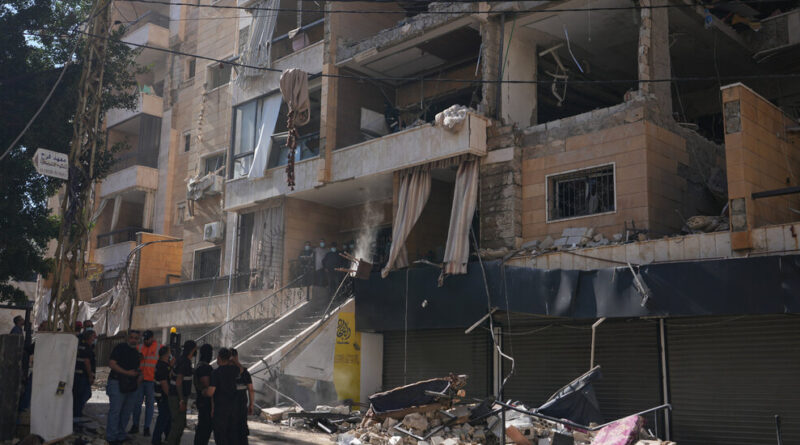
Israel struck at least two apartment buildings in the Dahiya neighborhood on the southern fringes of the capital, Beirut, according to Lebanon’s state-run media. The area has long been dominated by Hezbollah and is populated most by its Shiite Muslim supporters.
Avichay Adraee, an Israeli military spokesman, said Israeli forces had attacked “Hezbollah infrastructure,” without elaborating.
Israeli officials sometimes issue warnings to allow civilians time to flee, but did not do so in this case. At least two people were killed and several wounded, Lebanese state media reported.
Iran has demanded an end to Israeli attacks on its ally Hezbollah, the powerful armed group that has long dominated Lebanon, overshadowing its government.
Last week, Israeli and Lebanese government officials reached a new cease-fire deal after talks in Washington. But Hezbollah quickly dismissed the agreement as tantamount to surrender, as it would have to cease its attacks on Israel without immediate concessions from Israel.
Israeli leaders warned last week that if Hezbollah attacked Israeli territory again, they would order military attacks on Beirut.
Then on Sunday, air-raid sirens warning of incoming rocket fire blared in two Israeli communities in northern Israel. Hours later, Benjamin Netanyahu, the Israeli prime minister, said in a statement he had ordered the attack on Dahiya.
More than 3,600 people have been killed in Lebanon since the war between Israel and Hezbollah three months ago, according to Lebanon’s health ministry, and around 30 Israelis have been killed, raising pressure on Mr. Netanyahu to ramp up attacks on Hezbollah.
Hezbollah fighters have successfully fired cable-borne drones that are difficult to jam at invading Israeli forces, which have occupied territory in southern Lebanon near Israel’s northern border.
But military analysts said the attack on Beirut on Sunday was unlikely to deter Hezbollah or compel the group to compromise. Hezbollah officials have argued that the Israeli attacks prove that only their armed fighters can be entrusted with the protection of Lebanon.
The latest round of warfare between Israel and Hezbollah began in March, several days after the United States and Israel launched a war with Iran. Hezbollah fired several rockets at northern Israel in solidarity with Iran, which has long been its patron. Israel then launched a heavy military campaign against Hezbollah.
In the three months since, Israeli forces have seized swathes of southern Lebanon and systematically razed homes in villages close to the border with Israel. More than one million people in Lebanon have been displaced with little indication of when they might return home.
Under the U.S.-backed cease-fire proposal, Israeli troops would gradually withdraw to allow the Lebanese military to assert control of the territory, sidelining Hezbollah. But the Lebanese army has long been seen as relatively weaker and less well funded than Hezbollah.
The plan also requires close coordination between Israel and Lebanon, which do not formally recognize one another.