Ye Concerts Have Been Canceled Across Europe. Why Not in the Netherlands?
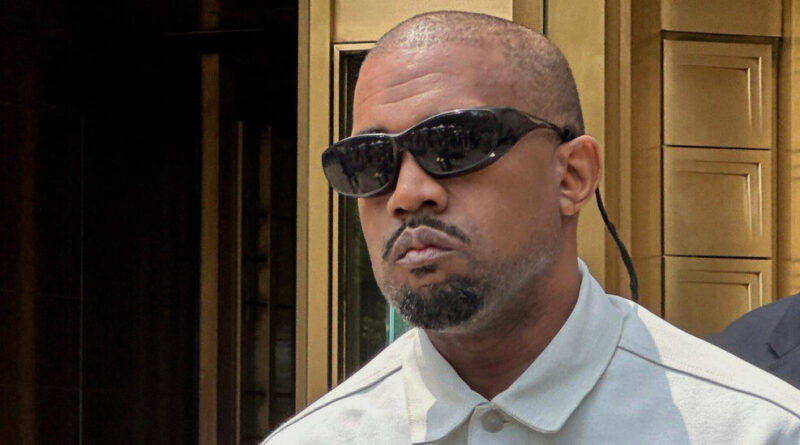
Ye, the artist formerly known as Kanye West, is planning to take the stage on Saturday in front of tens of thousands of people in the Netherlands, despite efforts from Jewish groups and Dutch lawmakers to prevent the show from happening.
Other European countries have rejected Ye’s comeback tour, after the rapper faced global backlash for antisemitic comments and a song called “Heil Hitler.” But in the Netherlands, where the authorities have pledged to combat rising antisemitism, an equally strong aversion to censorship has allowed for Ye’s two planned concerts to go ahead this month.
Experts say there is no legal basis to cancel his concerts or to refuse him entry to the country.
“In this case, there are insufficient grounds to assume a threat to public order or national security” that could disqualify Ye from entering the country, the Dutch Ministry of Justice and Security said last week.
Ye is set to give two concerts — the first of which is sold out — at a soccer stadium in Arnhem, in the eastern Netherlands, that holds about 40,000 people.
Last week, Ahmed Marcouch, Arnhem’s mayor, granted the organizers the necessary permit to hold the event, setting aside pressure from lawmakers and Jewish groups.
“I don’t see an inch of wiggle room to not grant that permit,” Mr. Marcouch said in a phone interview, adding that there had not been sufficient security concerns to deny it.
“No matter how terrible I find Ye’s past remarks, that does not give me, as mayor, the legitimacy to prohibit this man from performing.”
Under Dutch laws, the mayor could ban the concerts if they were deemed to threaten public order to a level that the authorities would not be able to manage. Ye does not pose that kind of threat, officials have concluded.
“The constitution is the basis for this,” said Marloes van Noorloos, a professor of criminal law at Leiden University, adding that officials were not allowed to ban events preemptively based on their potential content.
The promoter of the Dutch shows, J. Noah, and the venue, GelreDome, did not respond to requests for comment, nor did a representative for Ye.
Dutch lawmakers still tried to stop the concerts.
Last month, a majority in the Dutch House of Representatives supported a motion that asked the government to bar Ye from the Netherlands. Mirjam Bikker, a lawmaker for a Christian party that introduced the motion, said it was “somewhat of a moral appeal,” adding that she was frustrated that other European countries had been more successful in blocking concerts.
This week, Italian officials canceled a concert by Ye that had been planned for July in the northern city of Reggio Emilia, citing security worries and concerns raised by local Jewish leaders.
That followed a cascade of cancellations this spring. In April, the British government barred Ye from entering the country to play a series of concerts, citing his history of antisemitism. Later that month, Ye called off a show in Marseille, France, after the French interior ministry said it was considering banning the event.
In Switzerland, the soccer club FC Basel canceled Ye’s date at its stadium. So did a stadium in Poland, where the country’s minister of culture and national heritage, Marta Cienkowska, had said: “In a country marked by the history of the Holocaust, we cannot pretend that this is just entertainment.”
Some in the Netherlands lament their country’s response.
“At the moment that other countries succeed at being effective while also firmly upholding the rule of law, the Netherlands has to scratch its head,” said Ms. Bikker, the lawmaker.
Ye performed last Saturday in front of more than 100,000 people in Istanbul. Besides the Netherlands, he has international concerts planned in Georgia, Albania, Portugal and Spain.
In the Netherlands, as in many countries, the authorities say that antisemitism has risen since the 2023 Hamas-led attack on Israel and Israel’s war in Gaza that followed. Dutch Jewish groups have vehemently opposed Ye’s planned concerts, citing his yearslong history of antisemitic remarks, Holocaust denial and the sale of T-shirts emblazoned with swastikas on his website.
In January, Ye took out an ad in The Wall Street Journal saying that he regretted his antisemitic behavior and that he hoped to be forgiven by “those I’ve hurt.” Ye attributed his behavior — which also included professing a love for Adolf Hitler — to an untreated bipolar disorder.
Ye had apologized to Jews for his antisemitic behavior before, in 2023, only to retract that apology about a year later and declare himself a Nazi.
The Central Jewish Board, a Dutch advocacy group that went to court in an effort to block the concerts, took note of Ye’s apology but said in a statement, “Whether the remorse is sincere does nothing to diminish the danger emanating from his stage.”
This week, a judge in Amsterdam denied the group’s request.
Mr. Marcouch, the mayor, said he had had constructive conversations with members of the Jewish community, saying that he was not blind to the hurt over Ye’s past comments.
Still, he added, Dutch law on the matter was clear. Though he certainly would not have invited Ye, he said: “This is not about taste. This is about law and democracy.”