
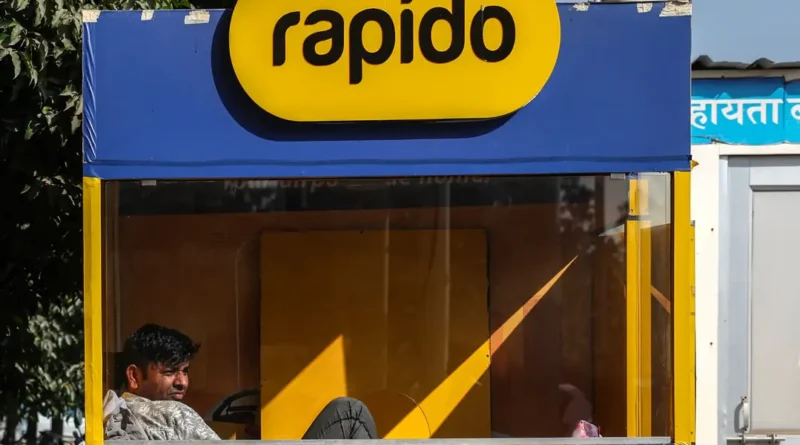
Uber is facing a David-and-Goliath battle in a 'must-win' market
A startup has emerged as Uber’s toughest rival in a market that CEO Dara Khosrowshahi called a “must-win,” doing so with a fraction of Uber’s global workforce.
Rapido is a Bengaluru-based startup founded in 2015 with no presence or brand awareness in North America. But in India, Rapido has grown to become one of the country’s primary ride-hailing providers, with more than 70 million monthly active users and nearly 3 million drivers, putting its top rivals in the region, Uber and Olaon notice.
“Ola used to be our main competitor,” Khosrowshahi said on Nikhil Kamath’s podcast last year. “I see now that the tougher competition in India is Rapido.”
In an interview with Business Insider, Rapido CEO and cofounder Aravind Sanka said the key to gaining ground in India was building around the needs of the local market, prioritizing two-wheelers and auto-rickshaws over traditional cars, and adopting a different driver economics model in a country where riders are highly price sensitive.
“From an affordability point of view, a four-wheeler is the most premium in India, and then a two-wheeler and three-wheeler are most affordable,” Sanka said. “We knew that India is a price-sensitive market and affordability has to be the key for ride-sharing compared to premium.”
Uber entered India’s market in 2013, two years before Rapido was founded, launching in Bengaluru with a traditional car-focused, ride-hailing model.
Sanka said Rapido took a different approach from day one, spending the first six years building the app around the two-wheeled platform before expanding into auto-rickshaws and cars.
The three-wheeled rickshaw is a popular mode of transportation in India. Abhishek Chinnappa/Getty Images
The focus has shaped Rapido’s approach to building the company. Sanka said the average cost of a two-wheeled ride is 60 to 70 cents, and that bikes and three-wheelers make up about 70% of total rides, forcing the company to operate with a lower-cost structure.
The startup also changed how it made money from drivers or “captains” as they’re referred to on the app. Instead of taking a commission on each ridethe company charges a flat daily fee, regardless of how much a driver earns per ride.
Sanka said the model helped bring more drivers online. Rapido has nearly 3 million drivers on the app — up from 1 million about two-and-a-half years ago. Uber’s head of India operations, Prabhjeet Singh, said last July that Uber had about 1.4 million drivers.
A Rapido spokesperson said the app has more than 70 million monthly active users. Sanka said the company has roughly 800 employees, which is dwarfed by Uber’s 34,000-strong global workforce.
An Uber spokesperson did not respond to a request for comment.
Rapido is not profitable yet, but its losses are shrinking. The company’s operating revenue rose 44% in fiscal 2025, while its net loss narrowed 30%, The Economic Times reported, citing financial documents filed with India’s Registrar of Companies.
Though one of the most populous countries in the world, Sanka estimated that less than 5% of its population uses ride-hailing. The CEO said a merger or consolidation with Uber is not in the cards at the moment.
“When penetration is low, and it is growing fast, that means the positions can change at any point in time,” Sanka said. “There’s no point of thinking about any kind of consolidation.”