Alberta Will Vote on a Possible Referendum to Separate From Canada. Here’s What to Know.
The oil-rich Western Canadian province of Alberta will hold a vote in October asking its citizens if they want to remain a part of the country, or if they prefer to hold a binding referendum on seceding.
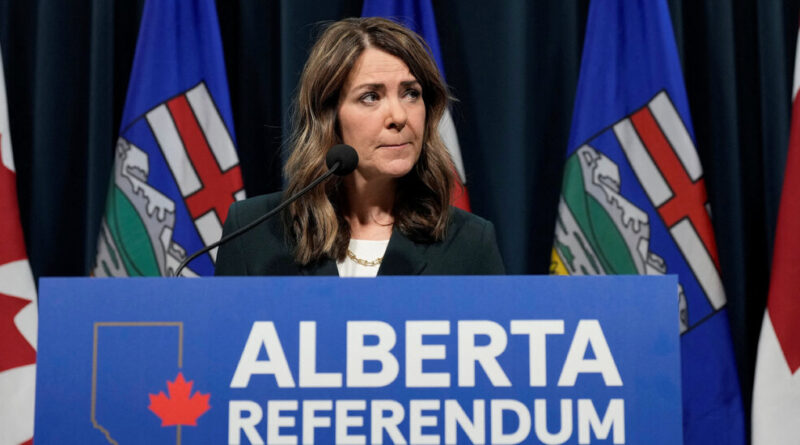
Premier Danielle Smith announced the referendum on May 21, seeking to cut through a legal and procedural quagmire threatening to scupper efforts by pro-independence and pro-Canada activists to hold a vote on the question.
Hundreds of thousands of citizens from one or the other side have already signed petitions, and Ms. Smith said she was thinking of their democratic rights.
Why did Alberta’s premier call for this vote?
Ms. Smith’s decision to take control of the fraught process came after a court in Alberta ruled that a petition to trigger a referendum for Alberta to break away from Canada was unconstitutional, because the province had not consulted with Indigenous groups whose rights would be negatively affected should a secession take place.
“Despite my personal support for remaining in Canada, I am deeply troubled by an erroneous court decision that interferes with the democratic rights of hundreds of thousands of Albertans,” Ms. Smith said, adding that the appeals to the ruling would take years to play out in the courts.
“Kicking the can down the road only prolongs a very emotional and important debate, and muzzling the voices of hundreds of thousands of Albertans wanting to be heard is unjustifiable in a free and democratic society,” she added.
The move has angered people on all sides of the debate: those who support independence feel Ms. Smith’s referendum is a gimmick depriving them of the chance to truly ask the question; and those who support Alberta remaining in Canada are outraged the question will even be on a ballot.
Prime Minister Mark Carney of Canada has been more circumspect, instead calling Alberta an “essential” part of the country but stopping short of criticizing Ms. Smith.
What will the October vote be about exactly?
Ms. Smith had earlier called for a vote on Oct. 19 on a number of questions relating to immigration policy.
The following question will be added: “Should Alberta remain a province of Canada or should the government of Alberta commence the legal process required under the Canadian Constitution to hold a binding provincial referendum on whether or not Alberta should separate from Canada?”
Simply put, the referendum will ask Albertans to decide if they want to stay in Canada, or hold another referendum to secede.
Why do some people want Alberta to be independent?
A small secessionist movement has long existed in Alberta, but it has grown in recent years and become more mainstream.
Recent polls show that up to 30 percent of Albertans would vote in favor of seceding from Canada.
While some people cite cultural reasons for this movement — Alberta is seen as more conservative than the rest of the country — it is economic grievances that have made this idea more appealing in recent years.
Alberta is Canada’s oil producer, and, over the past decade, environmental and other regulations promoted under the previous government led by Justin Trudeau were seen as punitive, depriving Albertans of income.
Some Albertans feel that they are unduly taxed to pay for social and welfare programs to poorer parts of the country and feel that the federal government should not be using Albertans’ taxes while also stifling their potential to earn more.
Is there a U.S. link?
Separatist leaders met on three occasions last year with Trump administration officials in Washington, although the State Department and the White House have dismissed those meetings as routine engagements with interest groups.
The highest ranking member of the Trump administration to speak about the Albertan independence movement was Treasury Secretary Scott Bessent who in January said that “They have great resources. The Albertans are very independent people,” and added that there’s a “rumor that they may have a referendum on whether they want to stay in Canada or not.”
The pro-independence activists who have connected with the U.S. administration have said they asked for funding and other assistance, such as the use of U.S. dollar, if they are successful in splitting the landlocked province away from Canada, but the administration has said it made no pledges of material or other support.
Supporters of President Trump and MAGA activists, most notably Stephen K. Bannon, have spoken publicly in favor of Alberta separating from Canada.
A small minority within the independence movement would like Alberta to become part of the United States, but separatist leaders have walked away from that position as it’s not popular with the majority of the movement.
What do Canadian political leaders think?
The two top federal parties — the Liberals under Canada’s prime minister, Mark Carney, and the Conservatives under the opposition leader, Pierre Poilievre — are firmly against secession.
Mr. Carney has sought to reverse the impression that his party wants to stifle Alberta’s growth and has worked with Ms. Smith to propose a new pipeline to take more oil from the province to the British Columbia coast, to ship to Asian markets. Ms. Smith has said she hopes the federal government’s change in attitude toward oil will show Albertans that Canada works for the province.
On Thursday, Mr. Poilievre said the Conservatives would campaign against separation. “I stand for a united country, and we’re going to campaign every day and every way to unite this country around hope,” he said at a news conference.