Scientists Tweaked the Global Warming Outlook. So Trump Weighed In.
Scientists are dialing back their worst-case scenario for how hot the world might get from climate change. That’s a small bit of good news. But over the weekend, President Trump falsely claimed it was evidence that scientists had been wrong.
Here’s a look at what’s changing, what it means and what the president said.
What changes are scientists making?
Researchers said a worst-case climate scenario that’s been used in science and policymaking for more than a decade had “become implausible” and would be revised downward.
That hothouse scenario assumed the highest realistic future greenhouse gas emissions. It predicted that, by the end of the century, global average temperatures could rise by 5 degrees Celsius, or 9 degrees Fahrenheit, over preindustrial levels.
It was also one of several scenarios developed by researchers — including the worst-case estimate, an optimistic best-case scenario, and one that fell in-between.
Now, because of the growth in renewable energy, the worst-case outlook is being revised downward. In a paper published in Aprila committee of top climate experts from around the world said that now the worst-case scenario would be that the planet could heat up by an average of 3.5 degrees Celsius, or just over 6 degrees Fahrenheit.
And it said that a likelier range would be warming of 2.5 to 3 degrees Celsius by the end of the century, based on current emissions trends in the real world.
Detlef van Vuuren, lead author of the paper and a senior researcher at the PBL Netherlands Environmental Assessment Agency, said the new numbers were based on revised emissions projections and that more climate computer-modeling work would help researchers refine their work.
The planet has already warmed by 1.4 degrees Celsius above preindustrial levels, according to the Copernicus Climate Change Servicea branch of the European Commission. That may not sound like much. But every fraction of a degree of global warming causes discernible, dangerous increases in extreme weather, crop failures and sea level rise.
What prompted the change?
The update was part of a planned reassessment ahead of upcoming reports by the Intergovernmental Panel on Climate Change, the international expert committee that assesses climate science for the United Nations. According to the authors, less burning of coal and a flattening of fossil fuel use overall caused them to adjust their estimates.
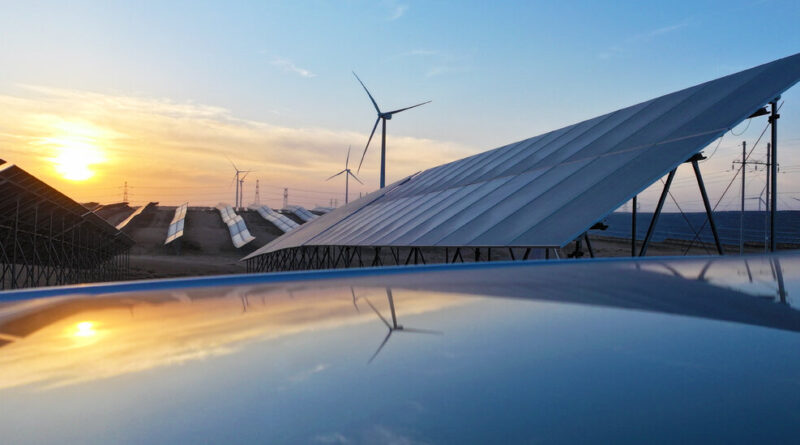
At the same time, renewable sources of energy like solar and wind power are becoming cheaper, and electric vehicles are becoming more affordable and more reliable. Some climate policies, such as requiring industries to rely less on fossil fuels, have also started to show results.
Is this a controversial move?
No, but it’s taken a while.
Many climate scientists have been arguing for years that the worst-case scenario, technically known as RCP 8.5, is unrealistic and should be scrapped. (RCP refers to a kind of climate blueprint, and 8.5 is essentially a rating of the warming caused by greenhouse gasses in Earth’s atmosphere.)
Zeke Hausfather, a climate scientist at Berkeley Earth, published a paper in 2020 in the journal Nature arguing that policymakers and the media were portraying the RCP 8.5 scenario as an expected outcome rather than a worst-case scenario.
At the same time, Dr. Hausfather noted that the lower-end estimate of climate warming has been moved upward, so the likelihood of keeping warming below 1.5 degrees Celsius is now receding. He said more extreme heat waves, more extreme wildfires, heavier precipitation events, sea level rise and loss of many ecosystems were all “going to continue and become worse.”
Others, including Roger Pielke, senior fellow at the American Enterprise Institute and professor emeritus at the University of Colorado Boulder, said that some climate scientists and environmentalists have been exaggerating the effects of climate change by using the RCP 8.5 scenario to scare people. “If you want the public to trust climate research, which they have to if we’re going to decarbonize over many decades, then playing it straight is always the right response,” he said.
What did the president say?
“GOOD RIDDANCE!” Mr. Trump said of RCP 8.5 in a social media post over the weekend.
The president, who has long called climate change a hoax, said falsely that the international expert committee admitted it had been wrong. “For far too long Climate Activism has been used by Dumocrats to scare Americans, push horrible Energy Policies, and fund BILLIONS into their bogus research programs,” he said.
The Trump administration has made huge budget cuts to climate research throughout the federal government, is dismantling a leading weather and climate research lab in Colorado, and has made it more difficult for scientists to collect, study and present their findings on how the environment is changing.
At the same time, the administration has blocked development of offshore wind power, ended support for solar energy and electric vehicles and encouraged more burning of oil, gas and coal. Those moves pushed U.S. greenhouse gas emissions up by 2.4 percent in 2025.