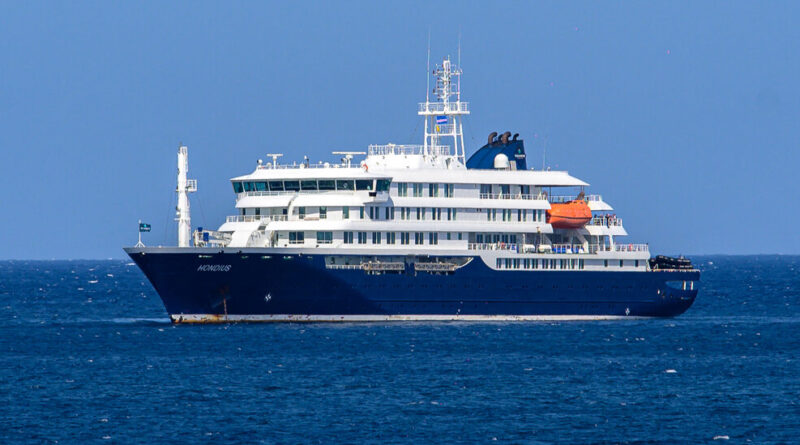
What to Know About the Suspected Hantavirus Outbreak on an Atlantic Cruise Ship
Hantavirus, a rare family of viruses carried by rodents, is suspected in a deadly outbreak aboard a cruise ship sailing the Atlantic Ocean.
The World Health Organization said on Sunday that three people who had been traveling aboard the vessel, the MV Hondius, had died. Another person is in intensive care in South Africa, and two symptomatic crew members are still on the ship and require urgent medical care, according to the vessel’s operator, Oceanwide Expeditions.
Officials confirmed hantavirus in one fatal case, the W.H.O. said, and the remaining five were under investigation.
On Monday morning, the vessel was anchored off the port of Praia, in the West African nation of Cape Verde, but had not yet docked, according to ship tracking data from MarineTraffic.
Here’s what we know:
Three people died from suspected infections and more might have caught the virus.
The three who died included a Dutch couple who were passengers on the cruise ship, according to South African officials.
The man, A 70, died upon arrival at St. Helena Island, a British protectorate in the South Atlantic, after he experienced a fever, headache, abdominal pain and diarrhea. His remains were awaiting repatriation to the Netherlands as of Sunday night.
His 69-year-old wife also became ill on board and collapsed at O.R. Tambo International Airport in Johannesburg, South Africa, while attempting to fly home to the Netherlands. She was taken to a health facility, where she died.
Details about the third person who died were not immediately released.
A British citizen fell ill during the voyage between St. Helena and Ascension Island. After an initial transfer to a hospital in Ascension, he was moved to a private facility in Sandton, South Africa, outside Johannesburg. His laboratory results came back positive for hantavirus, said Foster Mohale, a spokesman for the National Department of Health in South Africa.
Oceanwide Expeditions said in a statement on Sunday that hantavirus “has not been confirmed in the two symptomatic individuals currently on board.”
The vessel was carrying around 150 passengers and can hold as many as 170 people in its 80 cabins, according to Oceanwide. It has a staff and crew of nearly 60 people, including one doctor.
The ship had departed from Argentina and was headed for the Canary Islands.
The Dutch-registered MV Hondius departed Ushuaia, Argentina, around three weeks ago for the Canary Islands, Mr. Mohale said.
Cape Verde was a scheduled stop on the cruise’s itinerary before its planned final destination, he said.
As of Sunday evening, Cape Verde authorities had not authorized passengers to disembark, according to Oceanwide. The operator said that local officials were deciding whether to transfer the two symptomatic individuals who remained on board.
The ship’s itinerary included stops in Antarctica, the Falkland Islands, South Georgia Island, Nightingale Island, Tristan, St. Helena and Ascension, Mr. Mohale said.
The hantavirus is a rare disease that is often carried by rodents.
Hantavirus is a rare disease typically contracted when people breathe in particles of dried droppings or urine from infected rodents.
It is rare for the disease to spread among people, according to the Centers for Disease Control and Prevention. The Andes virusprimarily found in South America, is the only hantavirus known to spread between people.
From 1993 to 2022, there were 864 recorded cases of the disease in the United States, according to the C.D.C. Last year, Betsy Arakawa, the wife of the actor Gene Hackman, died from the effects of the virus.
Early symptoms are flulike, including fever, chills, body aches and headaches. As the illness progresses, it can cause shortness of breath and, in severe instances, lung or heart failure. There is no specific treatment for the virus, but symptoms can be treated with intubation, oxygen therapy, fluid replacement and medication, according to the C.D.C.
Cruise ships are a prime spot for infections to spread.
Hantavirus is rarely associated with cruise ships, but other viruses, like the norovirus, can spread much more frequently at sea.
In March 2025, more than 230 passengers and crew members got sick during a norovirus outbreak aboard a monthlong cruise from England to the Eastern Caribbean, according to the C.D.C. Norovirus, a gastrointestinal illness, thrives in the confined quarters of a ship. It spreads through person-to-person contact or through contaminated food or water.
According to the C.D.C., the most common outbreaks at sea involve gastrointestinal illnesses or respiratory infections such as Covid and influenza.