U.S. Indictment Accuses Mexican Governor of Conspiring With Sinaloa Cartel
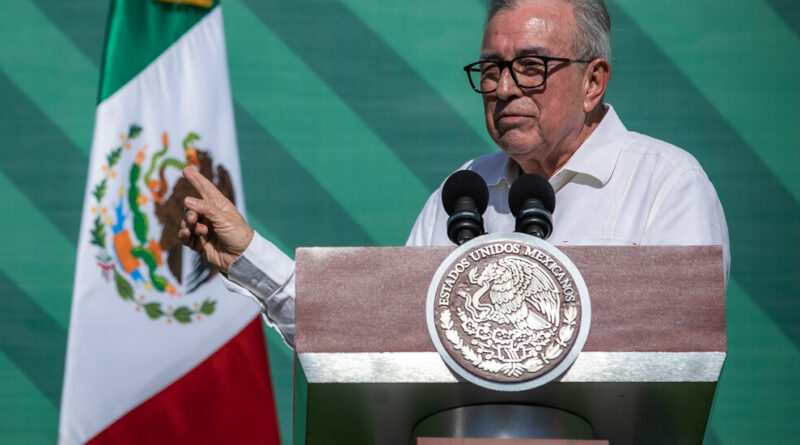
U.S. prosecutors accused a Mexican governor and nine other current and former Mexican officials of participating in a broad conspiracy to help a powerful Mexican cartel import drugs into the United States in exchange for bribes and votes.
In an indictment unsealed on Wednesday, U.S. prosecutors said that the governor of the Mexican state of Sinaloa, Rubén Rocha Moya, had accepted bribes and help getting elected in exchange for protecting his state’s dominant criminal organization, the Sinaloa cartel, which has terrorized his constituents for years.
Prosecutors alleged that the other current and former Mexican officials — including a Mexican senator and prominent mayor — had also taken bribes to shield cartel members from arrest and feed them information.
In a statement, Mr. Rocha denied the charges as “entirely false and without foundation,” and said that they were an effort by the United States to violate Mexico’s sovereignty and attack its leftist political movement, which is led by President Claudia Sheinbaum.
The indictment is the Trump administration’s most significant step yet in cracking down on the government corruption that it has said is at the heart of Mexico’s cartel problem.
Mr. Rocha is the highest-ranking member of Mexico’s dominant political party, Morena, to be indicted by the United States. The move could drive a wedge between the U.S. and Mexican governments just as they are deepening cooperation on combating the cartels that have killed thousands of Mexicans and made fortunes by smuggling drugs into the United States.
Mr. Rocha, 76, is a party ally of Ms. Sheinbaum and her predecessor, former President Andrés Manuel López Obrador. As Mr. Rocha had faced intensifying accusations of corruption in recent months, he had been publicly backed by Morena officials.
Ms. Sheinbaum has said that her government is rooting out corruption, and it has arrested some lower-level elected officials, but President Trump has said that more must be done.
Mexican officials suspected the United States was preparing indictments against officials in the country after the U.S. ambassador to Mexico, Ronald Johnson, gave a fiery speech in Sinaloa last week about corruption in the state, which seemed aimed at Mr. Rocha, according to two people familiar with the matter who spoke anonymously to describe private conversations.
Trade between Mexico and the United States “requires our governments to criminalize bribery and corruption and enforce codes of conduct for public officials,” said Mr. Johnson, speaking at the opening of a factory in Sinaloa.
“We may soon see significant action on this front,” the ambassador added. “So, stay tuned.”
After the speech, Mexican officials asked their American counterparts to warn them about any indictments they were preparing against sitting government officials so that they could manage the fallout nationally and within Morena, Ms. Sheinbaum’s party, according to these people.
On Tuesday evening, Mexican officials received an extradition request from the U.S. government for “various individuals,” the Mexican government said in a statement on Wednesday. The request “did not contain sufficient evidence to establish the responsibility of the individuals” targeted for extradition, the Mexican government said, adding that its attorney general’s office was evaluating the request.
The indictment of sitting government officials within her own party could create a predicament for Ms. Sheinbaum. She has sought to maintain a good relationship with Mr. Trump while standing firm in protecting Mexico’s sovereignty. She also faces the political realities of managing her sprawling party, which includes many officials deeply skeptical of Mr. Trump and some who are worried they could also be in the cross hairs of the U.S. justice system, fairly or not.
The indictment accused Mr. Rocha and the others of conspiring with the Sinaloa cartel — particularly with Los Chapitos, the faction led by the sons of Joaquín Guzmán Loera, the imprisoned drug kingpin known as “El Chapo” — to smuggle “massive amounts” of fentanyl, heroin, cocaine and methamphetamine into the United States. They did so, according to the indictment, in large part by protecting cartel leaders from being investigated, arrested or prosecuted.
In exchange, the document says, the Mexican officials received “millions of dollars in drug money.”
U.S. prosecutors argue that Mr. Rocha’s entire administration, which began in 2021, was built on cartel support. During the election, Mr. Rocha allegedly met with Los Chapitos leaders, promising them they could operate with impunity across the state if he won. Los Chapitos then allegedly helped elect Mr. Rocha by kidnapping and intimidating opposition candidates, as well as stealing ballot boxes.
The deal would have allowed the cartel to install corrupt officials within the Sinaloa state government and local municipalities, the indictment said. The other indicted officials include the current mayor of Sinaloa’s capital, the state’s deputy attorney general and several former top law enforcement officials from the state.

![Cash donated for Iran at a collection drive in Indian-administered Kashmir [Junaid Bhat/ Al Jazeera]](https://themuslimpress.com/wp-content/uploads/2026/04/Why-many-Kashmiris-are-donating-gold-breaking-piggy-banks-for-390x205.jpg)