
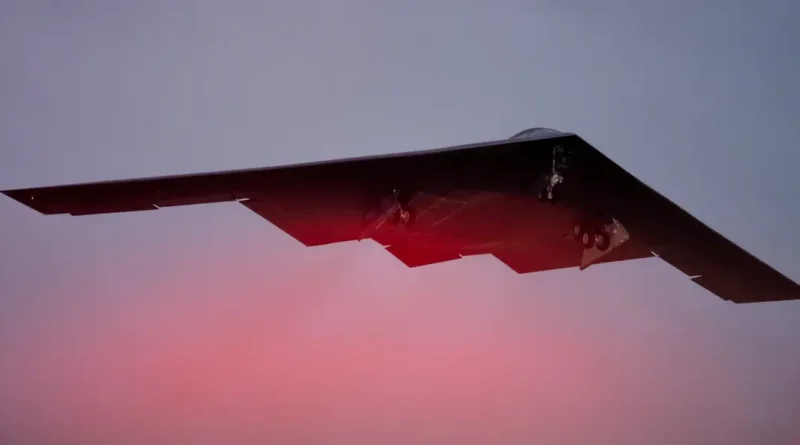
Bombers made 18 round-trip flights from the US to strike Iran, each spending more than 30 hours in the air
American bombers made numerous round-trip flights from the US to strike Iran, with each aircraft spending over a day in the air to execute these missions.
Air Force Gen. Dan Caine, chairman of the Joint Chiefs of Staff, told reporters on Wednesday that the US staged 62 bomber missions during Operation Epic Fury before the Trump administration said it reached a ceasefire with Iran Tuesday evening.
Eighteen of those bomber missions involved round-trip flights from the US “to deliver bombs on military targets” in Iran, and each one lasted more than 30 hours in duration, Caine said in a debrief of the five-week war.
“No other military in the world can do that,” the general said, “and it’s a testament to the logistical force that quietly serves behind them.”
Caine didn’t specify the point of origin, but the 30-hour missions likely involved B-2 Spirit stealth bombers out of Whiteman Air Force Base in Missouri and refueled en route by KC-135 tankers. Other American bomber aircraft — the B-1 Lancer and B-52 Stratofortress — took off from bases in the UK for missions in support of Epic Fury.
Crews perform pre-flight checks on a B-2 during Operation Epic Fury last month. US Air Force photo
B-2s from Whiteman completed similar long-distance bombing runs during Operation Midnight Hammerthe June 2025 mission to strike Iran’s nuclear sites with 30,000-pound bunker-buster munitions.
US Central Command, which oversees American military operations in the Middle East, said this week that more than 13,000 targets in Iran were struck since the war began in late February.
Caine said these included air defense systems, ballistic missile and one-way attack drone storage facilities, warships, naval mines, and weapons production factories, among other military targets. A majority of Iran’s facilities were destroyed, US officials said.
The US, Iran, and Israel agreed on Tuesday to a two-week ceasefire just ahead of a deadline that President Donald Trump set for Tehran to either make a deal and reopen the Strait of Hormuz or face the death of its civilization — a threat that received widespread global condemnation.
The Israeli military said Wednesday that it carried out strikes inside Iran overnight but has since held fire. Prime Minister Benjamin Netanyahu’s office said that the ceasefire agreement does not include the conflict with Hezbollah in Lebanon.
Meanwhile, several Gulf states reported Iranian attacks on Wednesday. The United Arab Emirates, for instance, said that Tehran launched 17 ballistic missiles and 35 drones since the ceasefire took effect.