
I quit my software engineering job to help seniors with tech. I assist them with things like recovering photos and bank accounts.
This story is based on a conversation with Adrian Amora, 37, known as a tech concierge living in Portland, Oregon. The interview has been edited for length and clarity.
I know I could have climbed the career ladder in my position as a software engineerbut there was something lacking in terms of job satisfaction.
My decade in the field included working for two archaeological firms on large projects for the transportation authority in Washington state and FEMA’s disaster response teams.
In 2023, I left that world to branch out on my own and started my own software development company. I decided that, as much as it was paying the bills, I wanted to do something in tech with a more human component.
I helped my grandparents with tech
Last July, I responded to a job ad for a tech concierge position at The Watermarka senior living community in Portland, Oregon.
I’ve always helped my grandparents, who are in their 80s, with some of their tech difficulties — like their internet connection — and I’ve found it rewarding.
I got the job and haven’t looked back.
There is a tendency for older people to internalize their technical struggles as a personal shortcoming. So often with tech, it’s not the person involved, but the equipment.
Nobody uses floppy discs anymore
If you’ve got a virus on your computer, for example, you can’t spend two hours on the phone talking to an AI virtual assistant to figure out these issues.
The facility serves a diverse population from all walks of life, including doctors and academics. I might help them retrieve work data from years ago from a wide variety of formats.
Nobody has a floppy disc port on their computer anymore, so when I unearth photos and other important things they thought they’d lost, they’re delighted.
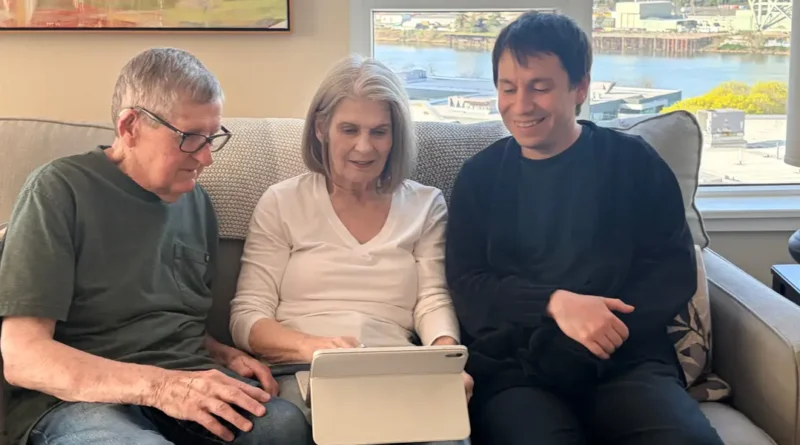
Amora can offer advice about iPhone usage. Courtesy of The Watermark.
Grasping technology is also rewarding to them because it combats loneliness and fosters connection.
I helped one man who only had his friends’ phone numbers track them down on Facebook. Now he’s busy chatting with them online, catching up on old times.
We had one senior who recently lost her husband. He had handled the couple’s finances throughout their marriage, and she hadn’t a clue how to access them.
It made her sad and vulnerable. So I promised her I would help her gain access to those bank accounts and develop skills to thrive in our digital world.
She loved music and, by the end of our time together, she would spend hours listening to long-lost music now available on streaming services.
Some residents have embraced AI
The other problems we run into include seeing medical records and booking doctor appointments online. Sometimes, the residents have no choice but to do that.
Still, they can quickly become adept at logging onto portals. It’s heartwarming to see them become more independent.
The residents are aged anywhere between their mid-50s and literally 103. Some have ventured into AI. It’s never too late to pick up new skills.
As for me, I’m glad that I quit the fast pace of my previous career to do something worthwhile that helps people.