US-Israeli war against Iran escalates as talks prove fruitless
Unlock the White House Watch newsletter for free
Your guide to what Trump’s second term means for Washington, business and the world
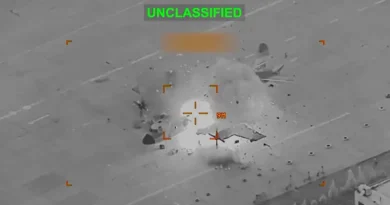
The US-Israeli war against Iran escalated over the weekend with a string of attacks on civilian infrastructure, even as regional diplomats held talks in a bid to de-escalate the conflict.
Mohammad Bagher Ghalibaf, one of Iran’s top wartime leaders, on Sunday accused the US of using diplomatic efforts as cover to prepare for ground operations in the Islamic republic, while warning that “our men are waiting”.
He issued the statement as the foreign ministers of Pakistan, Turkey, Egypt and Saudi Arabia met in Islamabad to discuss options to convince the US and Iran to accept a deal to end the war. Pakistani Prime Minister Shehbaz Sharif’s office said Islamabad was working to bring “both the US and Iran to the negotiating table”.
But there was no sign of any diplomatic progress as US and Israeli warplanes kept up their bombardment of Tehran and other Iranian cities, and an additional 3,500 US troops arrived in the region.
The Islamic regime hit back with barrages of missile and drone attacks targeting Israel and the US’s allies in the Gulf, including striking an Israeli chemical factory in that country’s south on Sunday, and aluminium plants in the United Arab Emirates and Bahrain on Saturday.
Emirates Global Aluminium, one of the world’s biggest aluminium producers, said its Al Taweelah site in Abu Dhabi had suffered “significant” damage. Bahrain’s Alba said it was also hit on the same day.
Those attacks came 24 hours after Iran said two of its biggest steel plants had been bombed, causing one to be shut down, hitting a vital source of non-oil export revenue for the Islamic republic.
Iranian officials said a university in Tehran and another in Isfahan were among the buildings struck by air strikes over the weekend, as well as a water reservoir in Iran’s Khuzestan province. An official was quoted in Iranian media as saying there was no shortage of water in the province.
Iran also continued to launch salvos of missiles and drones at bases hosting US forces in the region.
An attack on the Prince Sultan air base in Saudi Arabia on Friday that wounded 12 American troops also damaged one of the US’s E-3 Sentry surveillance aircraft, according to two people familiar with the situation. The $270mn plane is vital for combat operations, providing US forces with vital battleground information in real time.
It was one of the most significant hits to the American military since the start of the war.

The Islamic regime has repeatedly warned it will retaliate in kind to attacks on the republic. On Sunday, the Revolutionary Guards warned that Israeli and American universities in the region would be considered “legitimate targets” unless Washington condemned the strikes on Iranian institutions.
Donald Trump said on Thursday that he would extend an ultimatum to Iran to allow the free flow of shipping through the Strait of Hormuz, or the US would bomb its power plants, by 10 days. The US president had insisted that talks with Iran to end the war were “ongoing” and “going very well”.
Washington sent a 15-point plan to halt the war to Tehran through Pakistani mediators last week. But Iran’s leaders have dismissed Trump’s conditions and put forward their own demands to end the conflict. Regional diplomats say there are no formal negotiations, with messages being passed between the foes through mediators.
Pakistan’s foreign minister Ishaq Dar said on Saturday that Iran had agreed to allow 20 more Pakistani-flagged ships to pass through the Strait of Hormuz, through which about a fifth of the world’s oil and gas normally passes.
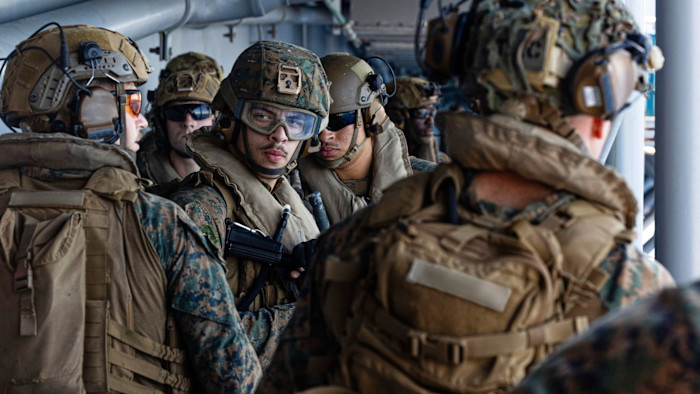
The additional US forces that arrived on Friday include about 2,200 Marines from the 31st Marine Expeditionary Unit, which is specially trained for amphibious landings and assaults. In total, Trump is deploying an extra 10,000 troops to the Middle East, including a second MEU and elite army paratroopers from the 82nd Airborne Division.
In a further sign that the conflict is escalating across the region, Israel’s Prime Minister Benjamin Netanyahu ordered the Israeli military to widen its invasion of Lebanon where it is fighting Hizbollah.
Houthi rebels in Yemen also fired two missiles at Israel over the weekend, the first attacks by the Iranian-backed militant movement since the war began.
The group, which had severely disrupted shipping through the Red Sea over the past years — had until that point stayed out of the conflict.
Additional reporting by Najmeh Bozorgmehr in Tehran and Mehul Srivastava in Tel Aviv