
Neurologist doesn't think AI will make people dumber, and shares how to stay sharp in the AI era
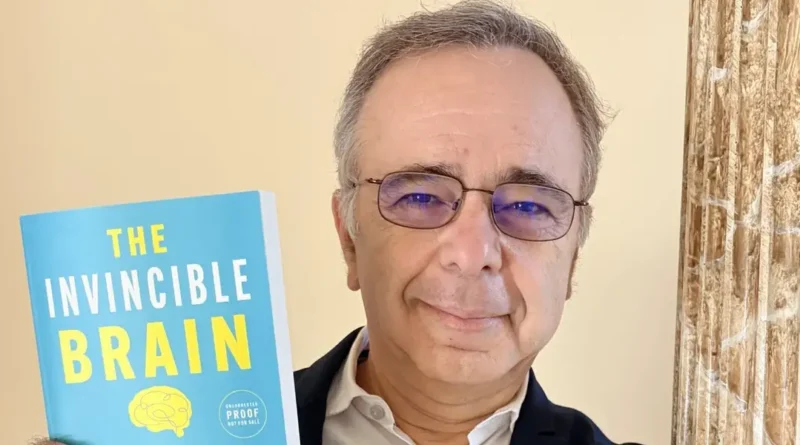
This as-told-to essay is based on a conversation with Dr. Majid Fotuhi, a neurologist and adjunct professor at Johns Hopkins University, who researches neuroplasticity and prevention of Alzheimer’s disease. He is also the author of “The Invincible Brain.” The following has been edited for length and clarity.
Neuroplasticity is your brain’s ability to change and rewire itself at any age. Making new connections in your brain leads to physical anatomical changes in your brain.
There’s a part of the brain called the cortex, and there’s an area called the hippocampus, which is next to the cortex. The cortex and hippocampus are parts of your brain that you use for your cognitive abilities: reading, writing, typing, doing your taxes, solving problems, and so forth. The hippocampus is also particularly involved with learning and memory.
These two brain structures have an extreme amount of malleability. They change with the environment, cultural experiences, food, and the amount of training your brain gets.
If you put me in an Amazon rainforest for a few years, I will have to learn how to hunt, survive, and listen to the cues in the jungle. Parts of my brain will develop, and parts will shrink to adapt to that environment. The brains of people today are very different from the brains of people from 200 years ago, because there were different challenges than we have now.
In that regard, I’m not too worried about the impact of AI on our brains, because when you use AI to go to the next level, you get a ton of information that challenges your brain. You are being overwhelmed with a lot of information that you need to handle and process. You have to decide which of it is true, which of it isn’t, and which of it is relevant.
While you don’t type the email as much yourself, or do the math in your head anymore, you get a lot of information that you didn’t have 50 years ago when you had a newspaper and television as a source.
Exercising your brain
I recommend about 20 to 30 minutes of brain exercise a day. If it’s a part of the daily routine, you don’t necessarily need to sit down for 20 minutes and do it. You have many opportunities throughout the day to use your memory and pay attention.
For example, when you read an article, actually read it carefully and pay attention to the details. Let’s say you read an article about what’s going on in the Middle East. Don’t just read that. If a city was bombed, find out who bombed it. What was damaged? What are the implications?
There are many opportunities to tone up the muscles for your attention and memory. For example, memorize three names every day. I memorize a lot of phone numbers and all my credit card numbers. I have made a habit of memorizing everyone I meet, like a bank teller or waitress at a restaurant, or people at a parties or lectures. I try not to use GPS as much as possible.
I recommend hobbies like dancing because you have to interact with someone else, listen to music, keep track of the steps, and know where you’re going. It’s a good way to train multiple parts of your brain at once.
Or, you could take golf lessons. Some people think that learning things with sports is physical, but if you learn to be better at pickleball, you’re improving parts of the brain and challenging it.
My general recommendation is to do the things you enjoy. There are many ways you can challenge the different networks in your brain. You don’t just have to sit down and do crossword puzzles or Sudoku.
Limit relying on AI
I limit relying on AI for trivial informationor for writing emails or responses to questions I receive. It’s tempting to ask AI to generate it for me, but I actually sit down, write it, and edit it. Then I’ll ask ChatGPT to double-check it or critique it.
You need to challenge your brain in every opportunity. Don’t become lazy and let AI do everything for you, because then you become so dependent on it that you can’t function by yourself.
AI has negative and positive aspects — some information is more easily available, but our brains are also challenged with a lot more information than in the past.
So, as your first exercise, can you try and remember the two parts of the brain I mentioned earlier, and what they’re responsible for?