
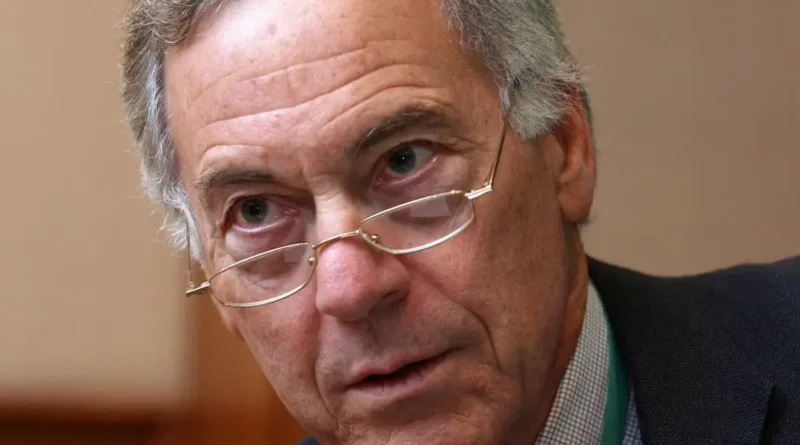
Iran is pulling from Muhammad Ali's playbook to deal 'knockout blow' to US: Steve Hanke
Steve Hanke says Iran is pulling from Muhammad Ali’s playbook — and could deal a “knockout blow” to the US.
“With its control of the Strait of Hormuzthat’s what Iran is capable of doing, and probably will do,” the professor of applied economics at Johns Hopkins told Business Insider by email on Thursday.
Hanke recalled a legendary boxing match dubbed the “Rumble in the Jungle” between Ali and George Foreman in 1974. Foreman was the undefeated heavyweight champion, making Ali a major underdog.
However, Ali braced himself against the ropes and absorbed blow after blow until Foreman was exhausted, at which point he counterattacked and floored his opponent.
“The war planners in Washington, D.C. and Jerusalem apparently never understood that, when under attackIran would adopt Muhammad Ali’s classic rope-a-dope strategy,” Hanke said.
The US has used overwhelming force to eliminate almost all of Iran’s military infrastructure, but the country continues to disrupt trade, roil financial markets, and threaten global economic growth by attacking neighboring countries and disrupting commerce, which has heaped pressure on President Donald Trump to end the conflict.
Power surge
Brent crude and European natural gas prices spiked to nearly four-year highs on Thursday after Iran responded to an Israeli strike on its gas fields by attacking the world’s largest liquefied natural gas (LNG) export plant in Qatar and causing “extensive damage.”
Oil and gas prices have soared since the start of the war between Iran and the US and Israel, largely because Iran has effectively closed the Strait of Hormuz — a key shipping channel through which 20% of the world’s oil and LNG flows — by using mines and missiles to scare off commercial vessels.
Hanke, a former economic advisor to President Ronald Reagan, was the president of Toronto Trust Argentina when it was the world’s best-performing market mutual fund in 1995. He said that shutting the strait has triggered an “acute physical shortage of crude.”
He pointed to the prices of Dubai and Oman crude, which have “exploded to levels that exceed the famous 2008 spike.” He said that has created a “significant gap between prices in the physical markets and the paper markets.”
Paper markets “have not yet priced in what’s really going on in the real world,” he continued, adding that they’ll eventually be “mugged by reality” and surge closer to physical prices.
Hanke said that traders are wary of trading West Texas Intermediate crude as they think the US government might try to sell futures to keep prices artificially low. Brent, the international benchmark, better reflects market sentiment and conditions, he added.
Past and future
“What about the Iranian knock-out blow?” Hanke wrote. “If that occurs, it will be when the massive collateral damage from the ever-increasing crude prices ripples through every corner of the world economy, inflicting such punishing pain on Iran’s adversaries that they can no longer withstand it.”
Hanke has been trading commodities and currencies for more than four decades. As Friedberg Mercantile Group’s chief economist in 1985, he predicted the Organization of Petroleum Exporting Countries (OPEC) would collapse, and oil would plunge to below $10 a barrel, leading his firm to place massive short bets on crude and the Saudi riyal and Kuwaiti dinar.
Hanke was proven right by April 1986 when oil crashed below that level, and the two Middle Eastern currencies tumbled shortly after.