Japan loses its thirst for vending machines
Unlock the Editor’s Digest for free
Roula Khalaf, Editor of the FT, selects her favourite stories in this weekly newsletter.
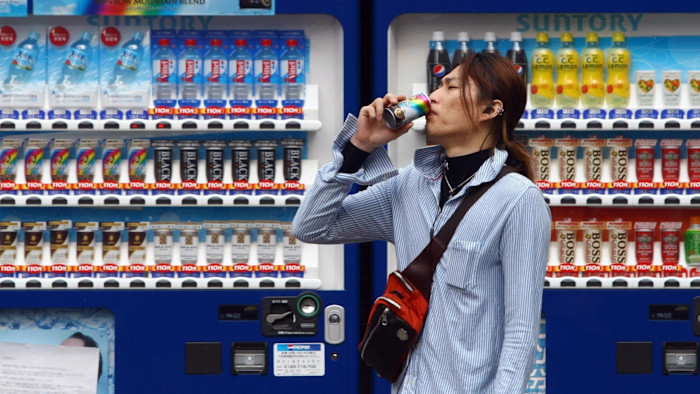
Tens of thousands of vending machines are vanishing from Japan, as machines that once symbolised the nation’s love of innovation are shunned in a climate of rising inflation and deepening labour shortages.
The nation’s stock of 2.2mn drinks vending machines is down 23 per cent from its bubble-era peak in 1985, according to the Japan Vending System Manufacturers Association.
The faltering economics of running a national vending machine empire were exposed when DyDo, Japan’s third biggest operator, this month said it would scrap almost 7.5 per cent of its network of 270,000 units after posting its largest ever annual loss.
“The vending machine business is becoming more difficult than anticipated,” said DyDo’s president Tomiya Takamatsu. “The top priority is to stop the bleeding.”
Itoen, Japan’s largest green tea producer, also plans to restructure its vending machine business and has taken a ¥13.6bn ($89mn) impairment charge because of the “significantly deteriorating operating environment”.
Japan loved vending machines for their convenience despite higher prices. But three years of rising inflation has driven consumers to greater thriftiness.
Well-known brands of tea and coffee can be 20 per cent cheaper in nearby convenience stores, which have also stepped up sales of freshly brewed coffee, while drugstores and supermarkets sell discount private label brands.
In 2024 just 42mn cases of drinks were sold via vending machines, down from 72mn at the 1997 peak, according to data from Inryo Souken, a Tokyo-based research institute.
Vending machines also still need people to keep them stocked — and Japan has a chronic shortage of truck drivers. In a sign of the squeeze, driver wages shot up 7.1 per cent in 2024, according to data from the Japan Trucking Association.
Vending machines are a prime example of Japan’s sluggish adoption of technology to solve labour shortages that have become a national challenge.

“Vending machines may look automatic, but the operations are still done by people. They’re only automatic at the point of sale,” said Akihito Nakai, an independent retail analyst.
“The real problem here is there is no data saying whether something has sold or not unless a person physically goes and checks. They haven’t digitalised data and inventory management.”
Suntory, the second-largest vending machine operator, acknowledged the challenge to secure labour but told the FT that wireless communication to remotely monitor stocks had “significantly reduced” the workload.

In response to what Asahi Soft Drinks said was an “inevitable” downward trend in the vending machine market, operators are shifting their focus to boosting profitability per unit by improving locations and increasing machine size to cut the need for restocking.
One beverage company said digitisation investments did make a return on vending machines in office buildings, which take longer for truck drivers to reach and stock higher-value goods. However, most vending units in the suburbs and rural areas lack sophisticated functions.
“It becomes a story of whether they can invest in this when sales are already falling,” Nakai said.